Akt Art Prints

Akt Paintings - Art History of the Genre

The nude is the depiction of the unclothed human body as a subject of art, a tradition central to Western painting and sculpture since ancient Greece and revived in the Renaissance. Its subjects range from figures of myth and the Bible, such as Venus, Adam and Eve or Saint Sebastian, to allegories, reclining figures, bathers, the odalisque and the academic study drawn from the living model. Because history painting was built on the human figure, drawing the nude from life was the core of academic training for centuries. In The Nude: A Study in Ideal Form (1956) the historian Kenneth Clark separated being naked, which he linked with exposure and embarrassment, from the nude as an idealized form of art.

The oldest nudes are Stone Age female figurines, probably symbols of fertility. In Greece nudity became the mark of gods, heroes and athletes: the stiff standing youths of the Archaic kouros gave way in the 5th century BC to the relaxed weight shift of contrapposto, as in Polykleitos’s Doryphoros (about 440 BC). Goddesses were at first draped, until Praxiteles carved the Aphrodite of Knidos (about 360-340 BC), the first life-size freestanding statue of a fully nude woman. These figures embodied an ideal of youth, health and measured proportion that Renaissance artists later studied in Roman copies.

Christian distrust of the body made full nudity rare in medieval art, except for Adam and Eve, the damned at the Last Judgment and the suffering Christ. Late Gothic nudes, often in manuscripts, have long bodies with narrow chests, high waists and rounded bellies, far from the classical canon. The Renaissance revived the antique ideal: Donatello’s bronze David, probably of the 1440s, was the first freestanding nude statue since antiquity. Sandro Botticelli’s The Birth of Venus (about 1485, Uffizi, Florence), painted for the Medici, borrowed the modest pose of ancient Venus statues. Michelangelo filled the Sistine Chapel ceiling with male nudes, and Albrecht Dürer pursued ideal proportions in his life-size Adam and Eve (1507, Prado, Madrid).

Giorgione’s Sleeping Venus (about 1510, Gemäldegalerie Alte Meister, Dresden), finished by Titian after Giorgione’s death, laid a sleeping goddess in a landscape and founded the long line of reclining nudes. Titian moved her indoors and opened her eyes in the Venus of Urbino (1538, Uffizi), and Diego Velázquez showed his Rokeby Venus (about 1647-1651, National Gallery, London) from behind, her face seen in a mirror; in 1914 a suffragette slashed the canvas. Drawing from the live model became the basis of training, and Raphael is credited with being the first to use female models regularly for female figures, where studio assistants had posed before. Until the mid-19th century women were barred from life classes.

Baroque painters worked more often from life and idealized less. Peter Paul Rubens painted goddesses such as the Three Graces with such radiant, ample flesh that his name became an adjective. Rembrandt gave his Bathsheba at Her Bath (1654, Louvre) the body and pensive face of a real woman. In the 18th century the Rococo made the nude decorative and playful: François Boucher’s Venus Consoling Love (1751, National Gallery of Art, Washington) was probably commissioned by Madame de Pompadour.

Francisco de Goya blurred the line between nude and naked with The Nude Maja (about 1797-1800, Prado), a real woman of his own day who returns the viewer’s gaze instead of a goddess looking away; in 1815 the painting brought him before the Inquisition. Jean-Auguste-Dominique Ingres added the odalisque, the harem woman of Orientalism, with his elongated Grande Odalisque (1814, Louvre). The Paris Salon filled each year with idealized Venuses, which Honoré Daumier mocked in an 1864 lithograph, and at the Salon of 1863 Napoleon III bought Alexandre Cabanel’s porcelain-smooth The Birth of Venus (1863, Musée d’Orsay).

The same year Édouard Manet’s Le Déjeuner sur l’herbe (1863, Musée d’Orsay), with a nude woman beside two clothed men at a modern picnic, became the scandal of the Salon des Refusés. His Olympia, shown at the Salon of 1865 (Musée d’Orsay), took the pose of the Venus of Urbino, yet the public saw a contemporary courtesan, and Gustave Courbet’s Woman with a Parrot (1866, Metropolitan Museum of Art, New York) drew similar criticism. Edgar Degas watched women washing and drying themselves in ordinary rooms, Pierre-Auguste Renoir revived the classical theme in The Large Bathers (1884-1887, Philadelphia Museum of Art), and Thomas Eakins painted young men at The Swimming Hole (1884-1885, Amon Carter Museum of American Art, Fort Worth).

In the 20th century Pablo Picasso broke the figures of Les Demoiselles d’Avignon (1907, Museum of Modern Art, New York) into angular planes, Henri Matisse reduced bodies to flowing contours in Dance (1909, Museum of Modern Art), and police closed Amedeo Modigliani’s only solo exhibition in 1917 over his reclining nudes. Suzanne Valadon painted women at everyday tasks without erotic display, as in Nude Arranging Her Hair (1916, National Museum of Women in the Arts, Washington), and Lucian Freud later painted the body without any idealization. In Ways of Seeing (1972) John Berger argued that the traditional female nude mirrored the power of a male audience. In a fine nude, look at how layered oil paint renders skin, how the pose echoes older models, and whether the figure looks away or meets your eyes.

Page 1 of 72
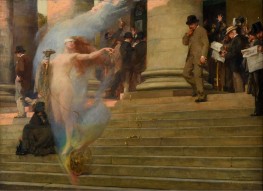
Albert Maignan
Canvas Print
$68.00
SKU: 23532-MGN
Original Size: 73.5 x 100 cm
Musée des Beaux-Arts de Reims, France
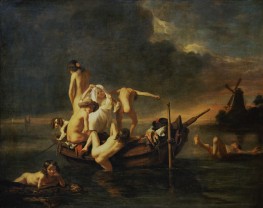
Nicolaes Maes
Canvas Print
$74.12
SKU: 23469-MNI
Original Size: 72.5 x 91.5 cm
Louvre Museum, Paris, France
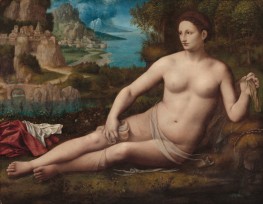
Bernardino Luini
Canvas Print
$72.93
SKU: 23426-LUI
Original Size: 106.7 x 136 cm
National Gallery of Art, Washington, USA
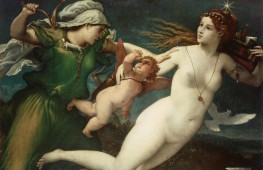
Lorenzo Lotto
Canvas Print
$61.69
SKU: 23360-LOL
Original Size: 76.3 x 117.7 cm
Palazzo Rospigliosi Pallavicini, Rome, Italy
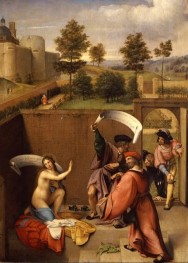
Lorenzo Lotto
Canvas Print
$66.81
SKU: 23338-LOL
Original Size: 66 x 50 cm
Galleria degli Uffizi, Florence, Italy
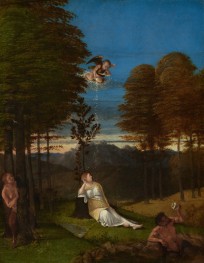
Lorenzo Lotto
Canvas Print
$61.69
SKU: 23328-LOL
Original Size: 42.9 x 33.7 cm
National Gallery of Art, Washington, USA
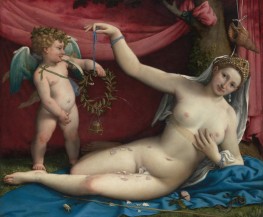
Lorenzo Lotto
Canvas Print
$77.18
SKU: 23318-LOL
Original Size: 92.4 x 111.4 cm
Metropolitan Museum of Art, New York, USA
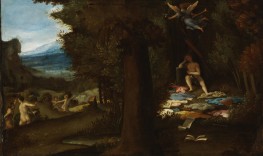
Lorenzo Lotto
Canvas Print
$61.69
SKU: 23294-LOL
Original Size: 44.5 x 74 cm
Museum of Fine Arts, Budapest, Hungary
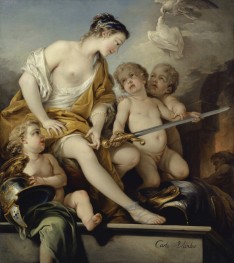
Charles-André van Loo
Canvas Print
$83.47
SKU: 23288-LOO
Original Size: 126 x 103 cm
Kunstmuseum Basel, Switzerland
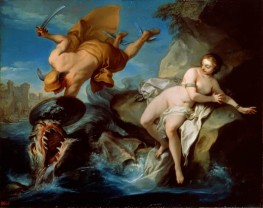
Charles-André van Loo
Canvas Print
$74.12
SKU: 23286-LOO
Original Size: unknown
State Hermitage Museum, St. Petersburg, Russia
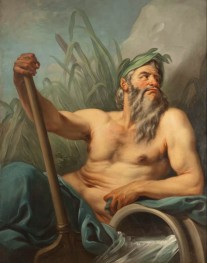
Charles-André van Loo
Canvas Print
$73.95
SKU: 23284-LOO
Original Size: unknown
Public Collection

Charles-André van Loo
Canvas Print
$70.21
SKU: 23283-LOO
Original Size: 118 x 90 cm
Public Collection
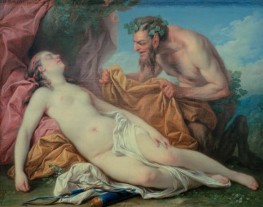
Charles-André van Loo
Canvas Print
$73.78
SKU: 23280-LOO
Original Size: 50 x 72 cm
State Hermitage Museum, St. Petersburg, Russia
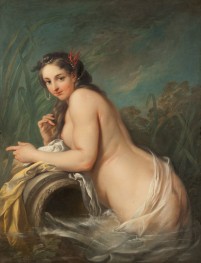
Charles-André van Loo
Canvas Print
$71.57
SKU: 23278-LOO
Original Size: 146 x 116 cm
Nationalmuseum, Stockholm, Sweden
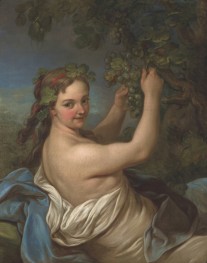
Charles-André van Loo
Canvas Print
$73.95
SKU: 23277-LOO
Original Size: 100 x 80 cm
High Museum of Art, Atlanta, USA
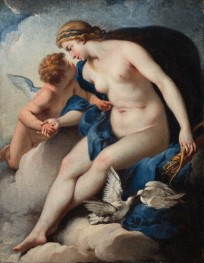
Charles-André van Loo
Canvas Print
$61.69
SKU: 23272-LOO
Original Size: 40.3 x 31.4 cm
Kunsthalle Bremen, Germany
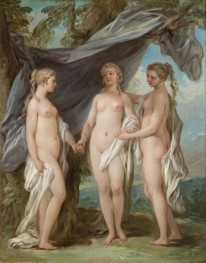
Charles-André van Loo
Canvas Print
$73.44
SKU: 23269-LOO
Original Size: 58.4 x 46 cm
Los Angeles County Museum of Art, USA
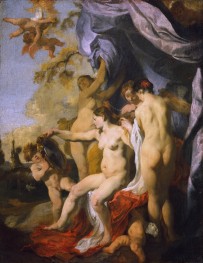
Johann Liss
Canvas Print
$72.42
SKU: 23245-LIJ
Original Size: 83 x 69 cm
Galleria degli Uffizi, Florence, Italy
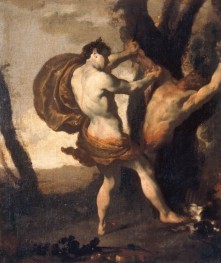
Johann Liss
Canvas Print
$78.88
SKU: 23243-LIJ
Original Size: 58 x 48 cm
Gallerie dell'Accademia, Venice, Italy
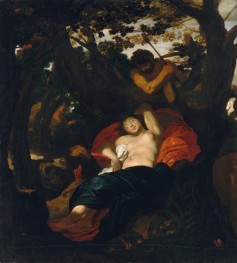
Johann Liss
Canvas Print
$84.49
SKU: 23236-LIJ
Original Size: 104.5 x 94.9 cm
Metropolitan Museum of Art, New York, USA
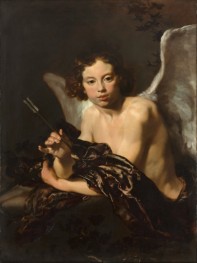
Johann Liss
Canvas Print
$70.04
SKU: 23235-LIJ
Original Size: 87.7 x 65.7 cm
Cleveland Museum of Art, USA
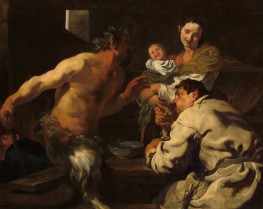
Johann Liss
Canvas Print
$74.63
SKU: 23234-LIJ
Original Size: 133.3 x 167.4 cm
National Gallery of Art, Washington, USA
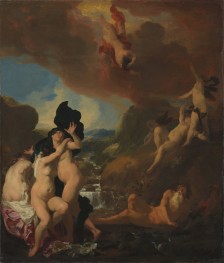
Johann Liss
Canvas Print
$79.73
SKU: 23233-LIJ
Original Size: 126.5 x 110.3 cm
National Gallery, London, UK
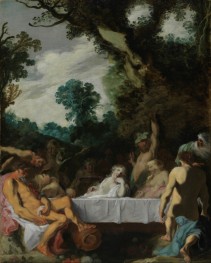
Johann Liss
Canvas Print
$61.69
SKU: 23230-LIJ
Original Size: 34.2 x 27.3 cm
Fitzwilliam Museum, Cambridge, UK

Back to top