

Peter Paul Rubens Giclée Fine Art Prints
1577-1640
Flemish Painter - Baroque
Rubens canvas prints and fine art paper prints: 403 works in museum quality, each made to order in the size you choose, with optional framing.
Peter Paul Rubens (1577-1640) was the leading painter of the Flemish Baroque, a diplomat in the service of the Spanish Habsburgs and the head of one of the most productive workshops of his century. His altarpieces, mythologies, hunts and portraits are known for their surging movement, warm color and sensuous rendering of flesh.
His parents were Calvinists who had fled Antwerp in 1568 to escape the Duke of Alba's persecution and settled in Cologne. His father Jan, a lawyer and former Antwerp alderman, became legal adviser to Anna of Saxony, the wife of William of Orange. He was imprisoned in Dillenburg Castle over an affair with her. After two years he was released on a bail of 6,000 thalers, banned from practicing law and confined to Siegen, where the family lived in hardship and where Peter Paul was born on 28 June 1577. The family later moved back to Cologne and returned to the Catholic Church. Jan taught his sons himself until he died in 1587. In 1590 his widow, Maria Pypelinckx, brought Philip, Peter Paul and their sister Blandina back to Antwerp.
There the brothers attended Rombout Verdonck's Latin school. One of Peter Paul's classmates was Balthasar Moretus, grandson of the printer Christophe Plantin, who remained his friend for life. When Blandina's dowry used up the family's money, the thirteen-year-old became a page to Countess Marguerite de Ligne-Arenberg, probably in Oudenaarde. He had long been copying woodcuts by Hans Holbein the Younger and Tobias Stimmer, however, and in 1592 he began training with the landscape painter Tobias Verhaecht, a relative by marriage. Wanting to paint histories rather than landscapes, he moved on after about a year to Adam van Noort and then to Otto van Veen. Van Veen had worked in Italy, served as court painter in Brussels and taught Rubens that a painter must also be a scholar of literature, theory and the antique. In 1598 Rubens became a master in the Guild of St. Luke. Early works such as the Battle of the Amazons still show his teacher's manner.
In 1600 he traveled to Italy with his first pupil, Deodat del Monte. In Venice he studied Titian, Veronese and Tintoretto and entered the service of Vincenzo I Gonzaga, Duke of Mantua, for whom he painted portraits, copied old masters and advised on purchases, among them Caravaggio's Death of the Virgin. In Rome he drew the Laocoön and the works of Michelangelo and Raphael and painted his first altarpiece, St. Helena for Santa Croce in Gerusalemme, commissioned by Archduke Albert. In 1603 the duke sent him to Spain with gifts for Philip III. Weeks of rain on the road had ruined several canvases, and Rubens washed, dried and repaired them himself, replacing two lost pictures with his own Democritus and Heraclitus. His Equestrian Portrait of the Duke of Lerma sends the rider toward the viewer, a livelier answer to Titian's Charles V at Mühlberg. He declined Lerma's offer of a post at the Spanish court.
Back in Italy, he painted the Genoese nobility, including the Marchesa Brigida Spinola Doria, and drew the city's new palaces for a book published in 1622 as Palazzi di Genova. From 1606 he lived with Philip in Rome on the Via della Croce and survived a serious bout of pleurisy. For the high altar of the Chiesa Nuova he painted a canvas whose surface caught so much light that the figures could not be made out, and he replaced it with a version on slate. He wrote in Italian, French, Spanish and Latin, kept the Brabant dialect for his most spontaneous letters, and signed himself "Pietro Paolo" for the rest of his life. In 1608 news of his mother's illness called him home. He closed his last letter from Italy with the remark that he was just mounting his horse. She died before he reached Antwerp, and he never saw Italy again.
The Twelve Years' Truce of 1609 brought renewed prosperity to Antwerp. That September Archduke Albert and Infanta Isabella made Rubens their court painter, allowing him to stay in Antwerp and to work for other patrons. In October he married Isabella Brant, daughter of the humanist Jan Brant, and painted the two of them seated in a honeysuckle bower. He designed an Italianate house with a large studio, a domed room for his ancient sculptures and a garden. His nephew described the routine kept there: Rubens rose at four, heard Mass, then painted while a hired reader read Plutarch, Livy or Seneca aloud, dictating letters without putting down his brush. He ate sparingly because of his gout, rode out in the evening and dined with a few friends. When Philip died in 1611, Rubens painted The Four Philosophers, showing himself, his brother and their teacher Justus Lipsius. Of his three children with Isabella, Clara Serena died at twelve, while Albert and Nicolaas appear in a double portrait.
The Elevation of the Cross (1610), which he painted inside the church of St. Walburga, and The Descent from the Cross (1611-1614), commissioned by the arquebusiers' guild for Antwerp Cathedral, made him the foremost painter in Flanders. Within two years he had turned away more than a hundred would-be pupils. Assistants painted much of the output, and he charged double for pictures entirely by his own hand. Anthony van Dyck worked with him, Frans Snyders painted the eagle in Prometheus Bound, and his friend Jan Brueghel the Elder once called him, jokingly, his secretary. To spread his designs, Rubens employed engravers such as Lucas Vorsterman, until the two quarreled, and between 1619 and 1620 he secured privileges against pirated copies in France, the Spanish Netherlands and the Dutch Republic. A story from the time has him refusing to invest in an alchemist's scheme for making gold, because his palette and brushes had long since served that purpose.
In 1621 Marie de' Medici commissioned two cycles for the Luxembourg Palace in Paris. The one on her own life, with scenes such as The Arrival of Marie de' Medici in Marseilles, was installed in 1625 and now hangs in the Louvre. The second, on Henry IV, was never finished. After the truce ended, Infanta Isabella entrusted him with diplomatic missions. Some courtiers looked down on a man who worked with his hands, yet Philip IV ennobled him in 1624. Isabella Brant died in 1626. Between 1627 and 1630 Rubens worked for peace between Spain, England and the Dutch Republic. During eight months in Madrid in 1628-29 he copied Titian again and befriended Diego Velázquez. In London he gave Charles I Minerva Protects Pax from Mars, received an honorary degree from Cambridge in 1629 and was knighted in 1630.
Later that year, at 53, he married the sixteen-year-old Helena Fourment. In a letter he explained that he had not felt ready for a celibate life and had preferred a young woman of the middle class to a lady of the court. Viewers recognized her in the Venus of The Judgement of Paris, and she appears, wrapped in fur, in Het Pelsken. In 1635 he oversaw the decorations for the Cardinal-Infante Ferdinand's entry into Antwerp and bought the estate of Het Steen, where landscapes such as Landscape with a Rainbow grew out of his own surroundings. The ceilings for the Banqueting House in London also date from this decade.
Rubens died of heart failure brought on by gout on 30 May 1640. After his death Philip IV bought back his copies of Titian for Spain. His burial chapel in St. James' Church, Antwerp, holds his Virgin and Child with Saints, and the Latin epitaph by his friend Gaspar Gevartius compares him to Apelles. His manner of painting flesh passed to Watteau, Boucher and Fragonard, and the word "Rubenesque" entered the language. His house is now the Rubenshuis museum.
Page 1 of 17

Canvas Print
$88.23
$88.23
SKU: 3114-RPP
Peter Paul Rubens
Original Size: 224 x 210.5 cm
Alte Pinakothek, Munich, Germany
Peter Paul Rubens
Original Size: 224 x 210.5 cm
Alte Pinakothek, Munich, Germany
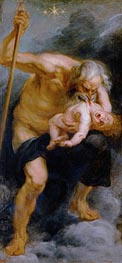
Canvas Print
$61.81
$61.81
SKU: 13794-RPP
Peter Paul Rubens
Original Size: 180 x 87 cm
Prado Museum, Madrid, Spain
Peter Paul Rubens
Original Size: 180 x 87 cm
Prado Museum, Madrid, Spain

Canvas Print
$72.56
$72.56
SKU: 14442-RPP
Peter Paul Rubens
Original Size: 142 x 182 cm
Art Gallery of Ontario, Toronto, Canada
Peter Paul Rubens
Original Size: 142 x 182 cm
Art Gallery of Ontario, Toronto, Canada

Canvas Print
$72.90
$72.90
SKU: 13738-RPP
Peter Paul Rubens
Original Size: 286 x 224 cm
Alte Pinakothek, Munich, Germany
Peter Paul Rubens
Original Size: 286 x 224 cm
Alte Pinakothek, Munich, Germany
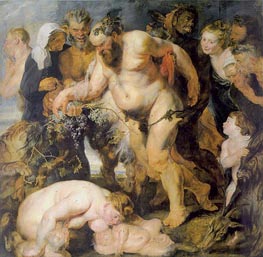
Canvas Print
$91.98
$91.98
SKU: 3456-RPP
Peter Paul Rubens
Original Size: 205 x 211 cm
Alte Pinakothek, Munich, Germany
Peter Paul Rubens
Original Size: 205 x 211 cm
Alte Pinakothek, Munich, Germany

Canvas Print
$67.96
$67.96
SKU: 19207-RPP
Peter Paul Rubens
Original Size: 68.2 x 52 cm
Sanssouci Palace, Potsdam, Germany
Peter Paul Rubens
Original Size: 68.2 x 52 cm
Sanssouci Palace, Potsdam, Germany

Canvas Print
$67.11
$67.11
SKU: 13882-RPP
Peter Paul Rubens
Original Size: 170 x 236.2 cm
National Gallery, London, UK
Peter Paul Rubens
Original Size: 170 x 236.2 cm
National Gallery, London, UK

Canvas Print
$71.54
$71.54
SKU: 3125-RPP
Peter Paul Rubens
Original Size: 394 x 295 cm
Louvre Museum, Paris, France
Peter Paul Rubens
Original Size: 394 x 295 cm
Louvre Museum, Paris, France

Canvas Print
$73.24
$73.24
SKU: 3475-RPP
Peter Paul Rubens
Original Size: 256 x 324 cm
Musée des Beaux-Arts de Rennes, France
Peter Paul Rubens
Original Size: 256 x 324 cm
Musée des Beaux-Arts de Rennes, France

Canvas Print
$61.81
$61.81
SKU: 4220-RPP
Peter Paul Rubens
Original Size: 289 x 518 cm
Collection of the Prince of Liechtenstein, Vaduz
Peter Paul Rubens
Original Size: 289 x 518 cm
Collection of the Prince of Liechtenstein, Vaduz

Canvas Print
$73.41
$73.41
SKU: 4229-RPP
Peter Paul Rubens
Original Size: 124 x 98 cm
Liechtenstein Museum, Vienna, Austria
Peter Paul Rubens
Original Size: 124 x 98 cm
Liechtenstein Museum, Vienna, Austria

Canvas Print
$64.72
$64.72
SKU: 3454-RPP
Peter Paul Rubens
Original Size: 199 x 286 cm
Prado Museum, Madrid, Spain
Peter Paul Rubens
Original Size: 199 x 286 cm
Prado Museum, Madrid, Spain

Canvas Print
$71.54
$71.54
SKU: 3137-RPP
Peter Paul Rubens
Original Size: 394 x 295 cm
Louvre Museum, Paris, France
Peter Paul Rubens
Original Size: 394 x 295 cm
Louvre Museum, Paris, France

Canvas Print
$67.79
$67.79
SKU: 13958-RPP
Peter Paul Rubens
Original Size: 131.2 x 94.2 cm
Courtauld Institute of Art, London, UK
Peter Paul Rubens
Original Size: 131.2 x 94.2 cm
Courtauld Institute of Art, London, UK

Canvas Print
$66.43
$66.43
SKU: 19202-RPP
Peter Paul Rubens
Original Size: 99.7 x 139.6 cm
Gemäldegalerie, Berlin, Germany
Peter Paul Rubens
Original Size: 99.7 x 139.6 cm
Gemäldegalerie, Berlin, Germany

Canvas Print
$61.81
$61.81
SKU: 3450-RPP
Peter Paul Rubens
Original Size: 206 x 345 cm
Palazzo Pitti, Florence, Italy
Peter Paul Rubens
Original Size: 206 x 345 cm
Palazzo Pitti, Florence, Italy

Canvas Print
$84.82
$84.82
SKU: 13845-RPP
Peter Paul Rubens
Original Size: 120 x 111 cm
Herzog Anton Ulrich-Museum, Braunschweig, Germany
Peter Paul Rubens
Original Size: 120 x 111 cm
Herzog Anton Ulrich-Museum, Braunschweig, Germany

Canvas Print
$71.37
$71.37
SKU: 13790-RPP
Peter Paul Rubens
Original Size: 395 x 295 cm
Louvre Museum, Paris, France
Peter Paul Rubens
Original Size: 395 x 295 cm
Louvre Museum, Paris, France

Canvas Print
$83.12
$83.12
SKU: 19203-RPP
Peter Paul Rubens
Original Size: 165.5 x 187 cm
Sanssouci Palace, Potsdam, Germany
Peter Paul Rubens
Original Size: 165.5 x 187 cm
Sanssouci Palace, Potsdam, Germany

Canvas Print
$77.33
$77.33
SKU: 3451-RPP
Peter Paul Rubens
Original Size: 221 x 181 cm
Prado Museum, Madrid, Spain
Peter Paul Rubens
Original Size: 221 x 181 cm
Prado Museum, Madrid, Spain

Canvas Print
$72.73
$72.73
SKU: 3116-RPP
Peter Paul Rubens
Original Size: 141 x 180 cm
State Hermitage Museum, St. Petersburg, Russia
Peter Paul Rubens
Original Size: 141 x 180 cm
State Hermitage Museum, St. Petersburg, Russia

Canvas Print
$81.59
$81.59
SKU: 3449-RPP
Peter Paul Rubens
Original Size: 242.6 x 209.5 cm
Philadelphia Museum of Art, USA
Peter Paul Rubens
Original Size: 242.6 x 209.5 cm
Philadelphia Museum of Art, USA

Canvas Print
$64.72
$64.72
SKU: 3113-RPP
Peter Paul Rubens
Original Size: 462 x 339 cm
Antwerp Cathedral, Belgium
Peter Paul Rubens
Original Size: 462 x 339 cm
Antwerp Cathedral, Belgium

Canvas Print
$71.54
$71.54
SKU: 13746-RPP
Peter Paul Rubens
Original Size: 109.5 x 85 cm
Kunsthistorisches Museum, Vienna, Austria
Peter Paul Rubens
Original Size: 109.5 x 85 cm
Kunsthistorisches Museum, Vienna, Austria