
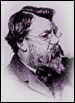
Emanuel Gottlieb Leutze Giclée Fine Art Prints
1816-1868
German Romanticism Painter
On the night of 5 September 1942, Allied bombs fell on Bremen and destroyed a painting made to celebrate liberty. It was the first version of Washington Crossing the Delaware. Its author, Emanuel Gottlieb Leutze (24 May 1816 - 18 July 1868), had conceived it as an argument rather than an ornament. German by birth and American by formation, he became the most widely reproduced history painter of nineteenth-century America. He made his name from a studio on the Rhine.
Schwäbisch Gmünd, in the Kingdom of Württemberg, was his birthplace; Philadelphia made him a painter. The family crossed the Atlantic in 1825, settling first in Fredericksburg, Virginia, and then in Pennsylvania. Drawing came to him beside a sickbed. Sitting with his ailing father through long hours of waiting, the boy filled the time with pencil and paper, and the habit held. His father died in 1831. At fourteen he was painting portraits for five dollars apiece and keeping himself alive on the proceeds. Formal instruction arrived in 1834, in the Philadelphia classes of the portraitist John Rubens Smith, and progress was quick. Emboldened, the young man proposed a published series of portraits of eminent American statesmen. Washington showed little interest. Early rejection can be clarifying.
By 1840 one canvas had found admirers and brought commissions enough to pay for a passage back to Germany. He enrolled at the Kunstakademie Düsseldorf, then under the directorship of Friedrich Wilhelm von Schadow, and lasted a single year. Academic drill sat badly with him. The Düsseldorf school's method of tight drawing, high finish and narrative clarity suited him even when its teaching did not. The decisive example was Karl Friedrich Lessing, whose historical subjects carried a distinctly political charge. Columbus before the Council of Salamanca, finished in 1841, went to the Düsseldorf Art Union. Its companion, Columbus in Chains, took the gold medal at the Brussels Art Exhibition and entered the collection of the Art Union in New York. Decades later it was engraved for the two-dollar Columbian Issue stamp of 1893.
Munich followed in 1842, with its lessons from Peter von Cornelius and Wilhelm von Kaulbach, and there he completed Columbus before the Queen. Venice and Rome came the next year. Studying Titian, he learned what warm glazes can do to flesh; studying Michelangelo, he learned how much a body can be asked to carry. He returned to Düsseldorf in 1845, married Juliane Lottner, and stayed for fourteen years.
Those years made him something more than a painter. Americans arriving in the Rhineland found in Leutze a fixer, a host and, when necessary, a banker. He located studios and lodgings, wrote introductions and quietly lent money. He presided over the Düsseldorf Artists' Association for years. In 1848 he was among the earliest promoters of the Malkasten. His call for a general gathering of artists in 1857 led to the founding of the Allgemeine deutsche Kunstgenossenschaft.
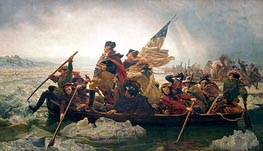
Then came 1848 itself, and the collapse of liberal hope across Europe. Leutze's response was neither a pamphlet nor a barricade but a large canvas holding up the American Revolution as encouragement to reformers. American tourists and art students posed for it in his studio. The first version, finished in 1850, was damaged by fire almost as soon as it was done, then restored and acquired by the Kunsthalle Bremen. There it remained until the bombs of 1942. A larger replica was ordered in 1850 by the Parisian dealer Adolphe Goupil for his New York branch. It went on view on Broadway in October 1851 and now hangs in the Metropolitan Museum of Art. In this work we see ice water, a crowded boat and a standing general whose posture no rower would tolerate. It is not reportage. It is rhetoric, built on diagonals, with a cold dawn light that keeps the whole improbable arrangement legible.
Commissions followed the fame. Washington Rallying the Troops at Monmouth, completed in 1854, was ordered by the New York banker David Leavitt. In 1859 the artist came home for good, opening a studio in New York City and dividing his time with Washington. That same year he painted Chief Justice Roger Brooke Taney, two years after the Dred Scott decision. The portrait, now at Harvard Law School, sets a figure in black against a shadowed red armchair. The chiaroscuro is severe, the hands slack, the gaze level and unhappy. Justice Antonin Scalia, writing in 1992, read disillusionment in that face - a rare instance of a sitting judge reviewing a painting from the bench. Leutze also portrayed the painter William Morris Hunt, a canvas later shown at the Museum of Fine Arts, Boston, in 1878.
The Capitol commission arrived in 1860. For a stairway in the House wing, Emanuel Gottlieb Leutze painted Westward the Course of Empire Takes Its Way, universally shortened to Westward Ho! He worked in stereochromy, the water-glass mural technique then thought to promise permanence. Election to the National Academy of Design came late, as did membership of the Union League Club of New York. The club still holds several of his pictures.
Heat killed him. On 18 July 1868, at fifty-two, he died of heat stroke in Washington and was buried at Glenwood Cemetery. A canvas titled The Emancipation of the Slaves stood unfinished in the studio. Perhaps the boy who once drew beside a dying man never quite stopped believing that a picture could hold something in place. Reputation has swung hard since: adoration, then the charge of bombast, then reconsideration. What the reconsideration sees is a German liberal who took an American myth seriously because he needed it to be true. Washington Crossing the Delaware remains among the most parodied images in the country it flatters, which is its own kind of survival. What endures in Leutze is the conviction that painting could argue with history, and occasionally win.
Schwäbisch Gmünd, in the Kingdom of Württemberg, was his birthplace; Philadelphia made him a painter. The family crossed the Atlantic in 1825, settling first in Fredericksburg, Virginia, and then in Pennsylvania. Drawing came to him beside a sickbed. Sitting with his ailing father through long hours of waiting, the boy filled the time with pencil and paper, and the habit held. His father died in 1831. At fourteen he was painting portraits for five dollars apiece and keeping himself alive on the proceeds. Formal instruction arrived in 1834, in the Philadelphia classes of the portraitist John Rubens Smith, and progress was quick. Emboldened, the young man proposed a published series of portraits of eminent American statesmen. Washington showed little interest. Early rejection can be clarifying.
By 1840 one canvas had found admirers and brought commissions enough to pay for a passage back to Germany. He enrolled at the Kunstakademie Düsseldorf, then under the directorship of Friedrich Wilhelm von Schadow, and lasted a single year. Academic drill sat badly with him. The Düsseldorf school's method of tight drawing, high finish and narrative clarity suited him even when its teaching did not. The decisive example was Karl Friedrich Lessing, whose historical subjects carried a distinctly political charge. Columbus before the Council of Salamanca, finished in 1841, went to the Düsseldorf Art Union. Its companion, Columbus in Chains, took the gold medal at the Brussels Art Exhibition and entered the collection of the Art Union in New York. Decades later it was engraved for the two-dollar Columbian Issue stamp of 1893.
Munich followed in 1842, with its lessons from Peter von Cornelius and Wilhelm von Kaulbach, and there he completed Columbus before the Queen. Venice and Rome came the next year. Studying Titian, he learned what warm glazes can do to flesh; studying Michelangelo, he learned how much a body can be asked to carry. He returned to Düsseldorf in 1845, married Juliane Lottner, and stayed for fourteen years.
Those years made him something more than a painter. Americans arriving in the Rhineland found in Leutze a fixer, a host and, when necessary, a banker. He located studios and lodgings, wrote introductions and quietly lent money. He presided over the Düsseldorf Artists' Association for years. In 1848 he was among the earliest promoters of the Malkasten. His call for a general gathering of artists in 1857 led to the founding of the Allgemeine deutsche Kunstgenossenschaft.
Then came 1848 itself, and the collapse of liberal hope across Europe. Leutze's response was neither a pamphlet nor a barricade but a large canvas holding up the American Revolution as encouragement to reformers. American tourists and art students posed for it in his studio. The first version, finished in 1850, was damaged by fire almost as soon as it was done, then restored and acquired by the Kunsthalle Bremen. There it remained until the bombs of 1942. A larger replica was ordered in 1850 by the Parisian dealer Adolphe Goupil for his New York branch. It went on view on Broadway in October 1851 and now hangs in the Metropolitan Museum of Art. In this work we see ice water, a crowded boat and a standing general whose posture no rower would tolerate. It is not reportage. It is rhetoric, built on diagonals, with a cold dawn light that keeps the whole improbable arrangement legible.
Commissions followed the fame. Washington Rallying the Troops at Monmouth, completed in 1854, was ordered by the New York banker David Leavitt. In 1859 the artist came home for good, opening a studio in New York City and dividing his time with Washington. That same year he painted Chief Justice Roger Brooke Taney, two years after the Dred Scott decision. The portrait, now at Harvard Law School, sets a figure in black against a shadowed red armchair. The chiaroscuro is severe, the hands slack, the gaze level and unhappy. Justice Antonin Scalia, writing in 1992, read disillusionment in that face - a rare instance of a sitting judge reviewing a painting from the bench. Leutze also portrayed the painter William Morris Hunt, a canvas later shown at the Museum of Fine Arts, Boston, in 1878.
The Capitol commission arrived in 1860. For a stairway in the House wing, Emanuel Gottlieb Leutze painted Westward the Course of Empire Takes Its Way, universally shortened to Westward Ho! He worked in stereochromy, the water-glass mural technique then thought to promise permanence. Election to the National Academy of Design came late, as did membership of the Union League Club of New York. The club still holds several of his pictures.
Heat killed him. On 18 July 1868, at fifty-two, he died of heat stroke in Washington and was buried at Glenwood Cemetery. A canvas titled The Emancipation of the Slaves stood unfinished in the studio. Perhaps the boy who once drew beside a dying man never quite stopped believing that a picture could hold something in place. Reputation has swung hard since: adoration, then the charge of bombast, then reconsideration. What the reconsideration sees is a German liberal who took an American myth seriously because he needed it to be true. Washington Crossing the Delaware remains among the most parodied images in the country it flatters, which is its own kind of survival. What endures in Leutze is the conviction that painting could argue with history, and occasionally win.
14 Leutze Artworks
Giclée Canvas Print
$63.41
$63.41
SKU: 4663-EGL
Emanuel Gottlieb Leutze
Original Size:378.5 x 647.7 cm
Metropolitan Museum of Art, New York, USA
Emanuel Gottlieb Leutze
Original Size:378.5 x 647.7 cm
Metropolitan Museum of Art, New York, USA
Giclée Canvas Print
$76.88
$76.88
SKU: 4664-EGL
Emanuel Gottlieb Leutze
Original Size:81.3 x 101.6 cm
Los Angeles County Museum of Art, California, USA
Emanuel Gottlieb Leutze
Original Size:81.3 x 101.6 cm
Los Angeles County Museum of Art, California, USA
Giclée Canvas Print
$72.33
$72.33
SKU: 22983-EGL
Emanuel Gottlieb Leutze
Original Size:79.1 x 60 cm
Chrysler Museum of Art, Norfolk, USA
Emanuel Gottlieb Leutze
Original Size:79.1 x 60 cm
Chrysler Museum of Art, Norfolk, USA
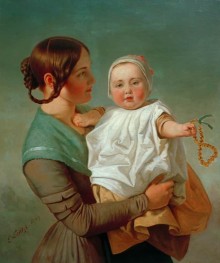
Giclée Canvas Print
$80.55
$80.55
SKU: 22981-EGL
Emanuel Gottlieb Leutze
Original Size:91 x 77 cm
Public Collection
Emanuel Gottlieb Leutze
Original Size:91 x 77 cm
Public Collection
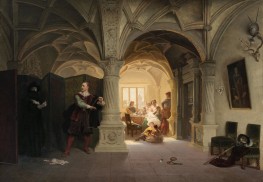
Giclée Canvas Print
$66.92
$66.92
SKU: 22977-EGL
Emanuel Gottlieb Leutze
Original Size:79.3 x 114.9 cm
Fogg Art Museum at Harvard University, Massachusetts, USA
Emanuel Gottlieb Leutze
Original Size:79.3 x 114.9 cm
Fogg Art Museum at Harvard University, Massachusetts, USA
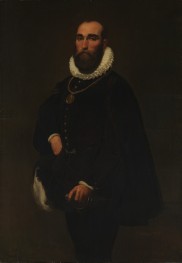
Giclée Canvas Print
$66.74
$66.74
SKU: 22978-EGL
Emanuel Gottlieb Leutze
Original Size:129.2 x 102.9 cm
Metropolitan Museum of Art, New York, USA
Emanuel Gottlieb Leutze
Original Size:129.2 x 102.9 cm
Metropolitan Museum of Art, New York, USA
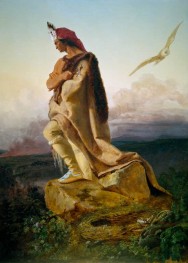
Giclée Canvas Print
$68.84
$68.84
SKU: 22987-EGL
Emanuel Gottlieb Leutze
Original Size:98 x 65 cm
Private Collection
Emanuel Gottlieb Leutze
Original Size:98 x 65 cm
Private Collection
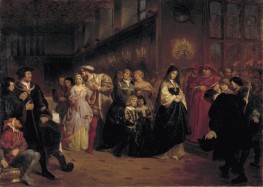
Giclée Canvas Print
$68.49
$68.49
SKU: 22979-EGL
Emanuel Gottlieb Leutze
Original Size:72.4 x 101.8 cm
Smithsonian American Art Museum, Washington, USA
Emanuel Gottlieb Leutze
Original Size:72.4 x 101.8 cm
Smithsonian American Art Museum, Washington, USA
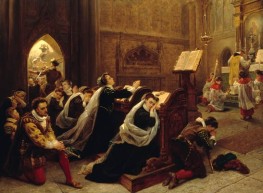
Giclée Canvas Print
$70.59
$70.59
SKU: 22984-EGL
Emanuel Gottlieb Leutze
Original Size:102 x 131.5 cm
Public Collection
Emanuel Gottlieb Leutze
Original Size:102 x 131.5 cm
Public Collection
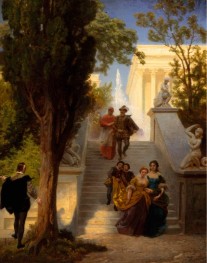
Giclée Canvas Print
$76.00
$76.00
SKU: 22985-EGL
Emanuel Gottlieb Leutze
Original Size:82 x 65 cm
Private Collection
Emanuel Gottlieb Leutze
Original Size:82 x 65 cm
Private Collection
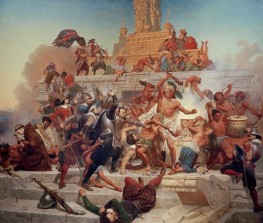
Giclée Canvas Print
$81.59
$81.59
SKU: 22986-EGL
Emanuel Gottlieb Leutze
Original Size:215.3 x 250.8 cm
Wadsworth Atheneum, Hartford, USA
Emanuel Gottlieb Leutze
Original Size:215.3 x 250.8 cm
Wadsworth Atheneum, Hartford, USA
Giclée Canvas Print
$64.30
$64.30
SKU: 22982-EGL
Emanuel Gottlieb Leutze
Original Size:unknown
Public Collection
Emanuel Gottlieb Leutze
Original Size:unknown
Public Collection
Giclée Canvas Print
$80.37
$80.37
SKU: 22980-EGL
Emanuel Gottlieb Leutze
Original Size:76.2 x 64.1 cm
Philadelphia Museum of Art, Pennsylvania, USA
Emanuel Gottlieb Leutze
Original Size:76.2 x 64.1 cm
Philadelphia Museum of Art, Pennsylvania, USA
Giclée Canvas Print
$63.41
$63.41
SKU: 4666-EGL
Emanuel Gottlieb Leutze
Original Size:37.5 x 29.5 cm
Reynolda House Museum of American Art, North Carolina, USA
Emanuel Gottlieb Leutze
Original Size:37.5 x 29.5 cm
Reynolda House Museum of American Art, North Carolina, USA