
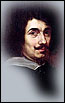
Claude Lorrain Giclée Fine Art Prints 1 of 4
c.1602-1682
French Baroque Painter
Look straight into the sun in a seventeenth-century painting and the chances are you are standing in front of a Claude. Until his generation, landscape painters lit their scenes from a source kept prudently outside the frame; he set the disc itself low over the water and let the glare eat into masts, mooring posts and the edges of buildings. Claude Lorrain - born Claude Gellée in the Duchy of Lorraine, died in Rome on 23 November 1682 - remains the presiding intelligence of the ideal landscape, a French painter whose entire working life belonged to Italy. Catalogues once filed him under the Roman School, and they were not wrong to do so.
Even his dates are contested. The tombstone says 1600; documents from his own lifetime point to 1604 or 1605. He was born at Chamagne in the Vosges, third of five sons of Jean Gellée and Anne Padose, and the two early accounts of what followed do not agree. Joachim von Sandrart, writing in 1675, had known the young man and shared his lodgings; Filippo Baldinucci, gathering material half a century later, relied largely on the artist's nephew. Baldinucci has him orphaned at twelve and sent to an elder brother at Freiburg, a specialist in inlay work who taught him to draw. Sandrart tells a homelier story - a poor pupil apprenticed to a pastry cook, travelling south with a company of bakers from a duchy famous for its pâtisserie, and taken into the Roman household of Agostino Tassi as a servant. The kitchen, in that account, led to the studio. Scholars now generally accept an apprenticeship under the obscure Goffredo Wals in Naples around 1620, followed by three years with Tassi.
Tassi ran a large workshop specialising in fresco decoration, and there Claude learned to compose on a wall-sized scale. In 1625 he went north again to paint backgrounds for Claude Deruet on a fresco cycle now lost; the arrangement did not last, and by 1627 he was back in Rome for good. He took a house in the Via Margutta, below the Trinità dei Monti, and never afterwards lived more than a few streets from it. Marseille, Genoa, Venice and Bavaria passed before his eyes along the way. What he brought home was a habit rather than a repertoire: Sandrart describes him out in the Campagna at first light and again at dusk, making oil studies from the motif - a practice rare enough at the time to be worth recording. Landscape with Cattle and Peasants of 1629, the earliest dated canvas and now in the Philadelphia Museum of Art, already shows a painter who has solved most of his problems.
Recognition came fast. The French ambassador in Rome commissioned work in 1633, Philip IV of Spain in 1634 and 1635, and Cardinal Guido Bentivoglio, delighted with two landscapes, put the name before Urban VIII; four papal pictures followed between 1635 and 1638, two of them small panels on copper. By the end of the decade no landscapist in Italy commanded higher fees. Seaport at Sunset of 1639, in the Louvre, shows the formula at its most seductive: a colonnade to one side, shipping in silhouette, and a whole harbour swimming in light that seems to arrive from an immense distance.
Around 1636 he began the document known as the Liber Veritatis, the Book of Truth. As each picture left the studio he recorded it in pen and brown wash, writing the purchaser's name on the reverse. One hundred and ninety-five sheets survive, bound, in the British Museum: the fullest account any painter of the period kept of his own output, and a working archive rather than an album for visitors. Drawing was in any case his first language. He filled sketchbooks at Tivoli and in the Campagna, laid wash over black chalk, heightened sheets with white, and produced more than forty etchings, most of them before 1642. Of the frescoes that first made his reputation, almost nothing survives.
Lorrain built his pictures geometrically before he lit them: a scaffolding of median and diagonal lines onto which trees, temples and open air were fitted in careful equilibrium. The architecture is largely invented, assembled from the Villa Farnesina, the Palazzo Senatorio and half-remembered ruins, without Poussin's archaeological scruple. Anachronism did not trouble him - Aeneas comes ashore past merchantmen of the 1640s. His figures, everyone agrees, were the weak point; Roger Fry called them notoriously feeble, and Baldinucci records the painter's own joke that he sold the landscape and gave the staffage away. In the last works they grow implausibly elongated. The light, though, never falters. The Embarkation of the Queen of Sheba of 1648, in the National Gallery, made departure itself a subject; the Worship of the Golden Calf of 1653 in Karlsruhe and the Dresden Coastal Landscape with Acis and Galatea of 1657 show how readily the same structure absorbed scripture and myth.
Of the man we know less than we would wish. In 1650 he moved to the Via Paolina, today the Via del Babuino, and remained there. He never married. In 1658 he adopted an orphan girl, Agnese, quite possibly his own daughter by a servant of that name; two nephews joined the household in 1662 and around 1680. Gout troubled him for years, and an illness in 1663 was serious enough to prompt a will. After 1670 he painted seldom and slowly: Coast View with Perseus and the Origin of Coral in 1674 for Cardinal Camillo Massimo, and for Prince Lorenzo Onofrio Colonna the last canvas of all, Landscape with Ascanius Shooting the Stag of Sylvia, finished in the year he died and now in the Ashmolean Museum. He died at home on 23 November 1682 and was buried at the Trinità dei Monti; in 1840 his remains were moved to San Luigi dei Francesi. The inventory found four of his own paintings in the house - and nearly all of his drawings. Perhaps he understood which of the two kept him honest.
Posterity claimed him in an accent he never heard. English collectors bought Claude Lorrain in bulk through the eighteenth century, until British houses held a share of his output out of all proportion to his Italian patronage, and tourists carried tinted convex mirrors - Claude glasses - into the Lake District to make real scenery behave like his pictures. Constable thought him the most perfect landscape painter the world ever saw. Turner went further, leaving two of his own canvases to the National Gallery on condition that they hang beside two Claudes, a wager still on view. Dostoevsky pressed him into service too: in Demons, Stavrogin describes the Dresden Acis and Galatea as a vision of the golden age and wakes with his eyes full of tears. Gellée painted a world in which the light is always slightly better than the one we woke up in, and in which the road out of the foreground is always open. We are still walking down it.
Even his dates are contested. The tombstone says 1600; documents from his own lifetime point to 1604 or 1605. He was born at Chamagne in the Vosges, third of five sons of Jean Gellée and Anne Padose, and the two early accounts of what followed do not agree. Joachim von Sandrart, writing in 1675, had known the young man and shared his lodgings; Filippo Baldinucci, gathering material half a century later, relied largely on the artist's nephew. Baldinucci has him orphaned at twelve and sent to an elder brother at Freiburg, a specialist in inlay work who taught him to draw. Sandrart tells a homelier story - a poor pupil apprenticed to a pastry cook, travelling south with a company of bakers from a duchy famous for its pâtisserie, and taken into the Roman household of Agostino Tassi as a servant. The kitchen, in that account, led to the studio. Scholars now generally accept an apprenticeship under the obscure Goffredo Wals in Naples around 1620, followed by three years with Tassi.
Tassi ran a large workshop specialising in fresco decoration, and there Claude learned to compose on a wall-sized scale. In 1625 he went north again to paint backgrounds for Claude Deruet on a fresco cycle now lost; the arrangement did not last, and by 1627 he was back in Rome for good. He took a house in the Via Margutta, below the Trinità dei Monti, and never afterwards lived more than a few streets from it. Marseille, Genoa, Venice and Bavaria passed before his eyes along the way. What he brought home was a habit rather than a repertoire: Sandrart describes him out in the Campagna at first light and again at dusk, making oil studies from the motif - a practice rare enough at the time to be worth recording. Landscape with Cattle and Peasants of 1629, the earliest dated canvas and now in the Philadelphia Museum of Art, already shows a painter who has solved most of his problems.
Recognition came fast. The French ambassador in Rome commissioned work in 1633, Philip IV of Spain in 1634 and 1635, and Cardinal Guido Bentivoglio, delighted with two landscapes, put the name before Urban VIII; four papal pictures followed between 1635 and 1638, two of them small panels on copper. By the end of the decade no landscapist in Italy commanded higher fees. Seaport at Sunset of 1639, in the Louvre, shows the formula at its most seductive: a colonnade to one side, shipping in silhouette, and a whole harbour swimming in light that seems to arrive from an immense distance.
Around 1636 he began the document known as the Liber Veritatis, the Book of Truth. As each picture left the studio he recorded it in pen and brown wash, writing the purchaser's name on the reverse. One hundred and ninety-five sheets survive, bound, in the British Museum: the fullest account any painter of the period kept of his own output, and a working archive rather than an album for visitors. Drawing was in any case his first language. He filled sketchbooks at Tivoli and in the Campagna, laid wash over black chalk, heightened sheets with white, and produced more than forty etchings, most of them before 1642. Of the frescoes that first made his reputation, almost nothing survives.
Lorrain built his pictures geometrically before he lit them: a scaffolding of median and diagonal lines onto which trees, temples and open air were fitted in careful equilibrium. The architecture is largely invented, assembled from the Villa Farnesina, the Palazzo Senatorio and half-remembered ruins, without Poussin's archaeological scruple. Anachronism did not trouble him - Aeneas comes ashore past merchantmen of the 1640s. His figures, everyone agrees, were the weak point; Roger Fry called them notoriously feeble, and Baldinucci records the painter's own joke that he sold the landscape and gave the staffage away. In the last works they grow implausibly elongated. The light, though, never falters. The Embarkation of the Queen of Sheba of 1648, in the National Gallery, made departure itself a subject; the Worship of the Golden Calf of 1653 in Karlsruhe and the Dresden Coastal Landscape with Acis and Galatea of 1657 show how readily the same structure absorbed scripture and myth.
Of the man we know less than we would wish. In 1650 he moved to the Via Paolina, today the Via del Babuino, and remained there. He never married. In 1658 he adopted an orphan girl, Agnese, quite possibly his own daughter by a servant of that name; two nephews joined the household in 1662 and around 1680. Gout troubled him for years, and an illness in 1663 was serious enough to prompt a will. After 1670 he painted seldom and slowly: Coast View with Perseus and the Origin of Coral in 1674 for Cardinal Camillo Massimo, and for Prince Lorenzo Onofrio Colonna the last canvas of all, Landscape with Ascanius Shooting the Stag of Sylvia, finished in the year he died and now in the Ashmolean Museum. He died at home on 23 November 1682 and was buried at the Trinità dei Monti; in 1840 his remains were moved to San Luigi dei Francesi. The inventory found four of his own paintings in the house - and nearly all of his drawings. Perhaps he understood which of the two kept him honest.
Posterity claimed him in an accent he never heard. English collectors bought Claude Lorrain in bulk through the eighteenth century, until British houses held a share of his output out of all proportion to his Italian patronage, and tourists carried tinted convex mirrors - Claude glasses - into the Lake District to make real scenery behave like his pictures. Constable thought him the most perfect landscape painter the world ever saw. Turner went further, leaving two of his own canvases to the National Gallery on condition that they hang beside two Claudes, a wager still on view. Dostoevsky pressed him into service too: in Demons, Stavrogin describes the Dresden Acis and Galatea as a vision of the golden age and wakes with his eyes full of tears. Gellée painted a world in which the light is always slightly better than the one we woke up in, and in which the road out of the foreground is always open. We are still walking down it.
91 Claude Lorrain Artworks
Page 1 of 4
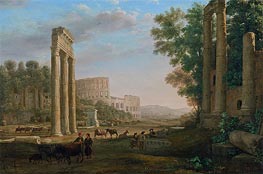
Giclée Canvas Print
$63.60
$63.60
SKU: 15533-LOC
Claude Lorrain
Original Size:79.7 x 118.8 cm
Art Gallery of South Australia, Adelaide, Australia
Claude Lorrain
Original Size:79.7 x 118.8 cm
Art Gallery of South Australia, Adelaide, Australia
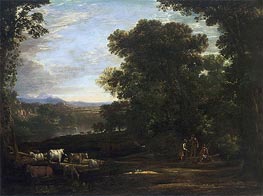
Giclée Canvas Print
$71.63
$71.63
SKU: 15505-LOC
Claude Lorrain
Original Size:106.7 x 148.6 cm
Philadelphia Museum of Art, Pennsylvania, USA
Claude Lorrain
Original Size:106.7 x 148.6 cm
Philadelphia Museum of Art, Pennsylvania, USA
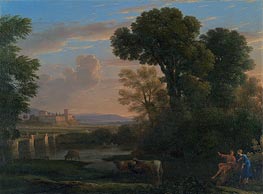
Giclée Canvas Print
$66.71
$66.71
SKU: 15513-LOC
Claude Lorrain
Original Size:39.4 x 53.3 cm
Yale University Art Gallery, Connecticut, USA
Claude Lorrain
Original Size:39.4 x 53.3 cm
Yale University Art Gallery, Connecticut, USA
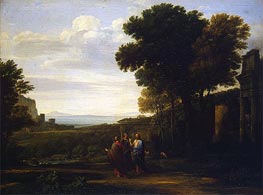
Giclée Canvas Print
$63.41
$63.41
SKU: 15544-LOC
Claude Lorrain
Original Size:99 x 132 cm
State Hermitage Museum, St. Petersburg, Russia
Claude Lorrain
Original Size:99 x 132 cm
State Hermitage Museum, St. Petersburg, Russia
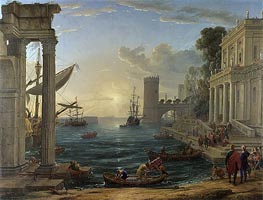
Giclée Canvas Print
$72.86
$72.86
SKU: 15517-LOC
Claude Lorrain
Original Size:149 x 196.7 cm
National Gallery, London, UK
Claude Lorrain
Original Size:149 x 196.7 cm
National Gallery, London, UK
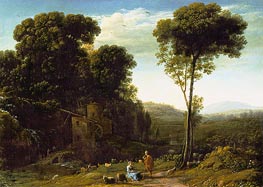
Giclée Canvas Print
$68.32
$68.32
SKU: 15560-LOC
Claude Lorrain
Original Size:59 x 83 cm
Los Angeles County Museum of Art, California, USA
Claude Lorrain
Original Size:59 x 83 cm
Los Angeles County Museum of Art, California, USA
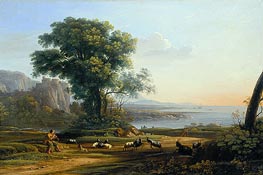
Giclée Canvas Print
$63.77
$63.77
SKU: 15496-LOC
Claude Lorrain
Original Size:74 x 110 cm
Galleria Sabauda, Turin, Italy
Claude Lorrain
Original Size:74 x 110 cm
Galleria Sabauda, Turin, Italy
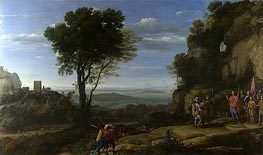
Giclée Canvas Print
$63.41
$63.41
SKU: 15526-LOC
Claude Lorrain
Original Size:111.4 x 186.5 cm
National Gallery, London, UK
Claude Lorrain
Original Size:111.4 x 186.5 cm
National Gallery, London, UK
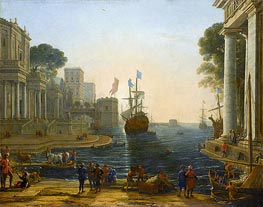
Giclée Canvas Print
$75.65
$75.65
SKU: 15510-LOC
Claude Lorrain
Original Size:119 x 150 cm
Louvre Museum, Paris, France
Claude Lorrain
Original Size:119 x 150 cm
Louvre Museum, Paris, France
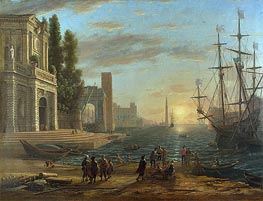
Giclée Canvas Print
$73.56
$73.56
SKU: 15516-LOC
Claude Lorrain
Original Size:103 x 131 cm
National Gallery, London, UK
Claude Lorrain
Original Size:103 x 131 cm
National Gallery, London, UK
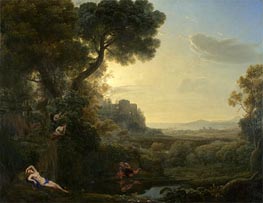
Giclée Canvas Print
$74.08
$74.08
SKU: 15522-LOC
Claude Lorrain
Original Size:94.6 x 118.7 cm
National Gallery, London, UK
Claude Lorrain
Original Size:94.6 x 118.7 cm
National Gallery, London, UK
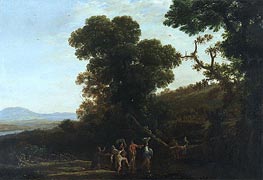
Giclée Canvas Print
$65.69
$65.69
SKU: 15534-LOC
Claude Lorrain
Original Size:63 x 90.5 cm
Museum Boijmans Van Beuningen, Rotterdam, Netherlands
Claude Lorrain
Original Size:63 x 90.5 cm
Museum Boijmans Van Beuningen, Rotterdam, Netherlands
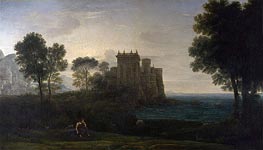
Giclée Canvas Print
$63.41
$63.41
SKU: 15523-LOC
Claude Lorrain
Original Size:87 x 151.3 cm
National Gallery, London, UK
Claude Lorrain
Original Size:87 x 151.3 cm
National Gallery, London, UK
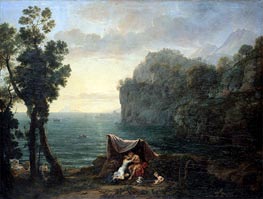
Giclée Canvas Print
$73.03
$73.03
SKU: 15530-LOC
Claude Lorrain
Original Size:102.5 x 136 cm
Gemaldegalerie Alte Meister, Dresden, Germany
Claude Lorrain
Original Size:102.5 x 136 cm
Gemaldegalerie Alte Meister, Dresden, Germany
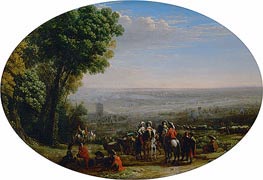
Giclée Canvas Print
$63.41
$63.41
SKU: 15487-LOC
Claude Lorrain
Original Size:28 x 42 cm
Louvre Museum, Paris, France
Claude Lorrain
Original Size:28 x 42 cm
Louvre Museum, Paris, France
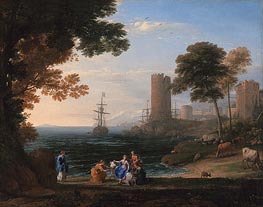
Giclée Canvas Print
$75.48
$75.48
SKU: 15536-LOC
Claude Lorrain
Original Size:96.2 x 167.6 cm
J. Paul Getty Museum, Los Angeles, USA
Claude Lorrain
Original Size:96.2 x 167.6 cm
J. Paul Getty Museum, Los Angeles, USA
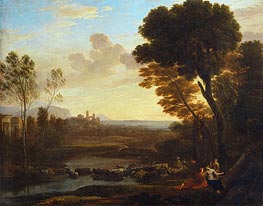
Giclée Canvas Print
$75.30
$75.30
SKU: 15480-LOC
Claude Lorrain
Original Size:118 x 150 cm
Louvre Museum, Paris, France
Claude Lorrain
Original Size:118 x 150 cm
Louvre Museum, Paris, France
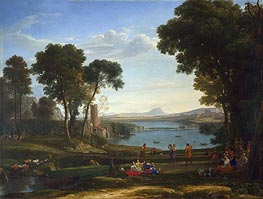
Giclée Canvas Print
$72.51
$72.51
SKU: 15520-LOC
Claude Lorrain
Original Size:152.3 x 200.6 cm
National Gallery, London, UK
Claude Lorrain
Original Size:152.3 x 200.6 cm
National Gallery, London, UK
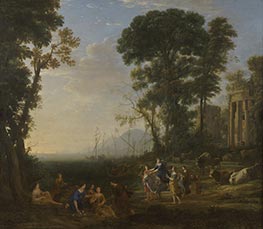
Giclée Canvas Print
$83.69
$83.69
SKU: 17699-LOC
Claude Lorrain
Original Size:170.8 x 199.7 cm
Kimbell Art Museum, Fort Worth, USA
Claude Lorrain
Original Size:170.8 x 199.7 cm
Kimbell Art Museum, Fort Worth, USA
Giclée Canvas Print
$64.47
$64.47
SKU: 15483-LOC
Claude Lorrain
Original Size:38.7 x 58 cm
Metropolitan Museum of Art, New York, USA
Claude Lorrain
Original Size:38.7 x 58 cm
Metropolitan Museum of Art, New York, USA
Giclée Canvas Print
$72.16
$72.16
SKU: 15508-LOC
Claude Lorrain
Original Size:71.2 x 95 cm
The Clark Art Institute, Massachusetts, USA
Claude Lorrain
Original Size:71.2 x 95 cm
The Clark Art Institute, Massachusetts, USA
Giclée Canvas Print
$64.30
$64.30
SKU: 15495-LOC
Claude Lorrain
Original Size:212 x 145 cm
Prado Museum, Madrid, Spain
Claude Lorrain
Original Size:212 x 145 cm
Prado Museum, Madrid, Spain
Giclée Canvas Print
$63.41
$63.41
SKU: 15537-LOC
Claude Lorrain
Original Size:50.5 x 39 cm
Dulwich Picture Gallery, London, UK
Claude Lorrain
Original Size:50.5 x 39 cm
Dulwich Picture Gallery, London, UK
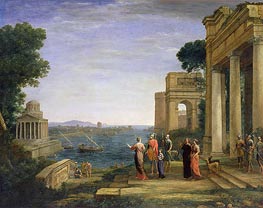
Giclée Canvas Print
$76.00
$76.00
SKU: 15565-LOC
Claude Lorrain
Original Size:120 x 149.2 cm
Hamburger Kunsthalle, Hamburg, Germany
Claude Lorrain
Original Size:120 x 149.2 cm
Hamburger Kunsthalle, Hamburg, Germany