Portrait Art Prints

Portrait Paintings - Art History of the Genre

Portraits are paintings that record the likeness and character of a particular person, commissioned by states, families and friends or painted out of admiration and affection. Sitters may appear full-length, half-length, head and shoulders or as a head alone, seen full face, in profile or in three-quarter view, which falls between the two. The genre includes single and double portraits, family and group pictures, equestrian portraits, self-portraits, donor figures in altarpieces and tiny miniatures. Academies ranked it second only to history painting, and for centuries it served mainly the rich and powerful, until middle-class patrons began to commission likenesses of their families.

Greek painted portraits are known only from writers, but the Fayum mummy portraits from Roman Egypt, made between the 2nd and 4th centuries AD, survived in the dry desert: frontal faces with large dark eyes, painted in hot wax or tempera on wooden panels and bound into the mummy wrappings. Pliny the Elder already lamented that the art of the true likeness had died out in Rome. Early medieval portraits were mostly donor figures with little attempt at resemblance, and secular sitters returned to panel painting only around 1400, as in the Wilton Diptych (about 1400, National Gallery, London), where Richard II of England kneels before the Virgin and Child.

In the 15th-century Netherlands Jan van Eyck, Robert Campin and Rogier van der Weyden used the new oil technique for small, minutely observed panels of courtiers and wealthy townspeople. Van Eyck’s Arnolfini Portrait (1434, National Gallery, London) is an early full-length portrait of a couple in their room. Italian patrons first preferred strict profiles modeled on ancient medals, as in Piero della Francesca’s portraits of Federico da Montefeltro and his wife (about 1473-1475, Uffizi, Florence). Leonardo da Vinci’s Ginevra de’ Benci (about 1474-1478, National Gallery of Art, Washington) is one of the first Italian three-quarter views. In the Mona Lisa (begun about 1503, Louvre) he gave the face a subtle asymmetry, and his notebooks recommend the soft relief of a face seen in the doorway of a dark room.

In the 16th century portraits grew larger and grander. Albrecht Dürer drew himself from the age of thirteen and in his Self-Portrait of 1500 (Alte Pinakothek, Munich) faced the viewer frontally like an icon. Hans Holbein the Younger drew a sitter’s face from life and finished the painting without him, reaching near-photographic realism in Sir Thomas More (1527, Frick Collection, New York) and later in his portraits of Henry VIII. Titian varied the poses of kings and emperors, set Charles V on horseback in a seminal equestrian portrait (1548, Prado, Madrid) and was perhaps the first great painter of children. Bronzino portrayed the Medici in cool, enameled finery, and Sofonisba Anguissola of Cremona gave her portraits new complexity.

Baroque courts used portraits to display power. Charles I of England knighted Anthony van Dyck as his court painter, and van Dyck’s Charles I in Three Positions (1635-1636, Royal Collection) shows the king’s head from three angles. In the Dutch Republic, where the Calvinist church commissioned no images and an aristocracy hardly existed, civic guards and guilds ordered group portraits. Frans Hals enlivened them with fluid, vivid brushwork, and Rembrandt lit a dissection in The Anatomy Lesson of Dr. Nicolaes Tulp (1632, Mauritshuis, The Hague), the first painting to bear his full signature, before The Night Watch (1642, Rijksmuseum, Amsterdam). He also left dozens of searching self-portraits. In Diego Velázquez’s Las Meninas (1656, Prado) the king and queen appear only in a mirror.

In 18th-century Britain Joshua Reynolds and Thomas Gainsborough founded a native school. Reynolds offered sitters a flattering likeness and left much of the work to assistants, while Gainsborough painted nearly everything himself, using long brushes and thin paint for the shimmering satin of The Blue Boy (about 1770, Huntington Library, San Marino). Women portraitists rose to prominence, among them Élisabeth Vigée Le Brun, the Venetian pastellist Rosalba Carriera and Angelica Kauffman. Tiny miniatures, set in gold or enamel lockets, were treasured until photography. In America John Singleton Copley painted Paul Revere in shirtsleeves at his workbench (Museum of Fine Arts, Boston), and Gilbert Stuart produced over 1,000 portraits, including more than 100 replicas of George Washington.

Neoclassical painters favored clear light and sculptural form: Jacques-Louis David’s Madame Récamier (1800, Louvre) was admired in exhibitions yet rejected by its sitter, and Jean-Auguste-Dominique Ingres set Napoleon on his Imperial Throne (1806, Musée de l’Armée, Paris). Francisco de Goya painted the royal family with unsparing candor in Charles IV of Spain and His Family (1800-1801, Prado). After photography arrived in 1839 it took over cheap likenesses, and painters sought effects the camera could not give. James McNeill Whistler turned his mother into a harmony of tones in Arrangement in Grey and Black No. 1 (1871, Musée d’Orsay). John Singer Sargent, the most successful society portraitist of his age, caused a scandal at the 1884 Salon with the bare-shouldered Madame X (Metropolitan Museum of Art, New York).

Twentieth-century painters bent the likeness to new ends: Henri Matisse divided his wife’s face with a green stripe in The Green Stripe (1905, Statens Museum for Kunst, Copenhagen), Pablo Picasso broke his dealer into Cubist facets in Portrait of Daniel-Henry Kahnweiler (1910, Art Institute of Chicago), and Amedeo Modigliani reduced eyes to dark almonds. From the 1960s Lucian Freud and Francis Bacon revived the painted portrait. When looking at a portrait, watch the eyes and eyebrows, which carry most of the expression because mouths rarely smile, and the slight asymmetry that keeps a face alive. Clothes, objects and backgrounds signal rank, profession or faith, and a right-handed painter in a self-portrait often seems to hold the brush in the left hand, because a mirror was used.

Page 1 of 187
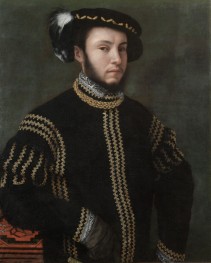
Moretto da Brescia
Canvas Print
$75.98
SKU: 23620-BMD
Original Size:67.8 x 83.8 cm
Lechi Museum, Montichiari, Italy
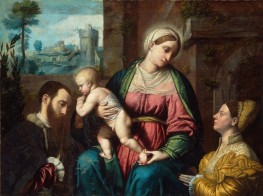
Moretto da Brescia
Canvas Print
$70.34
SKU: 23619-BMD
Original Size:123.2 x 158.8 cm
Philadelphia Museum of Art, USA
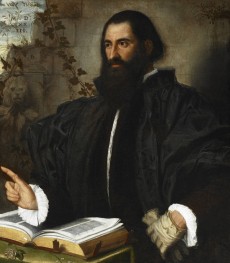
Moretto da Brescia
Canvas Print
$82.49
SKU: 23617-BMD
Original Size:84 x 75 cm
Galleria di Palazzo Rosso, Genoa, Italy
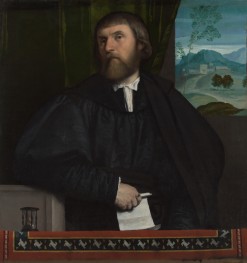
Moretto da Brescia
Canvas Print
$88.65
SKU: 23611-BMD
Original Size:87 x 81.3 cm
Metropolitan Museum of Art, New York, USA
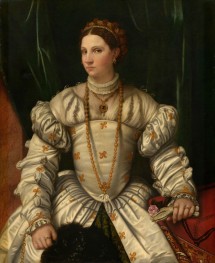
Moretto da Brescia
Canvas Print
$77.35
SKU: 23608-BMD
Original Size:106.4 x 87.6 cm
National Gallery of Art, Washington, USA
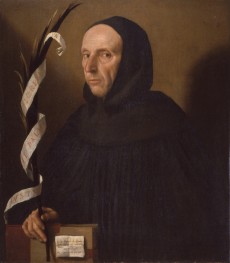
Moretto da Brescia
Canvas Print
$82.49
SKU: 23601-BMD
Original Size:74 x 66 cm
Castelvecchio Museum, Verona, Italy
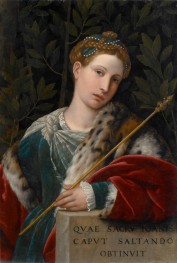
Moretto da Brescia
Canvas Print
$63.49
SKU: 23595-BMD
Original Size:unknown
Brescia Museum Foundation, Italy
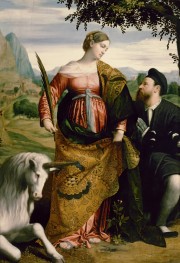
Moretto da Brescia
Canvas Print
$64.52
SKU: 23594-BMD
Original Size:200 x 139 cm
Kunsthistorisches Museum, Vienna, Austria
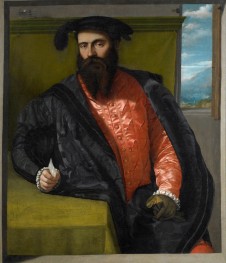
Moretto da Brescia
Canvas Print
$81.12
SKU: 23593-BMD
Original Size:unknown
Brescia Museum Foundation, Italy
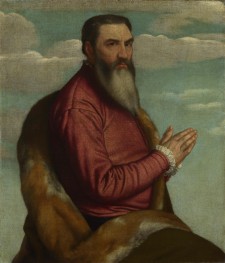
Moretto da Brescia
Canvas Print
$80.78
SKU: 23583-BMD
Original Size:103.7 x 89.4 cm
National Gallery, London, UK
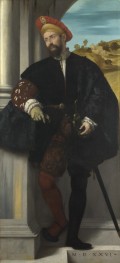
Moretto da Brescia
Canvas Print
$62.11
SKU: 23578-BMD
Original Size:201 x 92.2 cm
National Gallery, London, UK
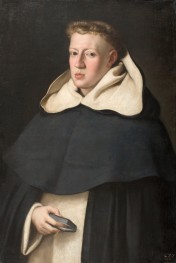
Juan Bautista Maíno
Canvas Print
$63.15
SKU: 23547-MJB
Original Size:90.5 x 61.5 cm
Museu Nacional d'Art de Catalunya, Barcelona, Spain
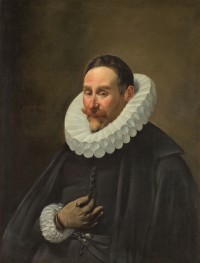
Juan Bautista Maíno
Canvas Print
$71.88
SKU: 23536-MJB
Original Size:96 x 76 cm
Prado Museum, Madrid, Spain
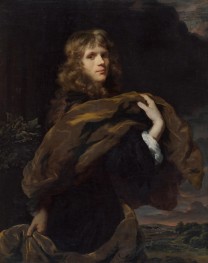
Nicolaes Maes
Canvas Print
$74.44
SKU: 23531-MNI
Original Size:114.7 x 90.9 cm
Bavarian National Museum, Munich, Germany
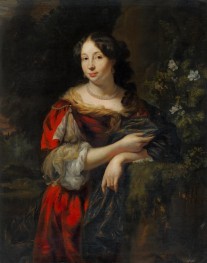
Nicolaes Maes
Canvas Print
$74.27
SKU: 23530-MNI
Original Size:114.9 x 91.7 cm
Bavarian National Museum, Munich, Germany
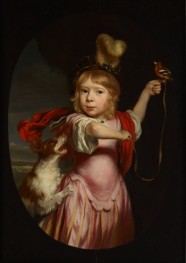
Nicolaes Maes
Canvas Print
$62.11
SKU: 23529-MNI
Original Size:42.4 x 29.7 cm
Minneapolis Institute of Arts, USA
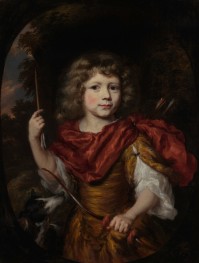
Nicolaes Maes
Canvas Print
$62.11
SKU: 23528-MNI
Original Size:44.8 x 33.8 cm
National Museum in Cracow, Kraków, Poland
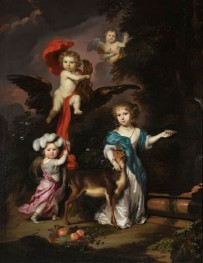
Nicolaes Maes
Canvas Print
$72.90
SKU: 23527-MNI
Original Size:90.7 x 70.2 cm
Private Collection
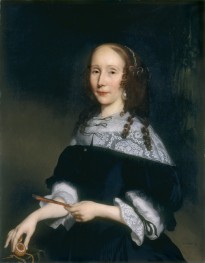
Nicolaes Maes
Canvas Print
$73.76
SKU: 23526-MNI
Original Size:91.7 x 72.4 cm
Thyssen-Bornemisza Museum, Madrid, Spain
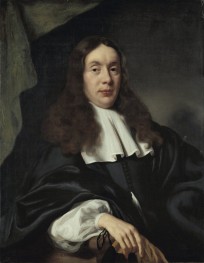
Nicolaes Maes
Canvas Print
$73.42
SKU: 23525-MNI
Original Size:91.4 x 72.7 cm
Thyssen-Bornemisza Museum, Madrid, Spain
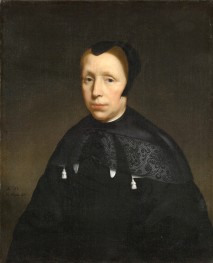
Nicolaes Maes
Canvas Print
$76.33
SKU: 23523-MNI
Original Size:75 x 59.3 cm
Kunstmuseum Basel, Switzerland
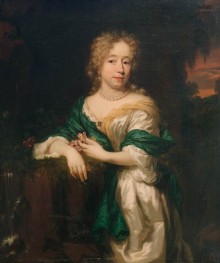
Nicolaes Maes
Canvas Print
$79.06
SKU: 23521-MNI
Original Size:66 x 53 cm
Private Collection
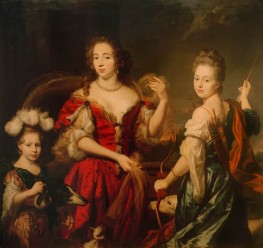
Nicolaes Maes
Canvas Print
$89.16
SKU: 23520-MNI
Original Size:137.5 x 143.5 cm
Anhalt Art Gallery, Dessau, Germany
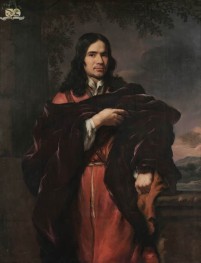
Nicolaes Maes
Canvas Print
$72.05
SKU: 23519-MNI
Original Size:135.5 x 104.5 cm
Royal Museums of Fine Arts of Belgium, Brussels

Back to top