
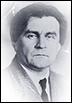
Kazimir Malevich Giclée Fine Art Prints 1 of 7
1879-1935
Russian Avant-Garde Artist
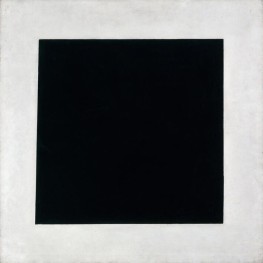
In December 1915, a black square hung in the corner of a Petrograd gallery - the spot traditionally reserved for Russian Orthodox icons. With that single gesture, Kazimir Severinovich Malevich (1879-1935), a Kiev-born artist of Polish descent, declared war on five centuries of representational painting. Across a career shaped by revolutionary upheaval, state repression, and relentless formal experiment, Malevich charted a path from provincial obscurity to the radical summit of abstraction he called Suprematism.
His origins were modest. Born on 23 February 1879 to Severin and Liudviga Malevich, ethnic Poles who had fled to the Kiev region following the failed January Uprising of 1863, Kazimir was the eldest of fourteen children, only nine of whom survived to adulthood. Polish was spoken at home; Russian and Ukrainian filled the streets. His father managed sugar refineries, and the family moved repeatedly through the Ukrainian countryside - Parkhomovka, Voltochok, Konotop. In Parkhomovka, the young Malevich attended an agricultural school while teaching himself to paint, drawing on the flat, saturated colours of peasant life. Perhaps those early encounters with folk decoration - the bold simplification of the lubok, the hieratic stillness of rural churches - planted a formal instinct that no amount of later influence would quite displace.
By 1896, the family had settled in Kursk, where Malevich found companions among local painters and worked outdoors in a loosely Impressionist manner. Through reproductions he encountered the Peredvizhniki - the Wanderers - particularly Ivan Shishkin and Ilia Repin, whose realism anchored his earliest ambitions. He took a post as draughtsman at the Moscow-Kursk-Voronezh railway to earn a living. A planned trip to Paris in 1909 fell through when a painting sale collapsed. Meanwhile, his personal life carried its own weight: marriage to Kazimira Zgleits in 1899, two children, and the death of his father in 1902.
Moscow changed everything. Arriving in autumn 1904, Malevich gained access - through the private collections of Sergei Shchukin and Ivan Morozov - to works by Cezanne, Gauguin, Matisse, and Picasso. Similarities between his Apple Tree in Blossom (1904) and Alfred Sisley's Villeneuve-la-Garenne, then in Shchukin's salon, suggest how rapidly he absorbed what he saw. He enrolled in Fedor Rerberg's studio, though the Moscow School of Painting, Sculpture and Architecture rejected him repeatedly. In 1907, the Blue Rose Exhibition of Moscow Symbolists left a deep mark; The Triumph of Heaven (1907) and The Shroud of Christ (1908) reveal a turn toward mystical imagery. Simultaneously he developed a fascination with Russian icons and folk art - sources that ran counter to the Western modernism flooding Moscow yet proved no less transformative.
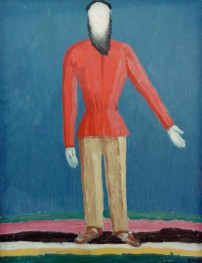
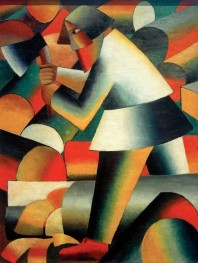
Between 1910 and 1913, Malevich moved at the volatile centre of the Russian avant-garde. He exhibited with the Knave of Diamonds group in December 1910, alongside Natalia Goncharova and Mikhail Larionov, who pushed him toward Neo-Primitivism - flattened forms, simplified structures, peasant subject matter. Figurative gouaches like Floor Polishers and Washerwoman (both 1911-12), shown at the 1912 Donkey's Tail exhibition, demonstrate this earthy directness. Yet Italian Futurism was also pulling at him. Adapting Marinetti's rhetoric, Malevich and his circle shifted emphasis toward linguistic and cognitive experiment - including the transrational language called zaum. His stage designs for the Cubo-Futurist opera Victory Over the Sun (1913), with a libretto by Aleksei Kruchenykh and music by Mikhail Matyushin, introduced a curtain bearing the outline of a square. Malevich would later identify this as the first appearance of his Black Square.
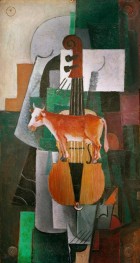
In 1914, he sent several works to the Salon des Independants in Paris, including the Cubist composition Samovar (1913). War overtook Europe that summer, and Malevich responded with Reservist of the First Division - a collage-based canvas scattering political and military fragments across abstract geometric planes. Flat colour blocks and geometric ordering in these wartime works already anticipated the leap to come.
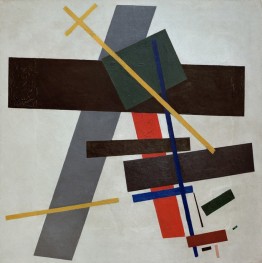
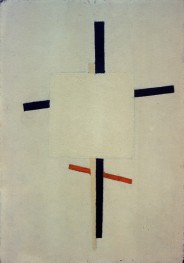
That leap arrived in 1915. Publishing From Cubism to Suprematism and exhibiting Black Square at the Last Futurist Exhibition 0,10 in Petrograd, Malevich proposed a painting stripped to its absolute zero: geometry, colour, and what he called "the supremacy of pure feeling." A black square on a white ground. Nothing more - and, he argued, nothing less. His student Anna Leporskaya later recalled that Malevich could neither eat, drink, nor sleep for a week after completing it. By 1918, the progression had reached its logical conclusion in Suprematist Composition: White on White - pigment reduced to the faintest tremor of a tilted square against an off-white field. In these canvases Malevich employed a distinctive technique of superimposing colours, applying a dark underlayer beneath a lighter one so the viewer perceives not a flat hue but a faintly shadowed depth.
Revolution and civil war reshaped the institutional landscape around him. After 1917, Malevich taught at the Vitebsk Practical Art School alongside Marc Chagall, founded the artists' collective UNOVIS in 1919, and held a solo exhibition at the Sixteenth State Exhibition in Moscow. He was appointed director of the Petrograd State Institute of Artistic Culture in 1923, only to see it shuttered in 1926 after a party newspaper called it "a government-supported monastery." His treatise The Non-Objective World, published in Munich in 1926, reached English-language readers only in 1959.
In March 1927, Malevich left Russia for the first and only time. He exhibited in Warsaw at the Polish Arts Club, met artists including Wladyslaw Strzeminski and Henryk Stazewski, then continued to Berlin with the poet Tadeusz Peiper. At the Bauhaus in Dessau he encountered Walter Gropius and Laszlo Moholy-Nagy. Over seventy works were shown at the Great Berlin Art Exhibition that May - a display later described as a defining moment for the Western reception of his art. Sensing what awaited him at home, he left most of the paintings in Germany. His instinct proved correct. In 1930, the OGPU arrested him in Leningrad on charges of Polish espionage; he was released after weeks of imprisonment. By 1934, Socialist Realism had been imposed as the sole permissible artistic mode. Malevich quietly returned to figurative painting.
Diagnosed with cancer in 1933 and denied permission to seek treatment abroad, Malevich continued to paint until the end. He died on 15 May 1935, at fifty-six. On his deathbed the Black Square hung above him, and mourners at his funeral carried a banner bearing the same image. His ashes were buried near his dacha in Nemchinovka, beneath a white cube marked with a black square - a memorial later destroyed during the Second World War. In Nazi Germany, his work was condemned as "Degenerate Art."
Posthumous recognition came steadily: major exhibitions at the Museum of Modern Art in 1936, the Guggenheim Museum in 1973, and the Stedelijk Museum in Amsterdam in 1989, which holds the largest collection of his paintings. His ideas shaped El Lissitzky, Lyubov Popova, Alexander Rodchenko, and later figures such as Ad Reinhardt and the American Minimalists. Since the 1990s, ownership disputes between museums and his heirs have complicated the institutional afterlife of his oeuvre. Yet the works themselves - poised between mathematical austerity and a conviction in the spiritual power of pure form - remain stubbornly alive, refusing easy interpretation. A black square still stops a viewer in their tracks, not because it explains something but because it insists there is something beyond explanation.
His origins were modest. Born on 23 February 1879 to Severin and Liudviga Malevich, ethnic Poles who had fled to the Kiev region following the failed January Uprising of 1863, Kazimir was the eldest of fourteen children, only nine of whom survived to adulthood. Polish was spoken at home; Russian and Ukrainian filled the streets. His father managed sugar refineries, and the family moved repeatedly through the Ukrainian countryside - Parkhomovka, Voltochok, Konotop. In Parkhomovka, the young Malevich attended an agricultural school while teaching himself to paint, drawing on the flat, saturated colours of peasant life. Perhaps those early encounters with folk decoration - the bold simplification of the lubok, the hieratic stillness of rural churches - planted a formal instinct that no amount of later influence would quite displace.
By 1896, the family had settled in Kursk, where Malevich found companions among local painters and worked outdoors in a loosely Impressionist manner. Through reproductions he encountered the Peredvizhniki - the Wanderers - particularly Ivan Shishkin and Ilia Repin, whose realism anchored his earliest ambitions. He took a post as draughtsman at the Moscow-Kursk-Voronezh railway to earn a living. A planned trip to Paris in 1909 fell through when a painting sale collapsed. Meanwhile, his personal life carried its own weight: marriage to Kazimira Zgleits in 1899, two children, and the death of his father in 1902.
Moscow changed everything. Arriving in autumn 1904, Malevich gained access - through the private collections of Sergei Shchukin and Ivan Morozov - to works by Cezanne, Gauguin, Matisse, and Picasso. Similarities between his Apple Tree in Blossom (1904) and Alfred Sisley's Villeneuve-la-Garenne, then in Shchukin's salon, suggest how rapidly he absorbed what he saw. He enrolled in Fedor Rerberg's studio, though the Moscow School of Painting, Sculpture and Architecture rejected him repeatedly. In 1907, the Blue Rose Exhibition of Moscow Symbolists left a deep mark; The Triumph of Heaven (1907) and The Shroud of Christ (1908) reveal a turn toward mystical imagery. Simultaneously he developed a fascination with Russian icons and folk art - sources that ran counter to the Western modernism flooding Moscow yet proved no less transformative.
Between 1910 and 1913, Malevich moved at the volatile centre of the Russian avant-garde. He exhibited with the Knave of Diamonds group in December 1910, alongside Natalia Goncharova and Mikhail Larionov, who pushed him toward Neo-Primitivism - flattened forms, simplified structures, peasant subject matter. Figurative gouaches like Floor Polishers and Washerwoman (both 1911-12), shown at the 1912 Donkey's Tail exhibition, demonstrate this earthy directness. Yet Italian Futurism was also pulling at him. Adapting Marinetti's rhetoric, Malevich and his circle shifted emphasis toward linguistic and cognitive experiment - including the transrational language called zaum. His stage designs for the Cubo-Futurist opera Victory Over the Sun (1913), with a libretto by Aleksei Kruchenykh and music by Mikhail Matyushin, introduced a curtain bearing the outline of a square. Malevich would later identify this as the first appearance of his Black Square.
In 1914, he sent several works to the Salon des Independants in Paris, including the Cubist composition Samovar (1913). War overtook Europe that summer, and Malevich responded with Reservist of the First Division - a collage-based canvas scattering political and military fragments across abstract geometric planes. Flat colour blocks and geometric ordering in these wartime works already anticipated the leap to come.
That leap arrived in 1915. Publishing From Cubism to Suprematism and exhibiting Black Square at the Last Futurist Exhibition 0,10 in Petrograd, Malevich proposed a painting stripped to its absolute zero: geometry, colour, and what he called "the supremacy of pure feeling." A black square on a white ground. Nothing more - and, he argued, nothing less. His student Anna Leporskaya later recalled that Malevich could neither eat, drink, nor sleep for a week after completing it. By 1918, the progression had reached its logical conclusion in Suprematist Composition: White on White - pigment reduced to the faintest tremor of a tilted square against an off-white field. In these canvases Malevich employed a distinctive technique of superimposing colours, applying a dark underlayer beneath a lighter one so the viewer perceives not a flat hue but a faintly shadowed depth.
Revolution and civil war reshaped the institutional landscape around him. After 1917, Malevich taught at the Vitebsk Practical Art School alongside Marc Chagall, founded the artists' collective UNOVIS in 1919, and held a solo exhibition at the Sixteenth State Exhibition in Moscow. He was appointed director of the Petrograd State Institute of Artistic Culture in 1923, only to see it shuttered in 1926 after a party newspaper called it "a government-supported monastery." His treatise The Non-Objective World, published in Munich in 1926, reached English-language readers only in 1959.
In March 1927, Malevich left Russia for the first and only time. He exhibited in Warsaw at the Polish Arts Club, met artists including Wladyslaw Strzeminski and Henryk Stazewski, then continued to Berlin with the poet Tadeusz Peiper. At the Bauhaus in Dessau he encountered Walter Gropius and Laszlo Moholy-Nagy. Over seventy works were shown at the Great Berlin Art Exhibition that May - a display later described as a defining moment for the Western reception of his art. Sensing what awaited him at home, he left most of the paintings in Germany. His instinct proved correct. In 1930, the OGPU arrested him in Leningrad on charges of Polish espionage; he was released after weeks of imprisonment. By 1934, Socialist Realism had been imposed as the sole permissible artistic mode. Malevich quietly returned to figurative painting.
Diagnosed with cancer in 1933 and denied permission to seek treatment abroad, Malevich continued to paint until the end. He died on 15 May 1935, at fifty-six. On his deathbed the Black Square hung above him, and mourners at his funeral carried a banner bearing the same image. His ashes were buried near his dacha in Nemchinovka, beneath a white cube marked with a black square - a memorial later destroyed during the Second World War. In Nazi Germany, his work was condemned as "Degenerate Art."
Posthumous recognition came steadily: major exhibitions at the Museum of Modern Art in 1936, the Guggenheim Museum in 1973, and the Stedelijk Museum in Amsterdam in 1989, which holds the largest collection of his paintings. His ideas shaped El Lissitzky, Lyubov Popova, Alexander Rodchenko, and later figures such as Ad Reinhardt and the American Minimalists. Since the 1990s, ownership disputes between museums and his heirs have complicated the institutional afterlife of his oeuvre. Yet the works themselves - poised between mathematical austerity and a conviction in the spiritual power of pure form - remain stubbornly alive, refusing easy interpretation. A black square still stops a viewer in their tracks, not because it explains something but because it insists there is something beyond explanation.
150 Kazimir Malevich Artworks
Page 1 of 7
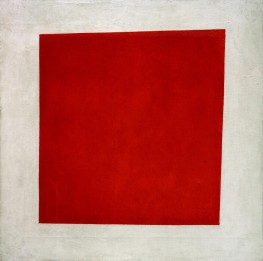
Giclée Canvas Print
$89.75
$89.75
SKU: 21441-KAZ
Kazimir Malevich
Original Size:53 x 53 cm
State Russian Museum, St. Petersburg, Russia
Kazimir Malevich
Original Size:53 x 53 cm
State Russian Museum, St. Petersburg, Russia
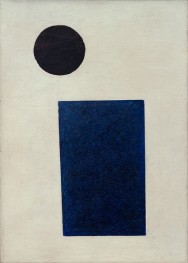
Giclée Canvas Print
$63.77
$63.77
SKU: 21410-KAZ
Kazimir Malevich
Original Size:43.2 x 30.8 cm
Private Collection
Kazimir Malevich
Original Size:43.2 x 30.8 cm
Private Collection
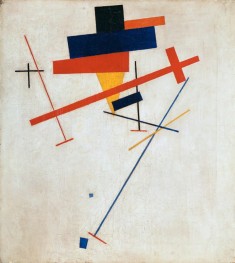
Giclée Canvas Print
$85.92
$85.92
SKU: 21326-KAZ
Kazimir Malevich
Original Size:unknown
Public Collection
Kazimir Malevich
Original Size:unknown
Public Collection
Giclée Canvas Print
$96.12
$96.12
SKU: 21330-KAZ
Kazimir Malevich
Original Size:80.5 x 81 cm
State Russian Museum, St. Petersburg, Russia
Kazimir Malevich
Original Size:80.5 x 81 cm
State Russian Museum, St. Petersburg, Russia
Giclée Canvas Print
$96.64
$96.64
SKU: 21362-KAZ
Kazimir Malevich
Original Size:106 x 106 cm
State Russian Museum, St. Petersburg, Russia
Kazimir Malevich
Original Size:106 x 106 cm
State Russian Museum, St. Petersburg, Russia
Giclée Canvas Print
$67.47
$67.47
SKU: 21408-KAZ
Kazimir Malevich
Original Size:73 x 51 cm
Stedelijk Museum, Amsterdam, Netherlands
Kazimir Malevich
Original Size:73 x 51 cm
Stedelijk Museum, Amsterdam, Netherlands
Giclée Canvas Print
$83.64
$83.64
SKU: 21345-KAZ
Kazimir Malevich
Original Size:142 x 164 cm
State Russian Museum, St. Petersburg, Russia
Kazimir Malevich
Original Size:142 x 164 cm
State Russian Museum, St. Petersburg, Russia
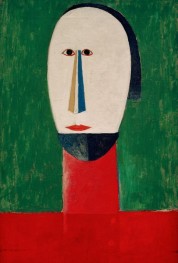
Giclée Canvas Print
$65.01
$65.01
SKU: 21386-KAZ
Kazimir Malevich
Original Size:61 x 41 cm
State Russian Museum, St. Petersburg, Russia
Kazimir Malevich
Original Size:61 x 41 cm
State Russian Museum, St. Petersburg, Russia
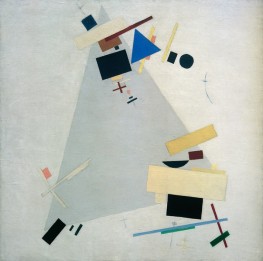
Giclée Canvas Print
$96.12
$96.12
SKU: 21443-KAZ
Kazimir Malevich
Original Size:80.5 x 80 cm
Public Collection
Kazimir Malevich
Original Size:80.5 x 80 cm
Public Collection
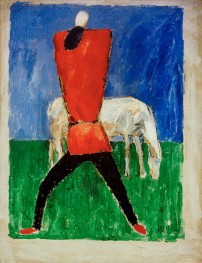
Giclée Canvas Print
$74.85
$74.85
SKU: 21445-KAZ
Kazimir Malevich
Original Size:66.5 x 51.5 cm
Musée d'Art Moderne, Paris, France
Kazimir Malevich
Original Size:66.5 x 51.5 cm
Musée d'Art Moderne, Paris, France
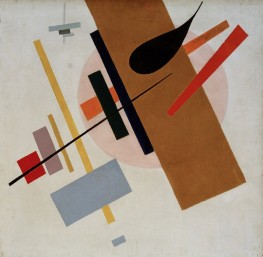
Giclée Canvas Print
$96.64
$96.64
SKU: 21405-KAZ
Kazimir Malevich
Original Size:80 x 80 cm
Public Collection
Kazimir Malevich
Original Size:80 x 80 cm
Public Collection
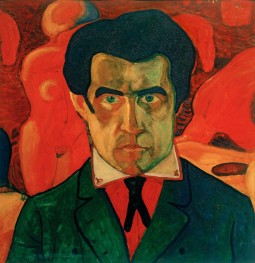
Giclée Canvas Print
$63.77
$63.77
SKU: 21425-KAZ
Kazimir Malevich
Original Size:27 x 26.8 cm
Public Collection
Kazimir Malevich
Original Size:27 x 26.8 cm
Public Collection
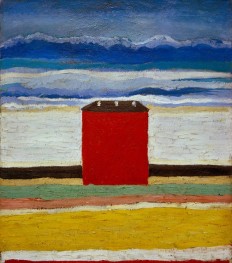
Giclée Canvas Print
$84.34
$84.34
SKU: 21372-KAZ
Kazimir Malevich
Original Size:63 x 55 cm
State Russian Museum, St. Petersburg, Russia
Kazimir Malevich
Original Size:63 x 55 cm
State Russian Museum, St. Petersburg, Russia
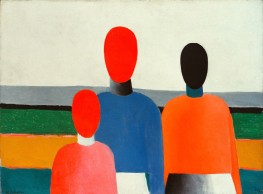
Giclée Canvas Print
$71.51
$71.51
SKU: 21344-KAZ
Kazimir Malevich
Original Size:47 x 63.5 cm
State Russian Museum, St. Petersburg, Russia
Kazimir Malevich
Original Size:47 x 63.5 cm
State Russian Museum, St. Petersburg, Russia
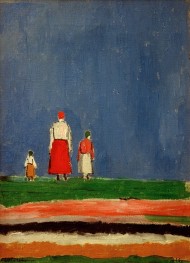
Giclée Canvas Print
$63.77
$63.77
SKU: 21446-KAZ
Kazimir Malevich
Original Size:37 x 27 cm
Private Collection
Kazimir Malevich
Original Size:37 x 27 cm
Private Collection
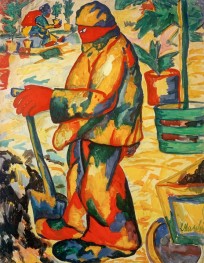
Giclée Canvas Print
$63.77
$63.77
SKU: 21457-KAZ
Kazimir Malevich
Original Size:39 x 31 cm
Stedelijk Museum, Amsterdam, Netherlands
Kazimir Malevich
Original Size:39 x 31 cm
Stedelijk Museum, Amsterdam, Netherlands
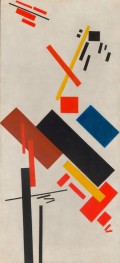
Giclée Canvas Print
$63.77
$63.77
SKU: 21468-KAZ
Kazimir Malevich
Original Size:97 x 44.5 cm
Public Collection
Kazimir Malevich
Original Size:97 x 44.5 cm
Public Collection
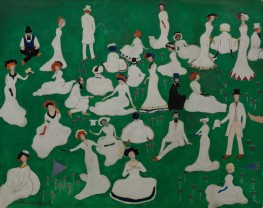
Giclée Canvas Print
$63.77
$63.77
SKU: 21465-KAZ
Kazimir Malevich
Original Size:23.8 x 30.2 cm
State Russian Museum, St. Petersburg, Russia
Kazimir Malevich
Original Size:23.8 x 30.2 cm
State Russian Museum, St. Petersburg, Russia
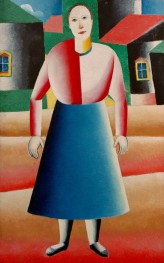
Giclée Canvas Print
$63.77
$63.77
SKU: 21374-KAZ
Kazimir Malevich
Original Size:70.5 x 44 cm
State Russian Museum, St. Petersburg, Russia
Kazimir Malevich
Original Size:70.5 x 44 cm
State Russian Museum, St. Petersburg, Russia
Giclée Canvas Print
$67.29
$67.29
SKU: 21444-KAZ
Kazimir Malevich
Original Size:55.6 x 38.7 cm
Stedelijk Museum, Amsterdam, Netherlands
Kazimir Malevich
Original Size:55.6 x 38.7 cm
Stedelijk Museum, Amsterdam, Netherlands
Giclée Canvas Print
$63.77
$63.77
SKU: 21368-KAZ
Kazimir Malevich
Original Size:48.8 x 25.8 cm
State Russian Museum, St. Petersburg, Russia
Kazimir Malevich
Original Size:48.8 x 25.8 cm
State Russian Museum, St. Petersburg, Russia
Giclée Canvas Print
$80.48
$80.48
SKU: 21373-KAZ
Kazimir Malevich
Original Size:120 x 100 cm
State Russian Museum, St. Petersburg, Russia
Kazimir Malevich
Original Size:120 x 100 cm
State Russian Museum, St. Petersburg, Russia
Giclée Canvas Print
$72.75
$72.75
SKU: 21432-KAZ
Kazimir Malevich
Original Size:93 x 70 cm
Stedelijk Museum, Amsterdam, Netherlands
Kazimir Malevich
Original Size:93 x 70 cm
Stedelijk Museum, Amsterdam, Netherlands
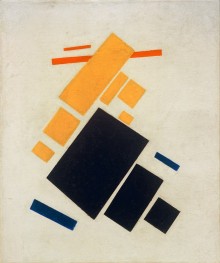
Giclée Canvas Print
$80.29
$80.29
SKU: 21442-KAZ
Kazimir Malevich
Original Size:58.1 x 48.3 cm
Museum of Modern Art, New York, USA
Kazimir Malevich
Original Size:58.1 x 48.3 cm
Museum of Modern Art, New York, USA