
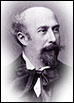
Luigi Loir Giclée Fine Art Prints
1845-1916
French Belle Epoque Painter
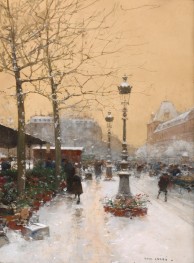
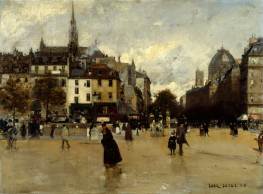
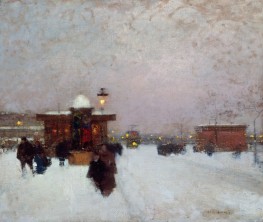
Snow settles on a boulevard at dusk, gaslight bleeds gold into the blue air, and a cab breaks the wet reflection of a shopfront window. Such moments were the property of Luigi Loir (1845 - 1916), a French painter of Austrian birth who became the portraitist of Paris itself - not so much of its people as of its weather, its pavements, its passing hours. Where his contemporary Jean Béraud painted the Parisians, Loir painted their city.
Luigi Aloys-François-Joseph Loir was born on 22 January 1845 in Gorizia, then an Austrian town and long a haven for exiled French royalists. His parents were French and served the Bourbons - the father as valet, the mother as governess - and the family's first years passed inside the Gorizia castle. Around 1847 they followed their employers to the Duchy of Parma. Upheaval scattered them again in 1860: the Bourbons were driven out, the Loirs went home to France, and the boy stayed behind alone to enrol at the Academy of Arts in Parma. Three years later his father fell ill and he travelled to Paris to join the family. He was eighteen. The city never let him go.
In Paris he found his principal teacher in Jean-Aimable Amédée Pastelot, a painter in watercolour and gouache whose subjects ran from flowers to genre scenes to characters out of the commedia dell'arte, and who also supplied the caricature journals then multiplying across the capital. Pastelot's studio functioned as a workshop rather than an academy. There Loir tried his hand at decoration, at theatrical costume, at illustrations for novels - a training in versatility that would serve him for fifty years. From the older man he took a feeling for the figure, then bent it to a purpose of his own: the fusion of figure and setting, of crowd and street.
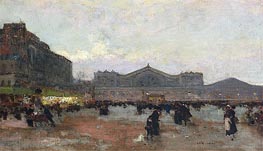
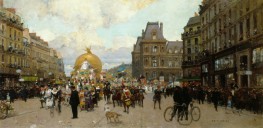
Around him, meanwhile, the city was being rebuilt. From the 1850s Baron Georges-Eugène Haussmann drove his grands boulevards through the medieval tangle, and in doing so turned the street into a stage. Bohemian Montmartre, the promenades of the leisured classes, the quays, the traffic, the crowds: public life had moved outdoors. Loir walked it and studied it. He observed with the patience of a naturalist and the dawdling pleasure of a flâneur, and something of both survives in the finished canvases.
His Salon debut came in 1865 with A Villers, sent in from Neuilly-sur-Seine, where he was then living on the edge of the capital. Recognition followed steadily: a third-class medal in 1879, a second-class medal in 1886, a gold medal at the Exposition Universelle of 1889. Collectors and institutions kept pace. Jules Ferry acquired La Porte des Ternes in 1875; the St. Louis Museum of Art took Le Pont d'Austerlitz in 1882; a Russian museum bought Le Point-du-Jour à Auteuil the following year; in 1893 the French state purchased Avant l'Embarquement for the Musée de Bar-le-Duc. Work of his entered the Musée du Luxembourg, the museums of Auxerre and Nantes, and collections in New York. Beside the celebrated monuments appeared Puteaux, Bercy, Auteuil and the riverbanks beyond the fortifications.
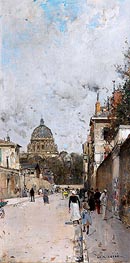
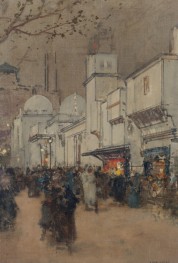
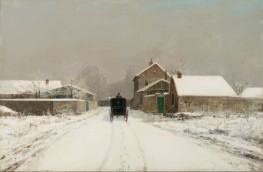
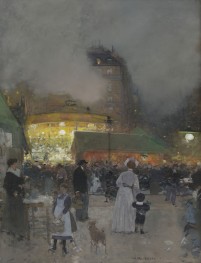
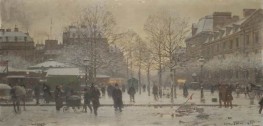
What holds these pictures together is light. Loir was a connoisseur of snow, of low winter sun on wet asphalt, of the moment when a lamp first tells against a darkening sky. Cool greys and violets dominate his tonal register, punctuated by a single warm accent - a shopfront, a brazier, a smear of impasto standing for the sun on the Seine. Twilight suited him best. Perhaps a childhood of borrowed houses and sudden departures taught him to watch places at the hour when they are about to be lost. Even his most familiar landmarks carry a faint air of leave-taking, so that the pictures were nostalgic almost before the paint was dry.
To his contemporaries, though, Loir was quite as visible on the walls of the street as inside the Salon. He produced hundreds of designs for commercial advertising, for books and sheet music, for menus and theatrical décor, exploiting the new process of chromolithography to send large coloured images across the city in numbers no easel painting could match. The commission to design the official cover of the Exposition Universelle of 1900 confirmed his standing. This was the decade in which the printed image argued its way into the category of art despite - or because of - its frank commercialism, and Loir belongs in that argument alongside Jules Chéret and Alphonse Mucha.
Official distinctions accumulated. He joined the Office d'Académie in 1889 and was made Chevalier de la Légion d'Honneur in 1898; he held membership of the Société des Peintres-Lithographes and the Société des Aquarellistes, and from 1899 sat on the juries of the Société des Artistes Français and the Société des Arts Décoratifs. He worked to the end. His final Salon showing, in 1914, included Crépuscule, Coin de Paris, Neige, a watercolour of the Alma bridge at dusk and a gouache made at Boulogne-sur-Mer. He died in Paris on 9 February 1916, in the middle of a war that was dismantling the world his brush had recorded.
Baudelaire had asked painters to find the heroism of modern life in their own streets, and few answered as literally as this one. Loir's handling leans towards Impressionism, his subjects sit close to the Naturalists, and his commercial output makes him one of the founders of modern graphic design. Two painters of the mid-twentieth century, Édouard Cortès and Antoine Blanchard, built entire careers on the Parisian street scene, and in their wet boulevards and gaslit corners the debt to Luigi Loir is unmistakable. His canvases hang today in the Musée des Beaux-Arts in Bordeaux (Aux Lilas), in Rouen (La Crue de la Seine de Paris, Ménilmontant) and at the Musée Crozatier in Le Puy-en-Velay (La Seine en décembre 1879). They still do what he intended - not to preserve Paris, which cannot be preserved, but to record how it felt to stand in it at half past four on a wet afternoon.
Luigi Aloys-François-Joseph Loir was born on 22 January 1845 in Gorizia, then an Austrian town and long a haven for exiled French royalists. His parents were French and served the Bourbons - the father as valet, the mother as governess - and the family's first years passed inside the Gorizia castle. Around 1847 they followed their employers to the Duchy of Parma. Upheaval scattered them again in 1860: the Bourbons were driven out, the Loirs went home to France, and the boy stayed behind alone to enrol at the Academy of Arts in Parma. Three years later his father fell ill and he travelled to Paris to join the family. He was eighteen. The city never let him go.
In Paris he found his principal teacher in Jean-Aimable Amédée Pastelot, a painter in watercolour and gouache whose subjects ran from flowers to genre scenes to characters out of the commedia dell'arte, and who also supplied the caricature journals then multiplying across the capital. Pastelot's studio functioned as a workshop rather than an academy. There Loir tried his hand at decoration, at theatrical costume, at illustrations for novels - a training in versatility that would serve him for fifty years. From the older man he took a feeling for the figure, then bent it to a purpose of his own: the fusion of figure and setting, of crowd and street.
Around him, meanwhile, the city was being rebuilt. From the 1850s Baron Georges-Eugène Haussmann drove his grands boulevards through the medieval tangle, and in doing so turned the street into a stage. Bohemian Montmartre, the promenades of the leisured classes, the quays, the traffic, the crowds: public life had moved outdoors. Loir walked it and studied it. He observed with the patience of a naturalist and the dawdling pleasure of a flâneur, and something of both survives in the finished canvases.
His Salon debut came in 1865 with A Villers, sent in from Neuilly-sur-Seine, where he was then living on the edge of the capital. Recognition followed steadily: a third-class medal in 1879, a second-class medal in 1886, a gold medal at the Exposition Universelle of 1889. Collectors and institutions kept pace. Jules Ferry acquired La Porte des Ternes in 1875; the St. Louis Museum of Art took Le Pont d'Austerlitz in 1882; a Russian museum bought Le Point-du-Jour à Auteuil the following year; in 1893 the French state purchased Avant l'Embarquement for the Musée de Bar-le-Duc. Work of his entered the Musée du Luxembourg, the museums of Auxerre and Nantes, and collections in New York. Beside the celebrated monuments appeared Puteaux, Bercy, Auteuil and the riverbanks beyond the fortifications.
What holds these pictures together is light. Loir was a connoisseur of snow, of low winter sun on wet asphalt, of the moment when a lamp first tells against a darkening sky. Cool greys and violets dominate his tonal register, punctuated by a single warm accent - a shopfront, a brazier, a smear of impasto standing for the sun on the Seine. Twilight suited him best. Perhaps a childhood of borrowed houses and sudden departures taught him to watch places at the hour when they are about to be lost. Even his most familiar landmarks carry a faint air of leave-taking, so that the pictures were nostalgic almost before the paint was dry.
To his contemporaries, though, Loir was quite as visible on the walls of the street as inside the Salon. He produced hundreds of designs for commercial advertising, for books and sheet music, for menus and theatrical décor, exploiting the new process of chromolithography to send large coloured images across the city in numbers no easel painting could match. The commission to design the official cover of the Exposition Universelle of 1900 confirmed his standing. This was the decade in which the printed image argued its way into the category of art despite - or because of - its frank commercialism, and Loir belongs in that argument alongside Jules Chéret and Alphonse Mucha.
Official distinctions accumulated. He joined the Office d'Académie in 1889 and was made Chevalier de la Légion d'Honneur in 1898; he held membership of the Société des Peintres-Lithographes and the Société des Aquarellistes, and from 1899 sat on the juries of the Société des Artistes Français and the Société des Arts Décoratifs. He worked to the end. His final Salon showing, in 1914, included Crépuscule, Coin de Paris, Neige, a watercolour of the Alma bridge at dusk and a gouache made at Boulogne-sur-Mer. He died in Paris on 9 February 1916, in the middle of a war that was dismantling the world his brush had recorded.
Baudelaire had asked painters to find the heroism of modern life in their own streets, and few answered as literally as this one. Loir's handling leans towards Impressionism, his subjects sit close to the Naturalists, and his commercial output makes him one of the founders of modern graphic design. Two painters of the mid-twentieth century, Édouard Cortès and Antoine Blanchard, built entire careers on the Parisian street scene, and in their wet boulevards and gaslit corners the debt to Luigi Loir is unmistakable. His canvases hang today in the Musée des Beaux-Arts in Bordeaux (Aux Lilas), in Rouen (La Crue de la Seine de Paris, Ménilmontant) and at the Musée Crozatier in Le Puy-en-Velay (La Seine en décembre 1879). They still do what he intended - not to preserve Paris, which cannot be preserved, but to record how it felt to stand in it at half past four on a wet afternoon.
22 Luigi Loir Artworks
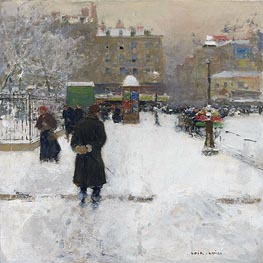
Giclée Canvas Print
$85.90
$85.90
SKU: 15979-LLU
Luigi Loir
Original Size:52 x 52 cm
Private Collection
Luigi Loir
Original Size:52 x 52 cm
Private Collection
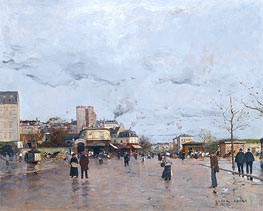
Giclée Canvas Print
$63.41
$63.41
SKU: 15976-LLU
Luigi Loir
Original Size:32.8 x 40.8 cm
Private Collection
Luigi Loir
Original Size:32.8 x 40.8 cm
Private Collection
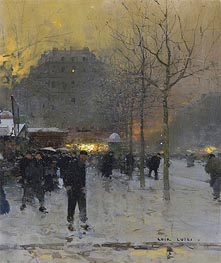
Giclée Canvas Print
$81.07
$81.07
SKU: 15978-LLU
Luigi Loir
Original Size:60 x 50 cm
Private Collection
Luigi Loir
Original Size:60 x 50 cm
Private Collection
Giclée Canvas Print
$63.41
$63.41
SKU: 15977-LLU
Luigi Loir
Original Size:42 x 21 cm
Private Collection
Luigi Loir
Original Size:42 x 21 cm
Private Collection
Giclée Canvas Print
$63.41
$63.41
SKU: 15975-LLU
Luigi Loir
Original Size:27 x 46.5 cm
Private Collection
Luigi Loir
Original Size:27 x 46.5 cm
Private Collection
Giclée Canvas Print
$63.41
$63.41
SKU: 21847-LLU
Luigi Loir
Original Size:172 x 296 cm
Pushkin Museum of Fine Arts, Moscow, Russia
Luigi Loir
Original Size:172 x 296 cm
Pushkin Museum of Fine Arts, Moscow, Russia
Giclée Paper Art Print
$67.34
$67.34
SKU: 23262-LLU
Luigi Loir
Original Size:64 x 54 cm
Private Collection
Luigi Loir
Original Size:64 x 54 cm
Private Collection
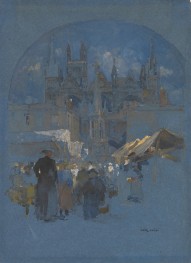
Giclée Paper Art Print
$60.04
$60.04
SKU: 23248-LLU
Luigi Loir
Original Size:38.9 x 28.3 cm
National Gallery of Art, Washington, USA
Luigi Loir
Original Size:38.9 x 28.3 cm
National Gallery of Art, Washington, USA
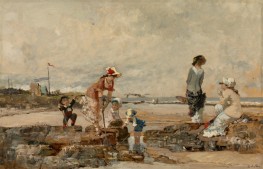
Giclée Canvas Print
$63.41
$63.41
SKU: 23250-LLU
Luigi Loir
Original Size:34.9 x 52.7 cm
The Clark Art Institute, Massachusetts, USA
Luigi Loir
Original Size:34.9 x 52.7 cm
The Clark Art Institute, Massachusetts, USA
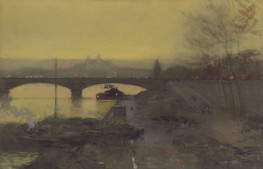
Giclée Paper Art Print
$60.04
$60.04
SKU: 23247-LLU
Luigi Loir
Original Size:42.8 x 66.1 cm
National Gallery of Art, Washington, USA
Luigi Loir
Original Size:42.8 x 66.1 cm
National Gallery of Art, Washington, USA
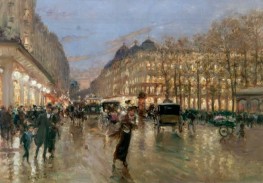
Giclée Canvas Print
$67.09
$67.09
SKU: 23259-LLU
Luigi Loir
Original Size:38 x 56 cm
Public Collection
Luigi Loir
Original Size:38 x 56 cm
Public Collection
Giclée Canvas Print
$71.29
$71.29
SKU: 23251-LLU
Luigi Loir
Original Size:46.5 x 61.5 cm
Musée Carnavalet, Paris, France
Luigi Loir
Original Size:46.5 x 61.5 cm
Musée Carnavalet, Paris, France
Giclée Canvas Print
$63.41
$63.41
SKU: 23255-LLU
Luigi Loir
Original Size:46 x 33 cm
Musée Carnavalet, Paris, France
Luigi Loir
Original Size:46 x 33 cm
Musée Carnavalet, Paris, France
Giclée Canvas Print
$80.37
$80.37
SKU: 23252-LLU
Luigi Loir
Original Size:46 x 55 cm
Musée Carnavalet, Paris, France
Luigi Loir
Original Size:46 x 55 cm
Musée Carnavalet, Paris, France
Giclée Canvas Print
$63.41
$63.41
SKU: 23261-LLU
Luigi Loir
Original Size:62 x 95.2 cm
Minneapolis Institute of Arts, Minnesota, USA
Luigi Loir
Original Size:62 x 95.2 cm
Minneapolis Institute of Arts, Minnesota, USA
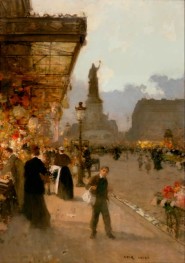
Giclée Canvas Print
$67.97
$67.97
SKU: 23260-LLU
Luigi Loir
Original Size:65.5 x 46.5 cm
Public Collection
Luigi Loir
Original Size:65.5 x 46.5 cm
Public Collection
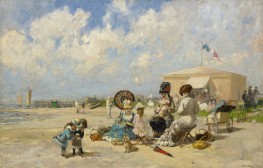
Giclée Canvas Print
$63.41
$63.41
SKU: 23249-LLU
Luigi Loir
Original Size:34.3 x 52.7 cm
The Clark Art Institute, Massachusetts, USA
Luigi Loir
Original Size:34.3 x 52.7 cm
The Clark Art Institute, Massachusetts, USA
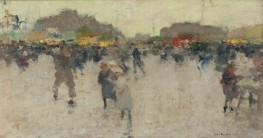
Giclée Canvas Print
$63.41
$63.41
SKU: 23256-LLU
Luigi Loir
Original Size:22 x 41 cm
Petit Palais, Paris, France
Luigi Loir
Original Size:22 x 41 cm
Petit Palais, Paris, France
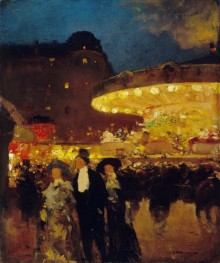
Giclée Canvas Print
$81.24
$81.24
SKU: 23253-LLU
Luigi Loir
Original Size:55 x 46.5 cm
Musée Carnavalet, Paris, France
Luigi Loir
Original Size:55 x 46.5 cm
Musée Carnavalet, Paris, France
Giclée Canvas Print
$73.73
$73.73
SKU: 23257-LLU
Luigi Loir
Original Size:60 x 45 cm
Musée Carnavalet, Paris, France
Luigi Loir
Original Size:60 x 45 cm
Musée Carnavalet, Paris, France
Giclée Canvas Print
$63.41
$63.41
SKU: 23254-LLU
Luigi Loir
Original Size:150 x 301 cm
Musée Carnavalet, Paris, France
Luigi Loir
Original Size:150 x 301 cm
Musée Carnavalet, Paris, France
Giclée Canvas Print
$63.41
$63.41
SKU: 23258-LLU
Luigi Loir
Original Size:101.5 x 201 cm
Galerie Belvedere, Vienna, Austria
Luigi Loir
Original Size:101.5 x 201 cm
Galerie Belvedere, Vienna, Austria