
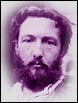
Lord Frederick Leighton Giclée Fine Art Prints 1 of 5
1830-1896
English Victorian Neoclassicism Painter
On 24 January 1896, the patent creating Frederic Leighton Baron Leighton of Stretton was issued. The painter died the next day. His hereditary peerage, alive for barely twenty-four hours, expired with him - the shortest-lived title in the history of the British peerage, and a fitting curtain for an artist whose entire career had been a study in elevated ceremony. Frederic Leighton (3 December 1830 - 25 January 1896) was the Victorian establishment's painter par excellence: President of the Royal Academy, friend of poets, classicist, traveller, and the most polished embodiment of an aesthetic that the twentieth century would shortly find unbearable.
He was born in Scarborough, son of a physician whose own father had attended two Russian tsars and amassed a substantial fortune in their service. This cushion of inherited wealth shaped everything. Where other young artists scraped for commissions, Leighton received an allowance from his father throughout his life, an arrangement that freed him to study where he pleased and to refuse work that did not suit him. Such security is not incidental to the art. It permitted the long apprenticeships, the slow finishes, the costly travel.
Educated at University College School in London, he was sent abroad early for his artistic training. In Frankfurt he studied under the Nazarene painter Eduard von Steinle; later, in Rome, he absorbed the more lyrical landscape sensibility of Giovanni Costa. The summer of 1847 furnished one of those biographical curiosities collectors prize: at seventeen, Leighton sat with Arthur Schopenhauer in Frankfurt and drew the philosopher in graphite and gouache. It remains the only known full-length study of Schopenhauer done from life. There is something quietly astonishing in this - the schoolboy hand recording a thinker whose pessimism would haunt European thought for another century.
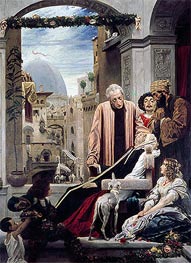
By twenty-four he was in Florence, enrolled at the Accademia di Belle Arti and at work on the canvas that would make his name. Cimabue's Celebrated Madonna Is Carried in Procession Through the Streets of Florence, completed between 1853 and 1855, was bought by Queen Victoria from his first Royal Academy exhibition. The painting reconstructs a thirteenth-century event - the parade of Cimabue's Madonna through the Borgo Allegri - with archaeological precision and a pageant-master's sense of rhythm. In a sense, it is the manifesto of his entire career: history made decorative, learning made pleasant.
Between 1855 and 1859 Leighton lived in Paris, where he moved among Ingres, Delacroix, Corot, and Millet. From each he took something, though wholesale conversion to any of them was never his temperament. He was a magpie of styles, fluent in many idioms but committed to a sustained academic classicism that drew increasingly on the Mediterranean. Travel was constant - Italy and Germany, then Algeria in 1857 (his first venture beyond Europe), later Egypt, Greece, Turkey, Syria, Lebanon, Morocco, Spain. These journeys fed the Orientalist surfaces and the brilliant tile work that would eventually furnish his London house.
He settled in London in 1860 and quickly found his footing among the Pre-Raphaelites, though he stood apart from their reformist programme. The following year, on commission from Robert Browning, he designed the tomb of Elizabeth Barrett Browning in the English Cemetery in Florence. Election as an Associate of the Royal Academy followed in 1864. In 1878 he was made President, a post he held until his death and exercised with a courtly authority that defined the institution for nearly two decades. The same year brought a knighthood at Windsor.
His work moved increasingly toward classical subject matter rendered in linear precision and saturated colour. Daphnephoria, painted between 1874 and 1876 and now in the Lady Lever Art Gallery, parades a Theban procession in honour of Apollo with the same fascination for ceremonial movement seen in the earlier Cimabue canvas. Flaming June, completed in 1895 and now in the Museo de Arte de Ponce, has come to overshadow nearly everything else - that coiled sleeping figure in saffron drapery, eclipsed for half a century and then rediscovered as one of the indelible images of Victorian art. The sculpture Athlete Wrestling with a Python, exhibited in 1877, was credited at the time with inaugurating the so-called New Sculpture movement, a renaissance in modelled form that would carry British sculpture into the new century.
Through all of this, Leighton remained a bachelor, and the question of his private life has occupied biographers for a century. He kept no diaries; his letters are notably reticent on personal matters. There were intense friendships - the poet Henry William Greville, met in Florence in 1856, courted him in unanswered letters - and a circle of younger men around his studio. Speculation persists; certainty does not. Perhaps the discipline of his public face required this opacity in private.
He was also a soldier, after a fashion. From 1860 he served in the Artists Rifles, rising to lieutenant colonel and commanding the corps from 1869 until 1883. James Whistler captured the comedy of the dual role: "Colonel of the Royal Academy and the President of the Artists Rifles - aye, and he paints a little!" His Holland Park home, Leighton House, designed in part to display his collection of Iznik tiles, remains open to the public; its Arab Hall is one of the finest interiors of late-Victorian London.
For decades after his death, Leighton's reputation suffered the fate of most academic Victorians - dismissed as anecdotal, finished, ideologically suspect. The rehabilitation began slowly in the 1960s and accelerated when Flaming June was acquired by Ponce after languishing unsold in a London frame shop. Today his canvases reach sums his detractors would have found vulgar, and Leighton House receives visitors who come to see what a painter could build when wealth, talent, and an extraordinary self-possession met. His career remains, for the historian of taste, an indispensable case study in how thoroughly the Victorian century believed in itself - and in how strangely beautiful that belief could look, set down in pigment.
He was born in Scarborough, son of a physician whose own father had attended two Russian tsars and amassed a substantial fortune in their service. This cushion of inherited wealth shaped everything. Where other young artists scraped for commissions, Leighton received an allowance from his father throughout his life, an arrangement that freed him to study where he pleased and to refuse work that did not suit him. Such security is not incidental to the art. It permitted the long apprenticeships, the slow finishes, the costly travel.
Educated at University College School in London, he was sent abroad early for his artistic training. In Frankfurt he studied under the Nazarene painter Eduard von Steinle; later, in Rome, he absorbed the more lyrical landscape sensibility of Giovanni Costa. The summer of 1847 furnished one of those biographical curiosities collectors prize: at seventeen, Leighton sat with Arthur Schopenhauer in Frankfurt and drew the philosopher in graphite and gouache. It remains the only known full-length study of Schopenhauer done from life. There is something quietly astonishing in this - the schoolboy hand recording a thinker whose pessimism would haunt European thought for another century.
By twenty-four he was in Florence, enrolled at the Accademia di Belle Arti and at work on the canvas that would make his name. Cimabue's Celebrated Madonna Is Carried in Procession Through the Streets of Florence, completed between 1853 and 1855, was bought by Queen Victoria from his first Royal Academy exhibition. The painting reconstructs a thirteenth-century event - the parade of Cimabue's Madonna through the Borgo Allegri - with archaeological precision and a pageant-master's sense of rhythm. In a sense, it is the manifesto of his entire career: history made decorative, learning made pleasant.
Between 1855 and 1859 Leighton lived in Paris, where he moved among Ingres, Delacroix, Corot, and Millet. From each he took something, though wholesale conversion to any of them was never his temperament. He was a magpie of styles, fluent in many idioms but committed to a sustained academic classicism that drew increasingly on the Mediterranean. Travel was constant - Italy and Germany, then Algeria in 1857 (his first venture beyond Europe), later Egypt, Greece, Turkey, Syria, Lebanon, Morocco, Spain. These journeys fed the Orientalist surfaces and the brilliant tile work that would eventually furnish his London house.
He settled in London in 1860 and quickly found his footing among the Pre-Raphaelites, though he stood apart from their reformist programme. The following year, on commission from Robert Browning, he designed the tomb of Elizabeth Barrett Browning in the English Cemetery in Florence. Election as an Associate of the Royal Academy followed in 1864. In 1878 he was made President, a post he held until his death and exercised with a courtly authority that defined the institution for nearly two decades. The same year brought a knighthood at Windsor.
His work moved increasingly toward classical subject matter rendered in linear precision and saturated colour. Daphnephoria, painted between 1874 and 1876 and now in the Lady Lever Art Gallery, parades a Theban procession in honour of Apollo with the same fascination for ceremonial movement seen in the earlier Cimabue canvas. Flaming June, completed in 1895 and now in the Museo de Arte de Ponce, has come to overshadow nearly everything else - that coiled sleeping figure in saffron drapery, eclipsed for half a century and then rediscovered as one of the indelible images of Victorian art. The sculpture Athlete Wrestling with a Python, exhibited in 1877, was credited at the time with inaugurating the so-called New Sculpture movement, a renaissance in modelled form that would carry British sculpture into the new century.
Through all of this, Leighton remained a bachelor, and the question of his private life has occupied biographers for a century. He kept no diaries; his letters are notably reticent on personal matters. There were intense friendships - the poet Henry William Greville, met in Florence in 1856, courted him in unanswered letters - and a circle of younger men around his studio. Speculation persists; certainty does not. Perhaps the discipline of his public face required this opacity in private.
He was also a soldier, after a fashion. From 1860 he served in the Artists Rifles, rising to lieutenant colonel and commanding the corps from 1869 until 1883. James Whistler captured the comedy of the dual role: "Colonel of the Royal Academy and the President of the Artists Rifles - aye, and he paints a little!" His Holland Park home, Leighton House, designed in part to display his collection of Iznik tiles, remains open to the public; its Arab Hall is one of the finest interiors of late-Victorian London.
For decades after his death, Leighton's reputation suffered the fate of most academic Victorians - dismissed as anecdotal, finished, ideologically suspect. The rehabilitation began slowly in the 1960s and accelerated when Flaming June was acquired by Ponce after languishing unsold in a London frame shop. Today his canvases reach sums his detractors would have found vulgar, and Leighton House receives visitors who come to see what a painter could build when wealth, talent, and an extraordinary self-possession met. His career remains, for the historian of taste, an indispensable case study in how thoroughly the Victorian century believed in itself - and in how strangely beautiful that belief could look, set down in pigment.
97 Frederick Leighton Artworks
Page 1 of 5
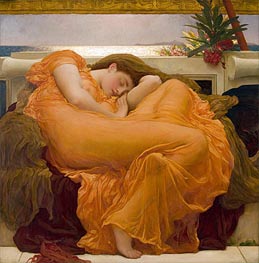
Giclée Canvas Print
$97.60
$97.60
SKU: 2580-LLF
Lord Frederick Leighton
Original Size:120.6 x 120.6 cm
Museo de Arte, Ponce
Lord Frederick Leighton
Original Size:120.6 x 120.6 cm
Museo de Arte, Ponce
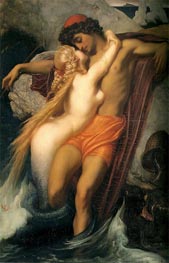
Giclée Canvas Print
$69.56
$69.56
SKU: 2598-LLF
Lord Frederick Leighton
Original Size:66.4 x 49 cm
Private Collection
Lord Frederick Leighton
Original Size:66.4 x 49 cm
Private Collection
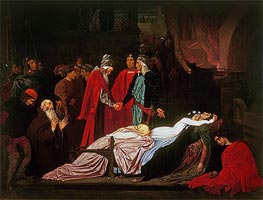
Giclée Canvas Print
$74.36
$74.36
SKU: 15452-LLF
Lord Frederick Leighton
Original Size:unknown
Private Collection
Lord Frederick Leighton
Original Size:unknown
Private Collection
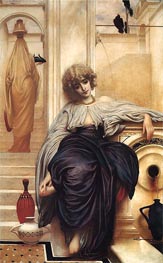
Giclée Canvas Print
$64.40
$64.40
SKU: 2602-LLF
Lord Frederick Leighton
Original Size:101.6 x 63 cm
Tate Gallery, London, UK
Lord Frederick Leighton
Original Size:101.6 x 63 cm
Tate Gallery, London, UK
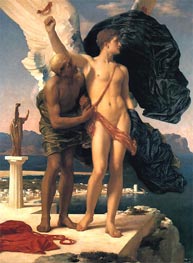
Giclée Canvas Print
$71.69
$71.69
SKU: 2583-LLF
Lord Frederick Leighton
Original Size:138.2 x 106.5 cm
Private Collection
Lord Frederick Leighton
Original Size:138.2 x 106.5 cm
Private Collection
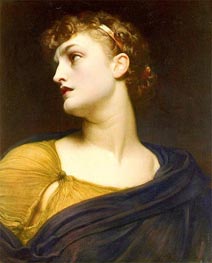
Giclée Canvas Print
$64.40
$64.40
SKU: 2601-LLF
Lord Frederick Leighton
Original Size:60.3 x 49.5 cm
Private Collection
Lord Frederick Leighton
Original Size:60.3 x 49.5 cm
Private Collection
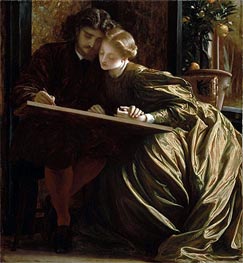
Giclée Canvas Print
$90.15
$90.15
SKU: 2589-LLF
Lord Frederick Leighton
Original Size:83.8 x 76.8 cm
Boston Museum of Fine Arts, Massachusetts, USA
Lord Frederick Leighton
Original Size:83.8 x 76.8 cm
Boston Museum of Fine Arts, Massachusetts, USA
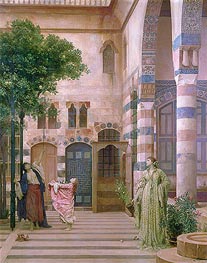
Giclée Canvas Print
$76.85
$76.85
SKU: 15424-LLF
Lord Frederick Leighton
Original Size:134 x 108 cm
Private Collection
Lord Frederick Leighton
Original Size:134 x 108 cm
Private Collection
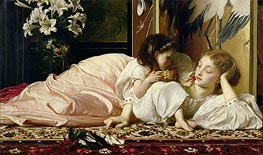
Giclée Canvas Print
$64.40
$64.40
SKU: 2588-LLF
Lord Frederick Leighton
Original Size:48 x 82 cm
Blackburn Museum and Art Gallery, Lancashire, UK
Lord Frederick Leighton
Original Size:48 x 82 cm
Blackburn Museum and Art Gallery, Lancashire, UK
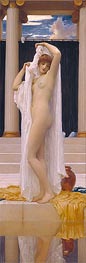
Giclée Canvas Print
$64.40
$64.40
SKU: 2590-LLF
Lord Frederick Leighton
Original Size:189.2 x 62.2 cm
Tate Gallery, London, UK
Lord Frederick Leighton
Original Size:189.2 x 62.2 cm
Tate Gallery, London, UK
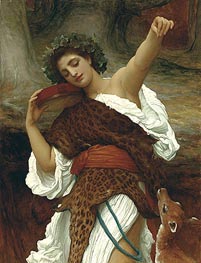
Giclée Canvas Print
$74.53
$74.53
SKU: 15468-LLF
Lord Frederick Leighton
Original Size:128.5 x 95.2 cm
Private Collection
Lord Frederick Leighton
Original Size:128.5 x 95.2 cm
Private Collection
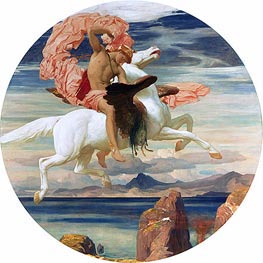
Giclée Canvas Print
$68.28
$68.28
SKU: 15438-LLF
Lord Frederick Leighton
Original Size:184 x 184 cm
New Walk Museum and Art Gallery, Leicester, UK
Lord Frederick Leighton
Original Size:184 x 184 cm
New Walk Museum and Art Gallery, Leicester, UK
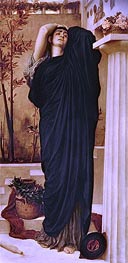
Giclée Canvas Print
$64.40
$64.40
SKU: 15436-LLF
Lord Frederick Leighton
Original Size:128.3 x 73.7 cm
Ferens Art Gallery, Hull City, UK
Lord Frederick Leighton
Original Size:128.3 x 73.7 cm
Ferens Art Gallery, Hull City, UK
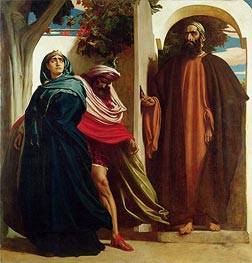
Giclée Canvas Print
$93.53
$93.53
SKU: 15434-LLF
Lord Frederick Leighton
Original Size:238.8 x 231 cm
Public Collection
Lord Frederick Leighton
Original Size:238.8 x 231 cm
Public Collection
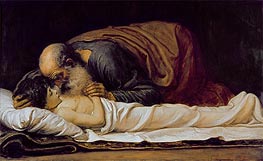
Giclée Canvas Print
$64.40
$64.40
SKU: 15428-LLF
Lord Frederick Leighton
Original Size:81.3 x 137 cm
Leighton House Museum, London, UK
Lord Frederick Leighton
Original Size:81.3 x 137 cm
Leighton House Museum, London, UK
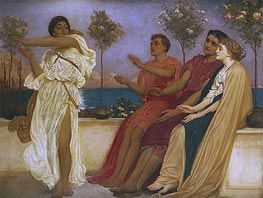
Giclée Canvas Print
$73.11
$73.11
SKU: 15459-LLF
Lord Frederick Leighton
Original Size:unknown
Private Collection
Lord Frederick Leighton
Original Size:unknown
Private Collection
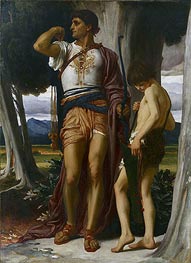
Giclée Canvas Print
$70.98
$70.98
SKU: 2621-LLF
Lord Frederick Leighton
Original Size:171.4 x 124.4 cm
Minneapolis Institute of Arts, Minnesota, USA
Lord Frederick Leighton
Original Size:171.4 x 124.4 cm
Minneapolis Institute of Arts, Minnesota, USA
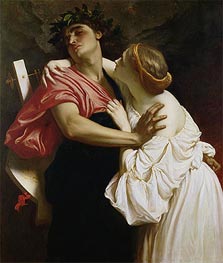
Giclée Canvas Print
$82.70
$82.70
SKU: 15417-LLF
Lord Frederick Leighton
Original Size:168.3 x 151 cm
Leighton House Museum, London, UK
Lord Frederick Leighton
Original Size:168.3 x 151 cm
Leighton House Museum, London, UK
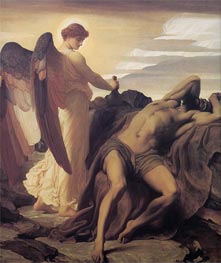
Giclée Canvas Print
$87.67
$87.67
SKU: 2594-LLF
Lord Frederick Leighton
Original Size:234.3 x 210.4 cm
Walker Art Gallery, Liverpool, UK
Lord Frederick Leighton
Original Size:234.3 x 210.4 cm
Walker Art Gallery, Liverpool, UK
Giclée Canvas Print
$70.63
$70.63
SKU: 15445-LLF
Lord Frederick Leighton
Original Size:254 x 183 cm
Leighton House Museum, London, UK
Lord Frederick Leighton
Original Size:254 x 183 cm
Leighton House Museum, London, UK
Giclée Paper Art Print
$60.98
$60.98
SKU: 15405-LLF
Lord Frederick Leighton
Original Size:36.3 x 33.2 cm
Private Collection
Lord Frederick Leighton
Original Size:36.3 x 33.2 cm
Private Collection
Giclée Canvas Print
$69.21
$69.21
SKU: 2614-LLF
Lord Frederick Leighton
Original Size:153 x 111 cm
Lady Lever Art Gallery, Port Sunlight, UK
Lord Frederick Leighton
Original Size:153 x 111 cm
Lady Lever Art Gallery, Port Sunlight, UK
Giclée Canvas Print
$91.40
$91.40
SKU: 15451-LLF
Lord Frederick Leighton
Original Size:63.7 x 60 cm
Walker Art Gallery, Liverpool, UK
Lord Frederick Leighton
Original Size:63.7 x 60 cm
Walker Art Gallery, Liverpool, UK
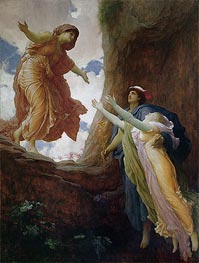
Giclée Canvas Print
$73.65
$73.65
SKU: 2619-LLF
Lord Frederick Leighton
Original Size:203 x 152 cm
City Art Gallery, Leeds, UK
Lord Frederick Leighton
Original Size:203 x 152 cm
City Art Gallery, Leeds, UK