
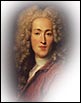
Nicolas Lancret Giclée Fine Art Prints 1 of 3
1690-1743
French Rococo Painter
Two paintings shown at the Place Dauphine in Paris, around the time of the Regency, drew enthusiastic attention - and the wrong attribution. Visitors assumed they were by Antoine Watteau, the rising star of the fête galante. They were, in fact, the work of Nicolas Lancret, then in his mid-twenties, and the misunderstanding both made his career and reportedly soured his friendship with the older artist. Born in Paris on 22 January 1690 and dying there on 14 September 1743, Lancret would spend the remainder of his life painting scenes of light, leisure, and quiet sociability that captured the temper of Regency France with uncommon fluency.
His training began conventionally enough. Apprenticed to Pierre d'Ulin, a competent if undistinguished history painter, the young man chafed at the demands of grand-manner instruction. Drawn instead to the looser, more theatrical inventions of Claude Gillot - whose other notable pupil happened to be Watteau himself - he transferred allegiances and worked in Gillot's studio from 1712 to 1713. The slender, almost weightless figures that populate his earlier canvases owe a clear debt to that period, as does his appetite for improvised theatre, masquerade, and rustic fête.
Watteau's example proved harder to escape. Lancret studied his elder's harlequins and parkland reveries with a devotion that bordered on imitation, and the Place Dauphine episode confirms how convincingly he could inhabit the same idiom. Reception by the Académie Royale followed in 1718, securing his place in the Parisian art world at a moment when the death of Louis XIV had loosened the grip of formal classicism and made room for something more intimate. The Régence under Philippe d'Orléans favoured precisely the kind of pictures Lancret was learning to paint: small, charming, decorative, attuned to private rather than public emotion.
His subjects rarely strayed from the polite pleasures of his age. Balls in candlelit interiors, village weddings under spreading trees, fairs and theatrical interludes, picnics in shaded glades - the Rococo vocabulary fitted him entirely, and he refined it across a long, productive career. Commissions for the Palace of Versailles followed, and his reputation eventually carried as far as Berlin, where Frederick the Great became an ardent collector. Le Déjeuner de jambon, painted in 1735 and now at the Musée Condé in Chantilly, shows him at his most assured: a hunting party paused for a meal, the figures arranged with theatrical ease, the still life of glass and meat handled with a confident, slightly dry touch.
That dryness was noticed. The art historian Michael Levey, weighing his achievement two centuries later, judged him no poet but a charming essayist - a verdict that has stuck, and that contains its own quiet justice. Where Watteau achieves a melancholy that lingers, Lancret offers conversation, anecdote, social intelligence. His draughtsmanship, schooled in part by an early stint with an engraver, is precise rather than searching; his colour bright rather than mysterious. Perhaps the comparison is unfair. He was, after all, doing something different.
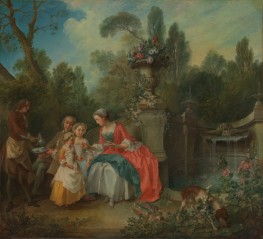
In 1735 the Académie named him a councillor, formal recognition of a standing he had long since earned. The years that followed brought a perceptible deepening. His figures grew more solid, more weighted into their surroundings, less inclined to drift across the picture plane. Works such as Le Montreur de lanterne magique reveal a more considered relationship between figures and landscape, while his last painting, Family in a Garden - now in the National Gallery, London - is widely held to be his finest. A small girl, ringed by attentive relatives, lifts a cup of coffee to her lips for the first time. The pastel harmonies, the easy circulation of glances, the gentle humour of the moment all anticipate Fragonard and even, across the Channel, the conversation pieces of Thomas Gainsborough.
Of his private life little remains beyond a striking late episode. Lancret lived a bachelor existence well into his fifties, until in 1741 he married a young woman of eighteen, the granddaughter of the playwright Edme Boursault. He had reportedly found her and her dying mother in an attic in poverty, and learned that she was about to be sent to a convent. Whatever the precise truth of the story, the marriage lasted only two years. Pneumonia carried him off on 14 September 1743.
He left a substantial body of work, more than eighty compositions of which were engraved and circulated widely across Europe. The British Museum holds a fine series of his red chalk studies, supple and direct, while the National Gallery in London preserves the Four Ages of Man, cited in d'Argenville's eighteenth-century survey as among the principal achievements of Nicolas Lancret. Reduced for a time to the status of a lesser Watteau, he has been steadily restored to his own ground by recent scholarship. The pleasures he painted - small, civilised, alert to the rhythms of company - are not so different from the ones we still pursue, and his attentiveness to them has worn well.
His training began conventionally enough. Apprenticed to Pierre d'Ulin, a competent if undistinguished history painter, the young man chafed at the demands of grand-manner instruction. Drawn instead to the looser, more theatrical inventions of Claude Gillot - whose other notable pupil happened to be Watteau himself - he transferred allegiances and worked in Gillot's studio from 1712 to 1713. The slender, almost weightless figures that populate his earlier canvases owe a clear debt to that period, as does his appetite for improvised theatre, masquerade, and rustic fête.
Watteau's example proved harder to escape. Lancret studied his elder's harlequins and parkland reveries with a devotion that bordered on imitation, and the Place Dauphine episode confirms how convincingly he could inhabit the same idiom. Reception by the Académie Royale followed in 1718, securing his place in the Parisian art world at a moment when the death of Louis XIV had loosened the grip of formal classicism and made room for something more intimate. The Régence under Philippe d'Orléans favoured precisely the kind of pictures Lancret was learning to paint: small, charming, decorative, attuned to private rather than public emotion.
His subjects rarely strayed from the polite pleasures of his age. Balls in candlelit interiors, village weddings under spreading trees, fairs and theatrical interludes, picnics in shaded glades - the Rococo vocabulary fitted him entirely, and he refined it across a long, productive career. Commissions for the Palace of Versailles followed, and his reputation eventually carried as far as Berlin, where Frederick the Great became an ardent collector. Le Déjeuner de jambon, painted in 1735 and now at the Musée Condé in Chantilly, shows him at his most assured: a hunting party paused for a meal, the figures arranged with theatrical ease, the still life of glass and meat handled with a confident, slightly dry touch.
That dryness was noticed. The art historian Michael Levey, weighing his achievement two centuries later, judged him no poet but a charming essayist - a verdict that has stuck, and that contains its own quiet justice. Where Watteau achieves a melancholy that lingers, Lancret offers conversation, anecdote, social intelligence. His draughtsmanship, schooled in part by an early stint with an engraver, is precise rather than searching; his colour bright rather than mysterious. Perhaps the comparison is unfair. He was, after all, doing something different.
In 1735 the Académie named him a councillor, formal recognition of a standing he had long since earned. The years that followed brought a perceptible deepening. His figures grew more solid, more weighted into their surroundings, less inclined to drift across the picture plane. Works such as Le Montreur de lanterne magique reveal a more considered relationship between figures and landscape, while his last painting, Family in a Garden - now in the National Gallery, London - is widely held to be his finest. A small girl, ringed by attentive relatives, lifts a cup of coffee to her lips for the first time. The pastel harmonies, the easy circulation of glances, the gentle humour of the moment all anticipate Fragonard and even, across the Channel, the conversation pieces of Thomas Gainsborough.
Of his private life little remains beyond a striking late episode. Lancret lived a bachelor existence well into his fifties, until in 1741 he married a young woman of eighteen, the granddaughter of the playwright Edme Boursault. He had reportedly found her and her dying mother in an attic in poverty, and learned that she was about to be sent to a convent. Whatever the precise truth of the story, the marriage lasted only two years. Pneumonia carried him off on 14 September 1743.
He left a substantial body of work, more than eighty compositions of which were engraved and circulated widely across Europe. The British Museum holds a fine series of his red chalk studies, supple and direct, while the National Gallery in London preserves the Four Ages of Man, cited in d'Argenville's eighteenth-century survey as among the principal achievements of Nicolas Lancret. Reduced for a time to the status of a lesser Watteau, he has been steadily restored to his own ground by recent scholarship. The pleasures he painted - small, civilised, alert to the rhythms of company - are not so different from the ones we still pursue, and his attentiveness to them has worn well.
67 Nicolas Lancret Artworks
Page 1 of 3
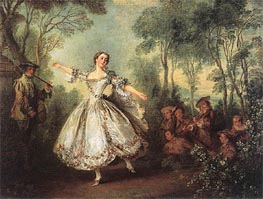
Giclée Canvas Print
$72.33
$72.33
SKU: 2967-LAN
Nicolas Lancret
Original Size:41.7 x 54.5 cm
The Wallace Collection, London, UK
Nicolas Lancret
Original Size:41.7 x 54.5 cm
The Wallace Collection, London, UK
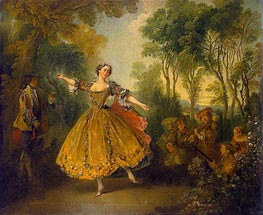
Giclée Canvas Print
$78.77
$78.77
SKU: 2969-LAN
Nicolas Lancret
Original Size:45 x 55 cm
State Hermitage Museum, St. Petersburg, Russia
Nicolas Lancret
Original Size:45 x 55 cm
State Hermitage Museum, St. Petersburg, Russia
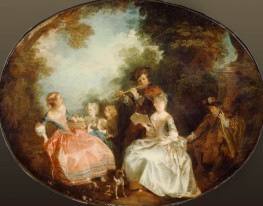
Giclée Canvas Print
$75.44
$75.44
SKU: 21840-LAN
Nicolas Lancret
Original Size:83 x 104 cm
Pushkin Museum of Fine Arts, Moscow, Russia
Nicolas Lancret
Original Size:83 x 104 cm
Pushkin Museum of Fine Arts, Moscow, Russia
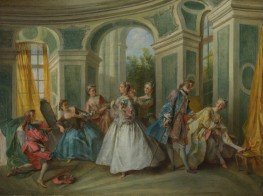
Giclée Canvas Print
$63.52
$63.52
SKU: 22406-LAN
Nicolas Lancret
Original Size:34.3 x 45.3 cm
National Gallery, London, UK
Nicolas Lancret
Original Size:34.3 x 45.3 cm
National Gallery, London, UK
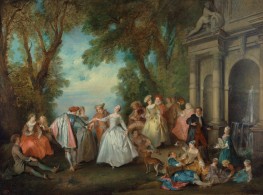
Giclée Canvas Print
$71.59
$71.59
SKU: 22420-LAN
Nicolas Lancret
Original Size:97.8 x 130.8 cm
J. Paul Getty Museum, Los Angeles, USA
Nicolas Lancret
Original Size:97.8 x 130.8 cm
J. Paul Getty Museum, Los Angeles, USA
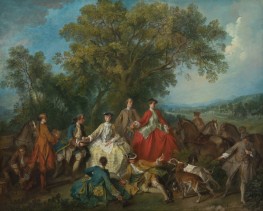
Giclée Canvas Print
$77.37
$77.37
SKU: 22442-LAN
Nicolas Lancret
Original Size:61.5 x 74.8 cm
National Gallery of Art, Washington, USA
Nicolas Lancret
Original Size:61.5 x 74.8 cm
National Gallery of Art, Washington, USA
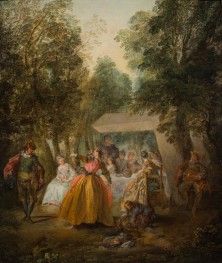
Giclée Canvas Print
$81.39
$81.39
SKU: 22445-LAN
Nicolas Lancret
Original Size:59.5 x 50.8 cm
University of North Carolina, Wilmington, USA
Nicolas Lancret
Original Size:59.5 x 50.8 cm
University of North Carolina, Wilmington, USA
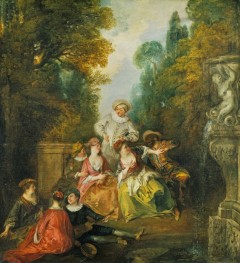
Giclée Canvas Print
$88.04
$88.04
SKU: 22440-LAN
Nicolas Lancret
Original Size:91 x 83 cm
The Wallace Collection, London, UK
Nicolas Lancret
Original Size:91 x 83 cm
The Wallace Collection, London, UK
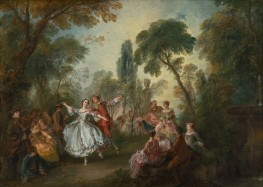
Giclée Canvas Print
$68.79
$68.79
SKU: 22443-LAN
Nicolas Lancret
Original Size:76.2 x 106.7 cm
National Gallery of Art, Washington, USA
Nicolas Lancret
Original Size:76.2 x 106.7 cm
National Gallery of Art, Washington, USA
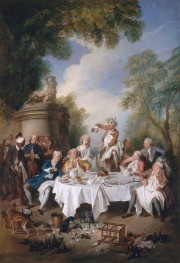
Giclée Canvas Print
$65.99
$65.99
SKU: 22471-LAN
Nicolas Lancret
Original Size:188 x 123 cm
Musee Conde, Chantilly, France
Nicolas Lancret
Original Size:188 x 123 cm
Musee Conde, Chantilly, France
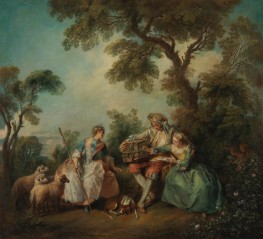
Giclée Canvas Print
$67.06
$67.06
SKU: 22402-LAN
Nicolas Lancret
Original Size:43.9 x 48 cm
Alte Pinakothek, Munich, Germany
Nicolas Lancret
Original Size:43.9 x 48 cm
Alte Pinakothek, Munich, Germany
Giclée Canvas Print
$74.04
$74.04
SKU: 22421-LAN
Nicolas Lancret
Original Size:69 x 84 cm
Louvre Museum, Paris, France
Nicolas Lancret
Original Size:69 x 84 cm
Louvre Museum, Paris, France
Giclée Canvas Print
$63.52
$63.52
SKU: 22408-LAN
Nicolas Lancret
Original Size:34.6 x 45.4 cm
National Gallery, London, UK
Nicolas Lancret
Original Size:34.6 x 45.4 cm
National Gallery, London, UK
Giclée Canvas Print
$71.07
$71.07
SKU: 22428-LAN
Nicolas Lancret
Original Size:45.7 x 62.9 cm
Frick Collection, New York, USA
Nicolas Lancret
Original Size:45.7 x 62.9 cm
Frick Collection, New York, USA
Giclée Canvas Print
$87.87
$87.87
SKU: 22405-LAN
Nicolas Lancret
Original Size:88.9 x 97.8 cm
National Gallery, London, UK
Nicolas Lancret
Original Size:88.9 x 97.8 cm
National Gallery, London, UK
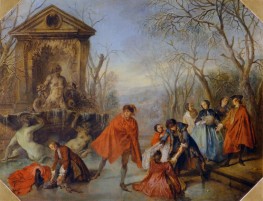
Giclée Canvas Print
$73.69
$73.69
SKU: 22461-LAN
Nicolas Lancret
Original Size:69 x 89 cm
Louvre Museum, Paris, France
Nicolas Lancret
Original Size:69 x 89 cm
Louvre Museum, Paris, France
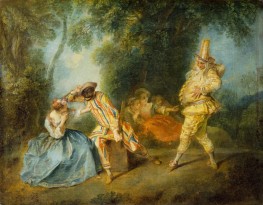
Giclée Canvas Print
$63.52
$63.52
SKU: 22434-LAN
Nicolas Lancret
Original Size:28.8 x 36.8 cm
The Wallace Collection, London, UK
Nicolas Lancret
Original Size:28.8 x 36.8 cm
The Wallace Collection, London, UK
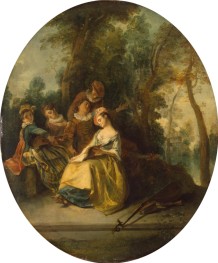
Giclée Canvas Print
$80.17
$80.17
SKU: 22419-LAN
Nicolas Lancret
Original Size:61.5 x 51.5 cm
State Hermitage Museum, St. Petersburg, Russia
Nicolas Lancret
Original Size:61.5 x 51.5 cm
State Hermitage Museum, St. Petersburg, Russia
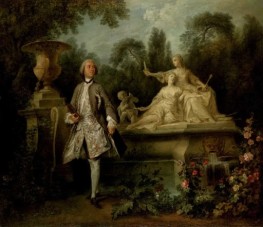
Giclée Canvas Print
$83.14
$83.14
SKU: 22429-LAN
Nicolas Lancret
Original Size:68.5 x 85 cm
Indianapolis Museum of Art, Indiana, USA
Nicolas Lancret
Original Size:68.5 x 85 cm
Indianapolis Museum of Art, Indiana, USA
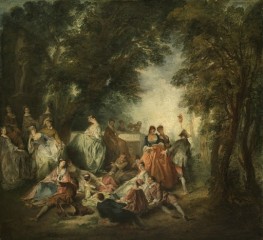
Giclée Canvas Print
$88.04
$88.04
SKU: 22430-LAN
Nicolas Lancret
Original Size:64.5 x 69.5 cm
Museu Calouste Gulbenkian, Lisbon, Portugal
Nicolas Lancret
Original Size:64.5 x 69.5 cm
Museu Calouste Gulbenkian, Lisbon, Portugal
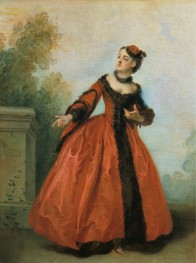
Giclée Canvas Print
$71.94
$71.94
SKU: 22439-LAN
Nicolas Lancret
Original Size:68 x 51.1 cm
The Wallace Collection, London, UK
Nicolas Lancret
Original Size:68 x 51.1 cm
The Wallace Collection, London, UK
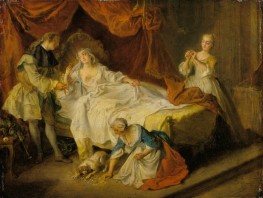
Giclée Canvas Print
$63.52
$63.52
SKU: 22432-LAN
Nicolas Lancret
Original Size:27.6 x 35.4 cm
The Wallace Collection, London, UK
Nicolas Lancret
Original Size:27.6 x 35.4 cm
The Wallace Collection, London, UK
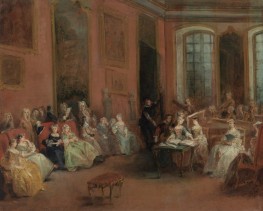
Giclée Canvas Print
$63.52
$63.52
SKU: 22403-LAN
Nicolas Lancret
Original Size:36.8 x 45.6 cm
Alte Pinakothek, Munich, Germany
Nicolas Lancret
Original Size:36.8 x 45.6 cm
Alte Pinakothek, Munich, Germany
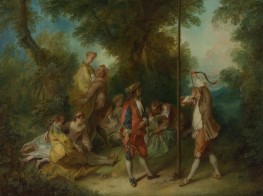
Giclée Canvas Print
$63.52
$63.52
SKU: 22409-LAN
Nicolas Lancret
Original Size:34.3 x 45.2 cm
National Gallery, London, UK
Nicolas Lancret
Original Size:34.3 x 45.2 cm
National Gallery, London, UK