
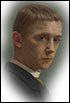
Félix Vallotton Giclée Fine Art Prints 1 of 12
1865-1925
Swiss Аrtist
In the stark contrast of black and white, Félix Vallotton found a visual language that would influence printmakers for generations. A Swiss-born artist who became central to the Parisian avant-garde, he moved between painting and graphic art with equal conviction, leaving behind a body of work that resists easy categorization. Born in Lausanne on December 28, 1865, and dying in Paris on December 29, 1925 - the day after his sixtieth birthday - Vallotton occupied a singular place among the artists of his era.
Lausanne in the 1860s was prosperous, Protestant, and provincial. The Vallotton household reflected these values precisely. His father ran a pharmacy and later acquired a chocolate factory; his mother came from a family of furniture craftsmen. Discipline and restraint governed daily life. Yet within this conventional framework, the young Félix developed an unusual gift for close observation. At the Collège Cantonal, where he completed classical studies in 1882, he gained early access to advanced drawing classes under Jean-Samson Guignard. His teacher recognized something distinctive - a capacity for realism that went beyond mere competence.
Paris beckoned. In January 1882, barely seventeen, Vallotton settled in the Rue Jacob in Saint-Germain-des-Prés and enrolled at the Académie Julian. Under Jules Joseph Lefebvre and Gustave Boulanger, he refined his technique while spending long hours in the Louvre. Leonardo, Holbein, Dürer, Ingres - these became his touchstones. Ingres in particular would remain a lasting reference throughout his career, visible in the crisp linearity and psychological precision of his portraits. By 1885, Vallotton had begun his Livre de Raison, a meticulous notebook cataloguing every painting, drawing, sculpture, and print he produced. When he died, this personal ledger documented over seventeen hundred works.
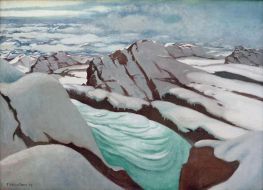
Recognition came early but proved difficult to sustain. His Portrait of Monsieur Ursenbach, shown at the Paris Salon in 1885, earned an honorable mention. Two years later, however, his unsparing realism in Les Parents de l'artiste drew sharp criticism from Lefebvre himself. Financial pressures mounted. His father's business struggled; support from home diminished. A bout of typhoid fever and subsequent depression forced a recuperative stay in Zermatt in 1889. During those weeks in the Alps, he painted mountain landscapes - quiet works that offered respite from Parisian uncertainty.
That same year, at the Paris Universal Exposition, Vallotton encountered Japanese prints. The encounter proved transformative. Woodcuts by Hokusai and others demonstrated how flat areas of color and bold compositional choices could convey meaning without academic modeling. He began experimenting with xylography, simplifying his drawings until only essential forms remained. His first woodcut - a portrait of the poet Paul Verlaine - announced a new direction. The writer Octave Uzanne heralded his work as nothing less than a renaissance of the woodcut.
By 1892, Vallotton had joined Les Nabis, a loose collective of young artists including Pierre Bonnard, Édouard Vuillard, Maurice Denis, and Ker-Xavier Roussel. Most had studied at the Académie Julian. They shared an interest in decorative art, symbolism, and the rejection of academic convention, though their individual styles diverged considerably. Vallotton stood somewhat apart - "The Foreign Nabi," they called him, acknowledging both his Swiss origins and his temperamental reserve. His friendship with Vuillard, however, would endure for life.
During the 1890s, his woodcuts brought international attention. Publications across Europe and the United States reproduced his images of street scenes, domestic interiors, bathing women, and crowds at demonstrations. In 1898, La Revue Blanche published Intimités, a series of ten woodcuts depicting charged encounters between men and women in bourgeois interiors. These prints combine graphic wit with psychological tension; desire, deception, and unspoken grievance play out in rooms stripped of reassuring detail. The influence of this series extended to artists as varied as Edvard Munch, Aubrey Beardsley, and Ernst Ludwig Kirchner.
A decisive shift came in 1899 with his marriage to Gabrielle Rodrigues-Hénriques, widowed daughter of Alexandre Bernheim, founder of the prestigious Galerie Bernheim-Jeune. The union brought three stepchildren and, crucially, financial stability. Vallotton gradually turned away from printmaking. He had produced few woodcuts after 1901, concentrating instead on painting. Portraits, nudes, still lifes, and landscapes occupied him now - works executed with smooth surfaces and hard edges, rendered in cool, almost detached observation. His Bathers on a Summer Evening from 1892-93, now in the Kunsthaus Zürich, exemplifies the deliberate awkwardness of his Nabi period. Later canvases such as The Turkish Bath, praised by Guillaume Apollinaire, reveal an artist refining his vision while resisting fashionable sentiment.
Critical reception remained mixed. A review in the Neue Zürcher Zeitung in 1910 complained that Vallotton "paints like a policeman," finding his colors joyless and his surfaces unbearably dry. Such assessments missed the point. His unflinching clarity anticipated the New Objectivity movement that emerged in Germany during the 1920s; parallels with Edward Hopper's later work suggest a shared sensibility toward urban isolation and domestic unease. In 1912, the French government offered him the Legion of Honour. Like Bonnard and Vuillard, he declined.
Naturalized as a French citizen in 1900, Vallotton volunteered for military service when war broke out in 1914. Rejected at forty-eight, he contributed what he could. In 1915-16, he returned to woodcut for the first time in years, producing the series This is War - his final prints. In 1917, the Ministry of Fine Arts sent him to the front lines for three weeks. Sketches made there became the basis for paintings like The Church of Souain in Silhouette, recording devastated landscapes with the same cool detachment that characterized his domestic scenes.
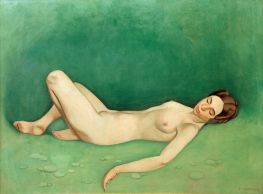
After the armistice, Vallotton retreated to gentler subjects. Composite landscapes - assembled in the studio from memory - and voluptuous nudes occupied his final years. Health troubles sent him south to Cagnes-sur-Mer in winter and to Honfleur in summer. He continued painting until the end. When cancer claimed him in December 1925, he left behind approximately seventeen hundred paintings, two hundred prints, hundreds of drawings, and several sculptures. A retrospective at the Salon des Indépendants followed in 1926, placing his work alongside that of van Gogh, Seurat, and Toulouse-Lautrec.
Perhaps what distinguishes Félix Vallotton most is his refusal to please. Where others softened edges or warmed palettes to court approval, he maintained an almost clinical precision. His interiors feel airless not from incompetence but from intention - these are spaces where emotion hides beneath composed surfaces. Today, his woodcuts continue to inform contemporary printmaking, while his paintings invite reconsideration of what realism might achieve when stripped of sentiment. In restraint, he discovered a language entirely his own.
Lausanne in the 1860s was prosperous, Protestant, and provincial. The Vallotton household reflected these values precisely. His father ran a pharmacy and later acquired a chocolate factory; his mother came from a family of furniture craftsmen. Discipline and restraint governed daily life. Yet within this conventional framework, the young Félix developed an unusual gift for close observation. At the Collège Cantonal, where he completed classical studies in 1882, he gained early access to advanced drawing classes under Jean-Samson Guignard. His teacher recognized something distinctive - a capacity for realism that went beyond mere competence.
Paris beckoned. In January 1882, barely seventeen, Vallotton settled in the Rue Jacob in Saint-Germain-des-Prés and enrolled at the Académie Julian. Under Jules Joseph Lefebvre and Gustave Boulanger, he refined his technique while spending long hours in the Louvre. Leonardo, Holbein, Dürer, Ingres - these became his touchstones. Ingres in particular would remain a lasting reference throughout his career, visible in the crisp linearity and psychological precision of his portraits. By 1885, Vallotton had begun his Livre de Raison, a meticulous notebook cataloguing every painting, drawing, sculpture, and print he produced. When he died, this personal ledger documented over seventeen hundred works.
Recognition came early but proved difficult to sustain. His Portrait of Monsieur Ursenbach, shown at the Paris Salon in 1885, earned an honorable mention. Two years later, however, his unsparing realism in Les Parents de l'artiste drew sharp criticism from Lefebvre himself. Financial pressures mounted. His father's business struggled; support from home diminished. A bout of typhoid fever and subsequent depression forced a recuperative stay in Zermatt in 1889. During those weeks in the Alps, he painted mountain landscapes - quiet works that offered respite from Parisian uncertainty.
That same year, at the Paris Universal Exposition, Vallotton encountered Japanese prints. The encounter proved transformative. Woodcuts by Hokusai and others demonstrated how flat areas of color and bold compositional choices could convey meaning without academic modeling. He began experimenting with xylography, simplifying his drawings until only essential forms remained. His first woodcut - a portrait of the poet Paul Verlaine - announced a new direction. The writer Octave Uzanne heralded his work as nothing less than a renaissance of the woodcut.
By 1892, Vallotton had joined Les Nabis, a loose collective of young artists including Pierre Bonnard, Édouard Vuillard, Maurice Denis, and Ker-Xavier Roussel. Most had studied at the Académie Julian. They shared an interest in decorative art, symbolism, and the rejection of academic convention, though their individual styles diverged considerably. Vallotton stood somewhat apart - "The Foreign Nabi," they called him, acknowledging both his Swiss origins and his temperamental reserve. His friendship with Vuillard, however, would endure for life.
During the 1890s, his woodcuts brought international attention. Publications across Europe and the United States reproduced his images of street scenes, domestic interiors, bathing women, and crowds at demonstrations. In 1898, La Revue Blanche published Intimités, a series of ten woodcuts depicting charged encounters between men and women in bourgeois interiors. These prints combine graphic wit with psychological tension; desire, deception, and unspoken grievance play out in rooms stripped of reassuring detail. The influence of this series extended to artists as varied as Edvard Munch, Aubrey Beardsley, and Ernst Ludwig Kirchner.
A decisive shift came in 1899 with his marriage to Gabrielle Rodrigues-Hénriques, widowed daughter of Alexandre Bernheim, founder of the prestigious Galerie Bernheim-Jeune. The union brought three stepchildren and, crucially, financial stability. Vallotton gradually turned away from printmaking. He had produced few woodcuts after 1901, concentrating instead on painting. Portraits, nudes, still lifes, and landscapes occupied him now - works executed with smooth surfaces and hard edges, rendered in cool, almost detached observation. His Bathers on a Summer Evening from 1892-93, now in the Kunsthaus Zürich, exemplifies the deliberate awkwardness of his Nabi period. Later canvases such as The Turkish Bath, praised by Guillaume Apollinaire, reveal an artist refining his vision while resisting fashionable sentiment.
Critical reception remained mixed. A review in the Neue Zürcher Zeitung in 1910 complained that Vallotton "paints like a policeman," finding his colors joyless and his surfaces unbearably dry. Such assessments missed the point. His unflinching clarity anticipated the New Objectivity movement that emerged in Germany during the 1920s; parallels with Edward Hopper's later work suggest a shared sensibility toward urban isolation and domestic unease. In 1912, the French government offered him the Legion of Honour. Like Bonnard and Vuillard, he declined.
Naturalized as a French citizen in 1900, Vallotton volunteered for military service when war broke out in 1914. Rejected at forty-eight, he contributed what he could. In 1915-16, he returned to woodcut for the first time in years, producing the series This is War - his final prints. In 1917, the Ministry of Fine Arts sent him to the front lines for three weeks. Sketches made there became the basis for paintings like The Church of Souain in Silhouette, recording devastated landscapes with the same cool detachment that characterized his domestic scenes.
After the armistice, Vallotton retreated to gentler subjects. Composite landscapes - assembled in the studio from memory - and voluptuous nudes occupied his final years. Health troubles sent him south to Cagnes-sur-Mer in winter and to Honfleur in summer. He continued painting until the end. When cancer claimed him in December 1925, he left behind approximately seventeen hundred paintings, two hundred prints, hundreds of drawings, and several sculptures. A retrospective at the Salon des Indépendants followed in 1926, placing his work alongside that of van Gogh, Seurat, and Toulouse-Lautrec.
Perhaps what distinguishes Félix Vallotton most is his refusal to please. Where others softened edges or warmed palettes to court approval, he maintained an almost clinical precision. His interiors feel airless not from incompetence but from intention - these are spaces where emotion hides beneath composed surfaces. Today, his woodcuts continue to inform contemporary printmaking, while his paintings invite reconsideration of what realism might achieve when stripped of sentiment. In restraint, he discovered a language entirely his own.
267 Félix Vallotton Artworks
Page 1 of 12
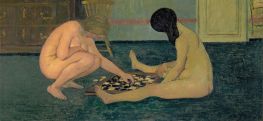
Giclée Canvas Print
$63.91
$63.91
SKU: 20022-FVA
Félix Vallotton
Original Size:25.5 x 52.5 cm
Public Collection
Félix Vallotton
Original Size:25.5 x 52.5 cm
Public Collection
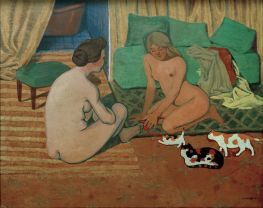
Giclée Canvas Print
$68.27
$68.27
SKU: 20140-FVA
Félix Vallotton
Original Size:41 x 52 cm
Cantonal Museum of Fine Arts, Lausanne, Switzerland
Félix Vallotton
Original Size:41 x 52 cm
Cantonal Museum of Fine Arts, Lausanne, Switzerland
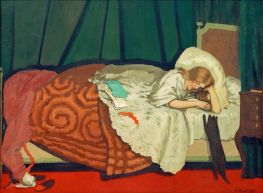
Giclée Canvas Print
$73.79
$73.79
SKU: 20101-FVA
Félix Vallotton
Original Size:48 x 63 cm
Private Collection
Félix Vallotton
Original Size:48 x 63 cm
Private Collection
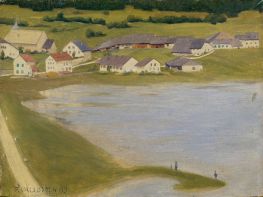
Giclée Canvas Print
$63.91
$63.91
SKU: 20260-FVA
Félix Vallotton
Original Size:24.5 x 32.5 cm
Cantonal Museum of Fine Arts, Lausanne, Switzerland
Félix Vallotton
Original Size:24.5 x 32.5 cm
Cantonal Museum of Fine Arts, Lausanne, Switzerland
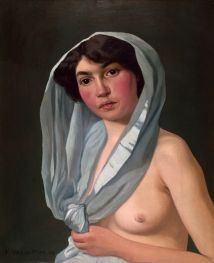
Giclée Canvas Print
$79.42
$79.42
SKU: 20242-FVA
Félix Vallotton
Original Size:61 x 50 cm
Public Collection
Félix Vallotton
Original Size:61 x 50 cm
Public Collection
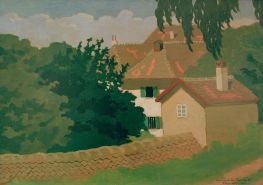
Giclée Canvas Print
$69.21
$69.21
SKU: 20063-FVA
Félix Vallotton
Original Size:40 x 56 cm
Private Collection
Félix Vallotton
Original Size:40 x 56 cm
Private Collection
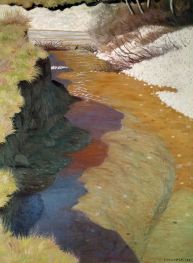
Giclée Canvas Print
$72.20
$72.20
SKU: 20236-FVA
Félix Vallotton
Original Size:80.5 x 60 cm
Cantonal Museum of Fine Arts, Lausanne, Switzerland
Félix Vallotton
Original Size:80.5 x 60 cm
Cantonal Museum of Fine Arts, Lausanne, Switzerland
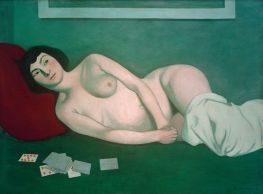
Giclée Canvas Print
$72.03
$72.03
SKU: 20217-FVA
Félix Vallotton
Original Size:97 x 130.5 cm
Von der Heydt Museum, Wuppertal, Germany
Félix Vallotton
Original Size:97 x 130.5 cm
Von der Heydt Museum, Wuppertal, Germany
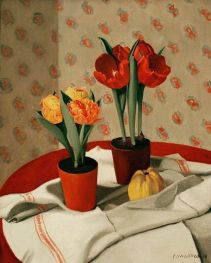
Giclée Canvas Print
$79.42
$79.42
SKU: 20042-FVA
Félix Vallotton
Original Size:61 x 50 cm
Private Collection
Félix Vallotton
Original Size:61 x 50 cm
Private Collection
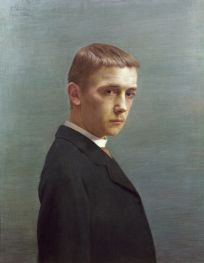
Giclée Canvas Print
$76.43
$76.43
SKU: 20251-FVA
Félix Vallotton
Original Size:70 x 55.2 cm
Cantonal Museum of Fine Arts, Lausanne, Switzerland
Félix Vallotton
Original Size:70 x 55.2 cm
Cantonal Museum of Fine Arts, Lausanne, Switzerland
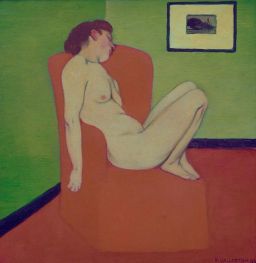
Giclée Canvas Print
$63.91
$63.91
SKU: 20093-FVA
Félix Vallotton
Original Size:28 x 27.7 cm
Public Collection
Félix Vallotton
Original Size:28 x 27.7 cm
Public Collection
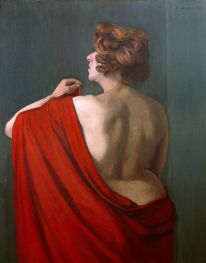
Giclée Canvas Print
$78.54
$78.54
SKU: 20267-FVA
Félix Vallotton
Original Size:100 x 81 cm
Cantonal Museum of Fine Arts, Lausanne, Switzerland
Félix Vallotton
Original Size:100 x 81 cm
Cantonal Museum of Fine Arts, Lausanne, Switzerland
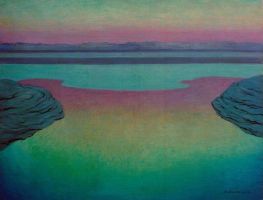
Giclée Canvas Print
$81.01
$81.01
SKU: 20136-FVA
Félix Vallotton
Original Size:61 x 73 cm
Public Collection
Félix Vallotton
Original Size:61 x 73 cm
Public Collection
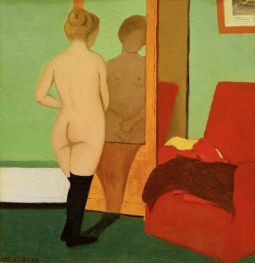
Giclée Canvas Print
$63.91
$63.91
SKU: 20086-FVA
Félix Vallotton
Original Size:27.5 x 28.5 cm
Private Collection
Félix Vallotton
Original Size:27.5 x 28.5 cm
Private Collection
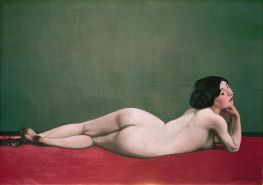
Giclée Canvas Print
$70.79
$70.79
SKU: 20168-FVA
Félix Vallotton
Original Size:73 x 100 cm
Public Collection
Félix Vallotton
Original Size:73 x 100 cm
Public Collection
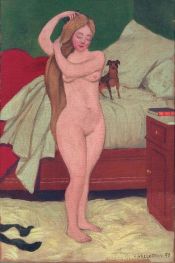
Giclée Canvas Print
$63.91
$63.91
SKU: 20087-FVA
Félix Vallotton
Original Size:33 x 22 cm
Private Collection
Félix Vallotton
Original Size:33 x 22 cm
Private Collection
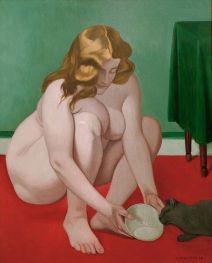
Giclée Canvas Print
$78.54
$78.54
SKU: 20037-FVA
Félix Vallotton
Original Size:100 x 81 cm
Private Collection
Félix Vallotton
Original Size:100 x 81 cm
Private Collection
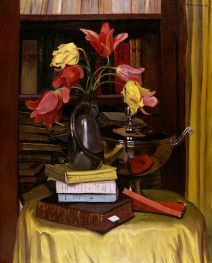
Giclée Canvas Print
$77.66
$77.66
SKU: 20248-FVA
Félix Vallotton
Original Size:81 x 65 cm
Private Collection
Félix Vallotton
Original Size:81 x 65 cm
Private Collection
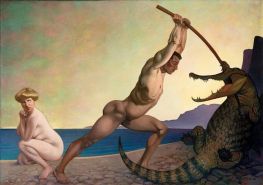
Giclée Canvas Print
$68.86
$68.86
SKU: 20195-FVA
Félix Vallotton
Original Size:160 x 225 cm
Public Collection
Félix Vallotton
Original Size:160 x 225 cm
Public Collection
Giclée Canvas Print
$66.74
$66.74
SKU: 20059-FVA
Félix Vallotton
Original Size:51 x 74 cm
Public Collection
Félix Vallotton
Original Size:51 x 74 cm
Public Collection
Giclée Canvas Print
$70.79
$70.79
SKU: 20072-FVA
Félix Vallotton
Original Size:73 x 100 cm
Kunsthaus, Zurich, Switzerland
Félix Vallotton
Original Size:73 x 100 cm
Kunsthaus, Zurich, Switzerland
Giclée Canvas Print
$81.71
$81.71
SKU: 20210-FVA
Félix Vallotton
Original Size:64 x 52 cm
Public Collection
Félix Vallotton
Original Size:64 x 52 cm
Public Collection
Giclée Canvas Print
$70.79
$70.79
SKU: 20091-FVA
Félix Vallotton
Original Size:95 x 130 cm
Public Collection
Félix Vallotton
Original Size:95 x 130 cm
Public Collection
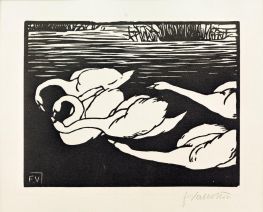
Giclée Paper Art Print
$60.52
$60.52
SKU: 20106-FVA
Félix Vallotton
Original Size:13.5 x 17.7 cm
Public Collection
Félix Vallotton
Original Size:13.5 x 17.7 cm
Public Collection