Still Life Art Prints

Still-Life - Art History of the Genre

Still lifes are paintings of motionless things: fruit, flowers, dead game and fish, shells, or glasses, silver, books, coins and pipes, arranged by the painter on a table or ledge. The genre includes flower and fruit pieces, breakfast and banquet tables, the showy pronkstilleven, the vanitas with its reminders of death, game pieces, kitchen and market scenes, the Spanish bodegón and the illusionistic trompe-l’œil. It became a specialty of its own in Flanders and the Netherlands during the last decades of the 16th century; the English name is borrowed from Dutch stilleven, while French, Italian and Spanish call it dead nature. Academic theory ranked it last among the genres, yet it never lacked admirers.

Painted food lined ancient Egyptian tombs, in the belief that it would become real for the dead. A Greek legend recorded by Pliny the Elder has the painters Zeuxis and Parrhasius competing in lifelike illusion, the earliest account of trompe-l’œil, and Pliny praises Peiraikos, whose pictures of humble things fetched more than the grand subjects of others. Roman wall paintings and mosaics at Pompeii and Herculaneum show glass bowls of fruit, and the skull as a sign of mortality also goes back to Roman times. Around 1300 Giotto and his pupils painted everyday objects in fictive niches, and late medieval manuscripts filled their borders with flowers, insects and objects, as in the Hours of Catherine of Cleves (about 1440).

Oil painting, developed in the Netherlands in the 15th century, let painters render objects with almost tangible realism. Jacopo de’ Barbari’s Still Life with Partridge and Gauntlets (1504, Alte Pinakothek, Munich) is one of the first still lifes to carry both a signature and a date. In Antwerp Pieter Aertsen’s A Meat Stall with the Holy Family Giving Alms (1551, Uppsala University) heaped meat across the foreground and pushed the sacred scene into the distance, founding the large kitchen and market picture. Caravaggio’s Basket of Fruit (about 1595-1600, Pinacoteca Ambrosiana, Milan), set at eye level with a worm-eaten apple and withered leaves, belonged to Cardinal Federico Borromeo. For him Jan Brueghel the Elder painted a flower piece in 1606, claiming it was done entirely from life and charging extra.

Around 1600 flower painting became a craze in the Netherlands, fed by new botany, cabinets of curiosities and a passion for tulips, newly brought from Turkey. Jan Brueghel the Elder and Ambrosius Bosschaert led the field, combining flowers of different seasons into single, impossibly perfect bouquets. Flowers carried meanings: the rose love and transience, the lily purity, the tulip display, the poppy sleep and death, while a butterfly could stand for resurrection and a dragonfly for brevity. With religious images banned from Dutch Reformed churches, the middle classes favored such pictures, sold mostly on the open market rather than commissioned, so painters chose their own subjects. Rachel Ruysch and Jan van Huysum carried the flower piece into the 18th century.

Dutch painters also refined the breakfast and banquet piece. Pieter Claesz and Willem Claesz Heda reduced them to near-monochrome harmonies of pewter, silver and glass, with a half-peeled lemon, a toppled goblet or a broken pie, as in Heda’s Breakfast Table with Blackberry Pie (1631, Gemäldegalerie Alte Meister, Dresden). From the 1640s Frans Snyders and Adriaen van Utrecht in Antwerp, then Jan Davidsz de Heem and Willem Kalf, painted the showy pronkstilleven, crowded with lobsters, exotic fruit and gilded cups. The vanitas placed a skull, an hourglass, a watch or a guttering candle among books and riches as a reminder of life’s brevity. Trompe-l’œil, which the Dutch called a little deception, pinned letters and quills to painted boards, as in Samuel van Hoogstraten’s letter racks of the 1650s.

The Spanish bodegón was austere. In Juan Sánchez Cotán’s Quince, Cabbage, Melon and Cucumber (about 1602, San Diego Museum of Art), a quince and a cabbage hang on strings in a dark window frame beside a melon and a cucumber; shortly afterward, in 1603, the painter entered a monastery. Spanish painters preferred raw fruit, unskinned game and plain stone ledges against bleak backgrounds, as in Francisco de Zurbarán’s Still Life with Lemons, Oranges and a Rose (1633, Norton Simon Museum, Pasadena). In Italy natura morta found many patrons, and women such as Fede Galizia and Giovanna Garzoni excelled at it. In 1667 the French theorist André Félibien ranked painters of fruit, flowers and shells below landscapists, and painters of dead things below those of living animals and, above all, of the human figure.

In the 18th century Jean Siméon Chardin painted small, quiet groups of kitchen things with soft, granular touches, as in The Ray (1728, Louvre), which won him entry to the French Academy. Jean-Baptiste Oudry set dead game against pale larder walls, and his White Duck (1753), a study in white on white, was stolen from Houghton Hall in 1990. In the 19th century Henri Fantin-Latour lived almost entirely by flower painting, and Édouard Manet’s Carnations and Clematis in a Crystal Vase (1883, Musée d’Orsay) shows the loose, bright touch of the new painting. The Impressionists dropped the dark background, and Gustave Caillebotte’s fruit stall seen from above was mocked as fruit in a bird’s-eye view. Vincent van Gogh’s Sunflowers (1888, National Gallery, London) turned a vase of flowers into a blaze of yellows.

Paul Cézanne used apples, jugs and tablecloths to rebuild space from color and planes, preparing the way for Cubism. Between 1910 and 1920 Pablo Picasso, Georges Braque and Juan Gris made still life the main testing ground of modern art, and Picasso’s Still Life with Chair Caning (1912, Musée Picasso, Paris) was among the first collages. Giorgio Morandi devoted decades to a few bottles and boxes, and Andy Warhol’s Campbell’s Soup Cans (1962, Museum of Modern Art, New York) turned the genre toward the mass-produced product. In a fine still life, look at how each surface is distinguished, from the bloom on a grape to a window reflected in a glass, how light falls from one side, and how a single fading petal or fly can change the meaning.

Page 1 of 69
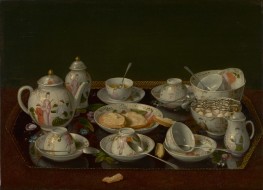
Jean-Étienne Liotard
Canvas Print
$61.69
SKU: 23102-LJE
Original Size: 37.8 x 51.6 cm
J. Paul Getty Museum, Los Angeles, USA
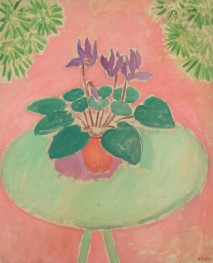
Henri Matisse
Canvas Print
$75.99
SKU: 23088-MAT
Original Size: unknown
Private Collection

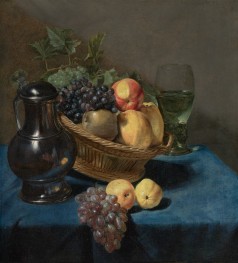
Judith Leyster
Canvas Print
$84.83
SKU: 23007-LEJ
Original Size: 68 x 62.5 cm
The Kremer Collection, Amsterdam, Netherlands
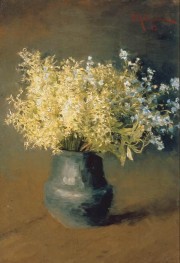
Isaac Ilyich Levitan
Canvas Print
$61.69
SKU: 22998-LEV
Original Size: 49 x 35 cm
The Tretyakov Gallery, Moscow, Russia
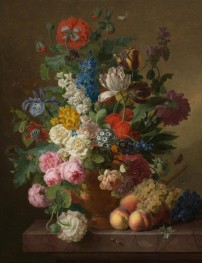
Jan Frans van Dael
Canvas Print
$71.91
SKU: 22976-DVJ
Original Size: 107.3 x 82.3 cm
National Gallery of Victoria, Melbourne, Australia

Abraham Mignon
Canvas Print
$73.10
SKU: 22813-MIG
Original Size: 110 x 84 cm
Galleria Sabauda, Turin, Italy

Fernand Léger
Canvas Print
$74.12
SKU: 22713-LEG
Original Size: 72.7 x 91.8 cm
Kunstmuseum Basel, Switzerland

Fernand Léger
Canvas Print
$61.69
SKU: 22709-LEG
Original Size: 185.4 x 80 cm
Kunstmuseum Basel, Switzerland

Fernand Léger
Canvas Print
$72.76
SKU: 22707-LEG
Original Size: 146 x 113.5 cm
Kunstmuseum Basel, Switzerland

Fernand Léger
Canvas Print
$68.68
SKU: 22706-LEG
Original Size: 130.7 x 97.6 cm
Kunstmuseum Basel, Switzerland

Fernand Léger
Canvas Print
$71.91
SKU: 22705-LEG
Original Size: 146 x 114.2 cm
Kunstmuseum Basel, Switzerland

Fernand Léger
Canvas Print
$74.12
SKU: 22704-LEG
Original Size: 92.1 x 72.8 cm
Kunstmuseum Basel, Switzerland

Salvador Dalí
Canvas Print
$61.69
SKU: 22679-DAS
Original Size: 30.5 x 33 cm
Gala-Salvador Dalí Foundation Museums, Figueres, Spain

Henri Matisse
Canvas Print
$73.61
SKU: 22644-MAT
Original Size: 73 x 92 cm
Private Collection

Henri Matisse
Canvas Print
$63.58
SKU: 22570-MAT
Original Size: 129.5 x 89.2 cm
Private Collection

Paul Lacroix
Canvas Print
$61.69
SKU: 22401-PLX
Original Size: 34.3 x 41.3 cm
National Gallery of Art, Washington, USA

Gustave Caillebotte
Canvas Print
$61.69
SKU: 22399-GUC
Original Size: 45.8 x 37.9 cm
Private Collection

Gustave Caillebotte
Canvas Print
$77.35
SKU: 22391-GUC
Original Size: unknown
Private Collection

Gustave Caillebotte
Canvas Print
$69.19
SKU: 22365-GUC
Original Size: 73 x 54 cm
Art Institute of Chicago, USA

Gustave Caillebotte
Canvas Print
$66.64
SKU: 22364-GUC
Original Size: 75.9 x 105.1 cm
Cleveland Museum of Art, USA

Gustave Caillebotte
Canvas Print
$77.86
SKU: 22362-GUC
Original Size: 65 x 54.3 cm
Private Collection

Gustave Caillebotte
Canvas Print
$77.69
SKU: 22361-GUC
Original Size: 65.1 x 54.1 cm
Private Collection

Gustave Caillebotte
Canvas Print
$77.35
SKU: 22355-GUC
Original Size: 61 x 50.5 cm
Private Collection

Gustave Caillebotte
Canvas Print
$61.69
SKU: 22354-GUC
Original Size: 46 x 38 cm
Private Collection

Back to top