Landscape Art Prints

Landscape - Art History of the Genre

Landscapes are paintings in which nature itself is the subject: hills and mountains, rivers, woods and fields, usually seen in a broad view under a sky that often carries the weather. The genre includes the ideal landscape of imagined classical scenery, the topographical view of a real place, the seascape, the winter scene, the moonlit night and the city view, or veduta. In the West landscape long ranked low in the academic hierarchy of genres, below history painting and portraiture, until the 19th century raised it to a leading art; in China, mountain-and-water ink painting was the most prestigious form of all. The English word, borrowed from Dutch landschap, named pictures before it named real views, and its first recorded use for a painting dates from 1598.

Minoan frescoes of around 1500 BCE are the earliest pure landscapes, and Roman wall paintings from the 1st century BCE, preserved at Pompeii and Herculaneum, show panoramas of lakes, shores and mountains. In China the tradition of shan shui, mountain and water, became the highest form of painting; in Fan Kuan’s Travelers among Mountains and Streams (11th century, National Palace Museum, Taipei) a tiny caravan passes beneath a towering cliff. In medieval Europe landscape almost vanished, returning in the 14th century as background with Giotto and in the illuminated calendars of the months in books of hours. Konrad Witz’s Miraculous Draught of Fishes (1444, Musée d’Art et d’Histoire, Geneva) is often cited as the first Western landscape to show an identifiable place, Lake Geneva.

Around 1500 Leonardo da Vinci and Albrecht Dürer made pure landscape drawings and watercolors, and in the early 16th century Albrecht Altdorfer and the German Danube School painted the first independent landscapes. In Antwerp Joachim Patinir created the world landscape, a vast panorama of rocks, rivers and sea seen from a high viewpoint, with tiny figures. Pieter Bruegel the Elder perfected the type, and in The Hunters in the Snow (1565, Kunsthistorisches Museum, Vienna) he looked down from a hilltop over a frozen valley. In Venice Giorgione and the young Titian created the pastoral ideal of classical poetry, a hilly, wooded Italy that many northern painters reproduced without ever making the journey.

In 17th-century Rome two Frenchmen, Claude Lorrain and Nicolas Poussin, perfected the ideal landscape: an imagined Arcadia of temples, trees and calm water, framed by dark foreground masses that lead the eye into a luminous distance. Small figures from myth or the Bible kept such pictures within history painting, the highest rank of the academic hierarchy, as in Poussin’s Landscape with the Ashes of Phocion (1648, Walker Art Gallery, Liverpool). Claude made the low sun itself his subject, filling harbors and pastures with golden haze. Salvator Rosa preferred the wild country of southern Italy, with jagged rocks, storms and bandits.

In the Dutch Golden Age landscape became a specialty in its own right, painted in small formats for private homes in a Calvinist society that had little use for religious pictures. Under low horizons and vast skies, painters caught light and weather with new subtlety, and period inventories named moonlit, woodland, farm and village scenes. Hendrick Avercamp filled frozen rivers with skaters, Aert van der Neer painted moonlit canals and Willem van de Velde the Younger ships and sea battles. Jacob van Ruisdael, the most versatile of all, painted forests, dunes and waterfalls, and Meindert Hobbema’s The Avenue at Middelharnis (1689, National Gallery, London) runs straight into the distance between tall, thin trees. In Flanders, Peter Paul Rubens painted large landscapes for his own houses.

In 18th-century Britain collectors prized Claude, whose views shaped both painting and the English landscape garden, and landscape in watercolor became a national specialty, practiced by professionals such as Thomas Girtin and by a multitude of amateurs. Painters also had tricks of invention: Thomas Gainsborough, like Poussin before him, modeled crags on small rough stones, and Alexander Cozens built compositions from random ink blots. Engraved topographical views and the Italian veduta, the precise city view perfected by Canaletto in Venice, met the Grand Tour travelers’ demand for real places, though such views ranked below imagined landscapes.

The 19th century made landscape a leading art, and John Ruskin and later Kenneth Clark judged it the defining artistic achievement of that century. John Constable painted the Suffolk countryside with fresh, broken touches of light in The Hay Wain (1821, National Gallery, London), while J. M. W. Turner dissolved his scenes in light and weather and Caspar David Friedrich gave landscape a quasi-mystical charge. From the 1830s Camille Corot and the Barbizon School established a French tradition, and the Impressionists, working outdoors, made landscape the engine of stylistic change. National schools followed, from Thomas Cole and Frederic Edwin Church in America, whose The Heart of the Andes (1859, Metropolitan Museum of Art, New York) is some ten feet wide, to Ivan Shishkin and Isaac Levitan in Russia.

After 1900 the Fauves, as in Henri Matisse’s Landscape at Collioure (1905, Museum of Modern Art, New York), and the Expressionists turned landscape into a field of pure color, while the Group of Seven painted the Canadian wilderness in the 1920s. In a good landscape, look first at how the eye travels from foreground to distance, a problem painters long solved with high viewpoints, mist or a dark framing tree. Notice how the sky sets the mood and how far hills grow paler and bluer through the air. Small figures give scale and often a story, and in the finest works the light tells the season and the hour.

Page 1 of 319
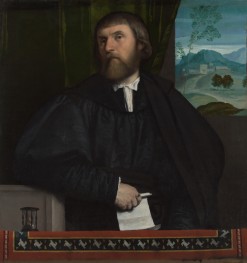
Moretto da Brescia
Canvas Print
$88.65
SKU: 23611-BMD
Original Size:87 x 81.3 cm
Metropolitan Museum of Art, New York, USA
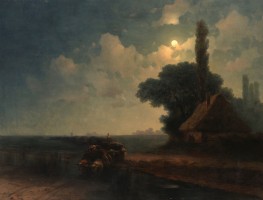
SKU: 23576-AYV
Original Size:96 x 125 cm
Private Collection
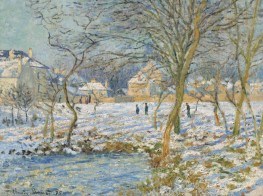
Claude Monet
Canvas Print
$70.34
SKU: 23575-MCL
Original Size:60.6 x 81.7 cm
Museum Barberini, Potsdam, Germany
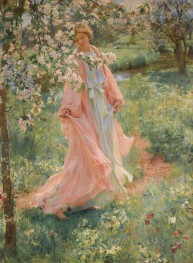
Herbert Arnould Olivier
Canvas Print
$62.11
SKU: 23572-HAO
Original Size:unknown
Private Collection
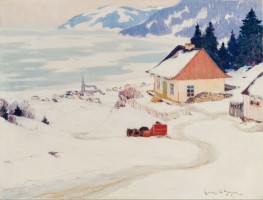
Clarence Gagnon
Canvas Print
$71.88
SKU: 23571-GAC
Original Size:51.7 x 66.4 cm
Musée du Québec, Quebec City, Canada
Clarence Gagnon
Canvas Print
$71.02
SKU: 23570-GAC
Original Size:46 x 61.2 cm
Public Collection
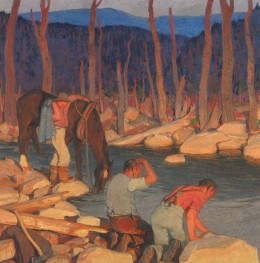
Clarence Gagnon
Canvas Print
$62.11
SKU: 23568-GAC
Original Size:23.5 x 25 cm
Public Collection
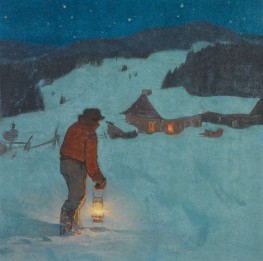
Clarence Gagnon
Canvas Print
$62.11
SKU: 23567-GAC
Original Size:22.2 x 22.1 cm
Public Collection
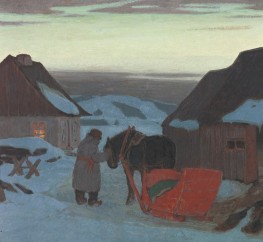
Clarence Gagnon
Canvas Print
$62.11
SKU: 23566-GAC
Original Size:22.4 x 24.1 cm
Public Collection
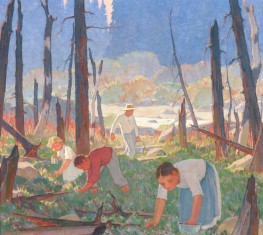
Clarence Gagnon
Canvas Print
$62.11
SKU: 23565-GAC
Original Size:21.4 x 24.3 cm
Public Collection
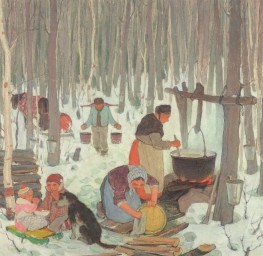
Clarence Gagnon
Canvas Print
$62.11
SKU: 23564-GAC
Original Size:24.9 x 25.8 cm
Public Collection
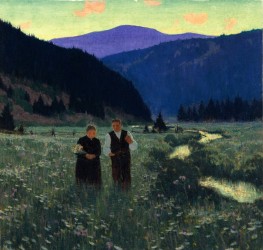
Clarence Gagnon
Canvas Print
$62.11
SKU: 23561-GAC
Original Size:24.1 x 26.5 cm
Public Collection
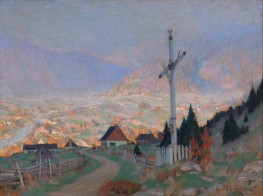
Clarence Gagnon
Canvas Print
$70.51
SKU: 23559-GAC
Original Size:56 x 74.5 cm
National Gallery of Canada, Ottawa
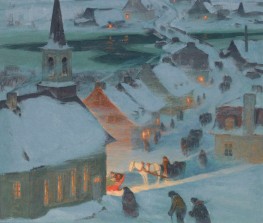
Clarence Gagnon
Canvas Print
$62.11
SKU: 23558-GAC
Original Size:21.7 x 23.8 cm
Public Collection
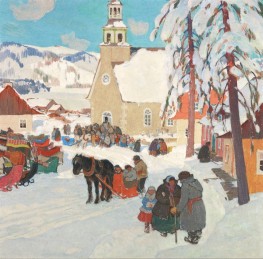
Clarence Gagnon
Canvas Print
$62.11
SKU: 23555-GAC
Original Size:23.3 x 25.6 cm
Public Collection
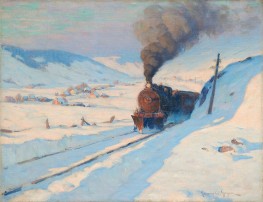
Clarence Gagnon
Canvas Print
$72.39
SKU: 23554-GAC
Original Size:56 x 71 cm
Private Collection
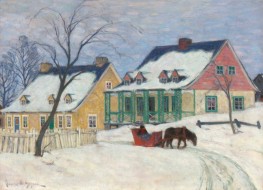
Clarence Gagnon
Canvas Print
$68.28
SKU: 23553-GAC
Original Size:52.5 x 72.5 cm
Private Collection
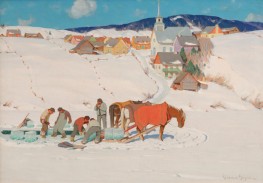
Clarence Gagnon
Canvas Print
$62.11
SKU: 23552-GAC
Original Size:25 x 36 cm
Private Collection
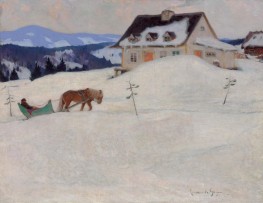
Clarence Gagnon
Canvas Print
$73.08
SKU: 23551-GAC
Original Size:74.3 x 95.3 cm
Private Collection
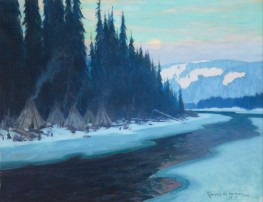
Clarence Gagnon
Canvas Print
$72.39
SKU: 23550-GAC
Original Size:50.2 x 64.8 cm
Private Collection
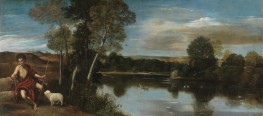
Juan Bautista Maíno
Canvas Print
$62.11
SKU: 23541-MJB
Original Size:74 x 163 cm
Prado Museum, Madrid, Spain
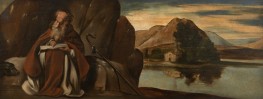
Juan Bautista Maíno
Canvas Print
$62.11
SKU: 23540-MJB
Original Size:61 x 155 cm
Prado Museum, Madrid, Spain
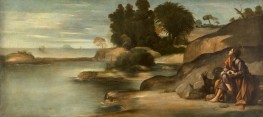
Juan Bautista Maíno
Canvas Print
$62.11
SKU: 23539-MJB
Original Size:74 x 163 cm
Prado Museum, Madrid, Spain
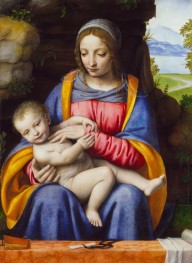
Bernardino Luini
Canvas Print
$62.11
SKU: 23439-LUI
Original Size:73.2 x 54.4 cm
The Wallace Collection, London, UK

Back to top