
Ernst Ludwig Kirchner Giclée Fine Art Prints 1 of 16
1880-1938
German Expressionist Painter
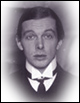
n the summer of 1917, a gaunt man dragged himself to a herdsman's hut on the Stafelalp above Davos, fleeing the watchful eye of his doctor below. There, surrounded by alpine meadows, Ernst Ludwig Kirchner began to paint again - defiance as much as creation. Ernst Ludwig Kirchner (6 May 1880 - 15 June 1938), German Expressionist painter, printmaker, and co-founder of Die Brucke, spent much of his life negotiating between the raw energy of his art and the fractures running through body and mind. Few twentieth-century artists channelled personal anguish into such formally daring work - or paid so steep a price.
Kirchner was born in Aschaffenburg, Bavaria, to a family of Prussian descent; his mother's Huguenot ancestry was something he returned to repeatedly, as though it explained some restlessness in his temperament. The family moved often as his father pursued academic appointments, settling in Chemnitz once the elder Kirchner secured a professorship at the College of Technology. After secondary school, the young Kirchner enrolled in 1901 at the Konigliche Technische Hochschule in Dresden to study architecture - a concession to parental pragmatism. Yet the institution offered more than technical drawing. Freehand studies, art history, and perspective classes opened a wider horizon. During his first term he met Fritz Bleyl, and the two discovered a shared impatience with convention.
A brief period in Munich from 1903 to 1904 sharpened Kirchner's visual instincts before he returned to Dresden in 1905 to complete his degree. That same year, he, Bleyl, Karl Schmidt-Rottluff, and Erich Heckel founded Die Brucke, whose name proposed a bridge between past and future modes of seeing. They worked out of Kirchner's studio, a former butcher's shop that Bleyl described as bohemian chaos. Models came from their social circle, posed for quarter-hour intervals to cultivate spontaneity. Something of the urgency and physical directness that defined Expressionist painting was already present in those early sessions, where the boundary between living and making art dissolved.
Reaching back to Albrecht Durer, Matthias Grunewald, and Lucas Cranach the Elder, the group revived the woodcut as a medium of fierce graphic power, while absorbing the provocations of international avant-garde movements. A manifesto Kirchner penned in 1906 declared that anyone driven to create without pretence belonged among them. Their first exhibition that autumn at K.F.M. Seifert and Co. in Dresden centred on the female nude. Over the following years, Kirchner worked prolifically during summers at the Moritzburg lakes and on the island of Fehmarn, rendering figures in open-air settings with angular contours and saturated, non-naturalistic colour. In 1906 he met Doris Grosse, who served as his primary model until 1911.
Relocating to Berlin in 1911 marked a decisive shift. The city's nervous velocity entered his canvases. With Max Pechstein, Kirchner launched MIUM-Institut to promote modern painting instruction, though it survived barely a year. Far more enduring was his relationship with Erna Schilling, which began in 1912 and lasted until his death. By 1913, internal tensions - partly provoked by his Chronik der Brucke - fractured the group irreparably. Kirchner staged his first solo exhibition at the Folkwang Museum in Essen. The Berlin street scenes he produced between 1913 and 1915 are among the most unsettling images of modern urban life: elongated figures, sharp diagonals, acidic greens and pinks. Street, Berlin (1913), now in the collection of the Museum of Modern Art, places the viewer among prostitutes and passers-by with a confrontational immediacy that owes nothing to detachment.
War shattered what the city had energised. Kirchner volunteered for military service in September 1914 and was sent to Halle an der Saale the following July for artillery training. A mental breakdown swiftly followed. Discharged through the intervention of his riding instructor, Professor Hans Fehr, he returned to Berlin, where he painted Self-Portrait as a Soldier (1915) - one of the most harrowing self-portraits in modern art, depicting himself in uniform with an amputated hand, a metaphor for creative annihilation. Alcoholism and Veronal addiction led to his admission to a sanatorium in Konigstein that December. An exhibition at Ludwig Schames's gallery in Frankfurt am Main in October 1916 brought financial relief, yet by December Kirchner was hospitalised again in Berlin-Charlottenburg.
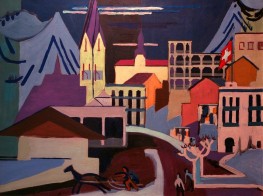
Davos, where he arrived in January 1917 at the invitation of Helene Spengler, became both refuge and prison. Under the strict regime of Dr. Lucius Spengler, Kirchner chafed and deceived. Moving to the hut on the Stafelalp that summer, he produced works such as View of the Church in Monstein and Rising Moon in the Stafelalp - canvases marking the beginning of his alpine period, where jagged peaks and deep valleys replaced the angular streets of Berlin. Perhaps the mountains offered a geometry he could inhabit without dread. After a stay at Ludwig Binswanger's Bellevue Sanatorium in Kreuzlingen, he settled in 1918 at In den Larchen in Frauenkirch, near Davos, furnishing it with furniture he carved himself.
Recovery was gradual but genuine. By 1920, exhibitions across Germany and Switzerland confirmed a growing reputation. Kirchner immersed himself in the farming community around Frauenkirch, painting its people and landscapes with increasing tenderness. Under the pseudonym Louis de Marsalle he began writing art criticism to control public reception of his own work. In 1921, a major Berlin showing drew favourable reviews; that year he also met the dancer Nina Hard, who became an important model despite Erna Schilling's objections. His style grew progressively abstract. Younger artists gravitated to him: Albert Muller, Hermann Scherer, and others formed the Rot-Blau group in Basel, working under his guidance until he firmly distanced himself from any patron's role in 1929.
Recognition and ruin advanced in parallel. Elected to the Prussian Academy of Arts in 1931, Kirchner saw that honour nullified two years later when the Nazi seizure of power made it impossible to sell paintings in Germany. By 1937, the regime had removed 639 of his works from public collections, displaying 25 in the infamous Degenerate Art exhibition. The Academy expelled him. He watched two decades of cultural achievement dismantled and wrote with bewildered grief that the impulse behind Die Brucke - to foster authentically German art - was now declared un-German. Health deteriorated; his doctors prescribed Eukodal. After Germany annexed Austria in March 1938, Kirchner grew convinced Switzerland would be next. On 15 June 1938, outside his home in Frauenkirch, he ended his own life by gunshot. Erna Schilling remained in the house until her death in 1945.
Kirchner's legacy is vast, contested, and continually reappraised. Major retrospectives have travelled through institutions on both sides of the Atlantic - the National Gallery of Art in Washington, the Royal Academy in London, the Museum of Modern Art in New York, the Kirchner Museum in Davos. His Street Scene, Berlin (1913) sold at Christie's in 2006 for thirty-eight million dollars. Yet the provenance of many works carries the shadow of Nazi persecution: Jewish collectors such as Alfred Hess and the dealer Alfred Flechtheim lost their holdings to forced sale or seizure. Restitution claims continue. What endures beyond the market is the work itself - its jagged line, its reckless palette, its refusal to look away from the body in crisis. Kirchner compels not admiration but confrontation, and in that unsparing demand lies his continuing relevance.
Kirchner was born in Aschaffenburg, Bavaria, to a family of Prussian descent; his mother's Huguenot ancestry was something he returned to repeatedly, as though it explained some restlessness in his temperament. The family moved often as his father pursued academic appointments, settling in Chemnitz once the elder Kirchner secured a professorship at the College of Technology. After secondary school, the young Kirchner enrolled in 1901 at the Konigliche Technische Hochschule in Dresden to study architecture - a concession to parental pragmatism. Yet the institution offered more than technical drawing. Freehand studies, art history, and perspective classes opened a wider horizon. During his first term he met Fritz Bleyl, and the two discovered a shared impatience with convention.
A brief period in Munich from 1903 to 1904 sharpened Kirchner's visual instincts before he returned to Dresden in 1905 to complete his degree. That same year, he, Bleyl, Karl Schmidt-Rottluff, and Erich Heckel founded Die Brucke, whose name proposed a bridge between past and future modes of seeing. They worked out of Kirchner's studio, a former butcher's shop that Bleyl described as bohemian chaos. Models came from their social circle, posed for quarter-hour intervals to cultivate spontaneity. Something of the urgency and physical directness that defined Expressionist painting was already present in those early sessions, where the boundary between living and making art dissolved.
Reaching back to Albrecht Durer, Matthias Grunewald, and Lucas Cranach the Elder, the group revived the woodcut as a medium of fierce graphic power, while absorbing the provocations of international avant-garde movements. A manifesto Kirchner penned in 1906 declared that anyone driven to create without pretence belonged among them. Their first exhibition that autumn at K.F.M. Seifert and Co. in Dresden centred on the female nude. Over the following years, Kirchner worked prolifically during summers at the Moritzburg lakes and on the island of Fehmarn, rendering figures in open-air settings with angular contours and saturated, non-naturalistic colour. In 1906 he met Doris Grosse, who served as his primary model until 1911.
Relocating to Berlin in 1911 marked a decisive shift. The city's nervous velocity entered his canvases. With Max Pechstein, Kirchner launched MIUM-Institut to promote modern painting instruction, though it survived barely a year. Far more enduring was his relationship with Erna Schilling, which began in 1912 and lasted until his death. By 1913, internal tensions - partly provoked by his Chronik der Brucke - fractured the group irreparably. Kirchner staged his first solo exhibition at the Folkwang Museum in Essen. The Berlin street scenes he produced between 1913 and 1915 are among the most unsettling images of modern urban life: elongated figures, sharp diagonals, acidic greens and pinks. Street, Berlin (1913), now in the collection of the Museum of Modern Art, places the viewer among prostitutes and passers-by with a confrontational immediacy that owes nothing to detachment.
War shattered what the city had energised. Kirchner volunteered for military service in September 1914 and was sent to Halle an der Saale the following July for artillery training. A mental breakdown swiftly followed. Discharged through the intervention of his riding instructor, Professor Hans Fehr, he returned to Berlin, where he painted Self-Portrait as a Soldier (1915) - one of the most harrowing self-portraits in modern art, depicting himself in uniform with an amputated hand, a metaphor for creative annihilation. Alcoholism and Veronal addiction led to his admission to a sanatorium in Konigstein that December. An exhibition at Ludwig Schames's gallery in Frankfurt am Main in October 1916 brought financial relief, yet by December Kirchner was hospitalised again in Berlin-Charlottenburg.
Davos, where he arrived in January 1917 at the invitation of Helene Spengler, became both refuge and prison. Under the strict regime of Dr. Lucius Spengler, Kirchner chafed and deceived. Moving to the hut on the Stafelalp that summer, he produced works such as View of the Church in Monstein and Rising Moon in the Stafelalp - canvases marking the beginning of his alpine period, where jagged peaks and deep valleys replaced the angular streets of Berlin. Perhaps the mountains offered a geometry he could inhabit without dread. After a stay at Ludwig Binswanger's Bellevue Sanatorium in Kreuzlingen, he settled in 1918 at In den Larchen in Frauenkirch, near Davos, furnishing it with furniture he carved himself.
Recovery was gradual but genuine. By 1920, exhibitions across Germany and Switzerland confirmed a growing reputation. Kirchner immersed himself in the farming community around Frauenkirch, painting its people and landscapes with increasing tenderness. Under the pseudonym Louis de Marsalle he began writing art criticism to control public reception of his own work. In 1921, a major Berlin showing drew favourable reviews; that year he also met the dancer Nina Hard, who became an important model despite Erna Schilling's objections. His style grew progressively abstract. Younger artists gravitated to him: Albert Muller, Hermann Scherer, and others formed the Rot-Blau group in Basel, working under his guidance until he firmly distanced himself from any patron's role in 1929.
Recognition and ruin advanced in parallel. Elected to the Prussian Academy of Arts in 1931, Kirchner saw that honour nullified two years later when the Nazi seizure of power made it impossible to sell paintings in Germany. By 1937, the regime had removed 639 of his works from public collections, displaying 25 in the infamous Degenerate Art exhibition. The Academy expelled him. He watched two decades of cultural achievement dismantled and wrote with bewildered grief that the impulse behind Die Brucke - to foster authentically German art - was now declared un-German. Health deteriorated; his doctors prescribed Eukodal. After Germany annexed Austria in March 1938, Kirchner grew convinced Switzerland would be next. On 15 June 1938, outside his home in Frauenkirch, he ended his own life by gunshot. Erna Schilling remained in the house until her death in 1945.
Kirchner's legacy is vast, contested, and continually reappraised. Major retrospectives have travelled through institutions on both sides of the Atlantic - the National Gallery of Art in Washington, the Royal Academy in London, the Museum of Modern Art in New York, the Kirchner Museum in Davos. His Street Scene, Berlin (1913) sold at Christie's in 2006 for thirty-eight million dollars. Yet the provenance of many works carries the shadow of Nazi persecution: Jewish collectors such as Alfred Hess and the dealer Alfred Flechtheim lost their holdings to forced sale or seizure. Restitution claims continue. What endures beyond the market is the work itself - its jagged line, its reckless palette, its refusal to look away from the body in crisis. Kirchner compels not admiration but confrontation, and in that unsparing demand lies his continuing relevance.
366 Ernst Ludwig Kirchner Artworks
Page 1 of 16
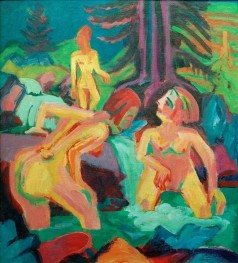
Giclée Canvas Print
$84.34
$84.34
SKU: 21063-KEL
Ernst Ludwig Kirchner
Original Size:90 x 78.5 cm
Public Collection
Ernst Ludwig Kirchner
Original Size:90 x 78.5 cm
Public Collection
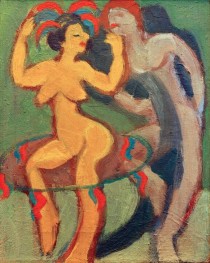
Giclée Canvas Print
$63.77
$63.77
SKU: 21068-KEL
Ernst Ludwig Kirchner
Original Size:27 x 22 cm
Private Collection
Ernst Ludwig Kirchner
Original Size:27 x 22 cm
Private Collection
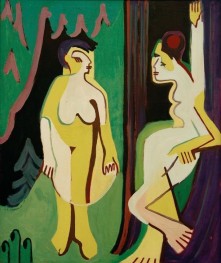
Giclée Canvas Print
$79.95
$79.95
SKU: 21116-KEL
Ernst Ludwig Kirchner
Original Size:121 x 100 cm
Public Collection
Ernst Ludwig Kirchner
Original Size:121 x 100 cm
Public Collection
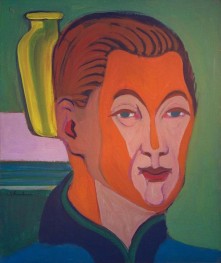
Giclée Canvas Print
$80.48
$80.48
SKU: 21017-KEL
Ernst Ludwig Kirchner
Original Size:60 x 50 cm
Kirchner Museum, Davos, Switzerland
Ernst Ludwig Kirchner
Original Size:60 x 50 cm
Kirchner Museum, Davos, Switzerland
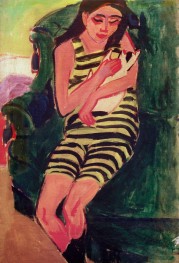
Giclée Canvas Print
$70.28
$70.28
SKU: 21301-KEL
Ernst Ludwig Kirchner
Original Size:121 x 88 cm
Public Collection
Ernst Ludwig Kirchner
Original Size:121 x 88 cm
Public Collection
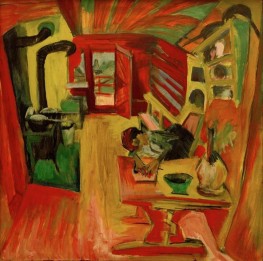
Giclée Canvas Print
$96.64
$96.64
SKU: 21101-KEL
Ernst Ludwig Kirchner
Original Size:121.5 x 121.5 cm
Thyssen-Bornemisza Museum, Madrid, Spain
Ernst Ludwig Kirchner
Original Size:121.5 x 121.5 cm
Thyssen-Bornemisza Museum, Madrid, Spain
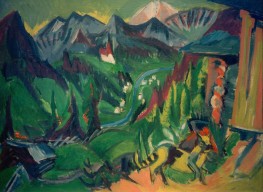
Giclée Canvas Print
$72.39
$72.39
SKU: 21317-KEL
Ernst Ludwig Kirchner
Original Size:90 x 120 cm
Public Collection
Ernst Ludwig Kirchner
Original Size:90 x 120 cm
Public Collection
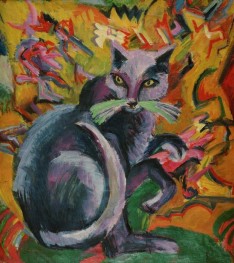
Giclée Canvas Print
$84.34
$84.34
SKU: 21102-KEL
Ernst Ludwig Kirchner
Original Size:79 x 69 cm
Museum Ostwall, Dortmund, Germany
Ernst Ludwig Kirchner
Original Size:79 x 69 cm
Museum Ostwall, Dortmund, Germany
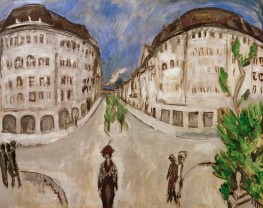
Giclée Canvas Print
$77.31
$77.31
SKU: 21182-KEL
Ernst Ludwig Kirchner
Original Size:120 x 150 cm
Public Collection
Ernst Ludwig Kirchner
Original Size:120 x 150 cm
Public Collection
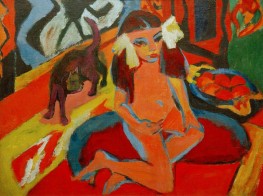
Giclée Canvas Print
$71.87
$71.87
SKU: 21223-KEL
Ernst Ludwig Kirchner
Original Size:88.5 x 119 cm
Private Collection
Ernst Ludwig Kirchner
Original Size:88.5 x 119 cm
Private Collection
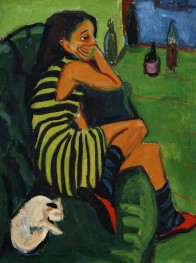
Giclée Canvas Print
$73.45
$73.45
SKU: 21038-KEL
Ernst Ludwig Kirchner
Original Size:100 x 76 cm
Brücke Museum, Berlin, Germany
Ernst Ludwig Kirchner
Original Size:100 x 76 cm
Brücke Museum, Berlin, Germany
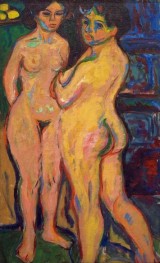
Giclée Canvas Print
$63.77
$63.77
SKU: 21054-KEL
Ernst Ludwig Kirchner
Original Size:150 x 95 cm
State Art Collections, Dresden, Germany
Ernst Ludwig Kirchner
Original Size:150 x 95 cm
State Art Collections, Dresden, Germany
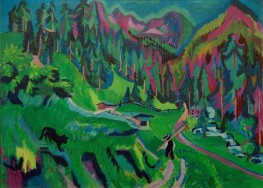
Giclée Canvas Print
$70.81
$70.81
SKU: 21228-KEL
Ernst Ludwig Kirchner
Original Size:110 x 150 cm
Private Collection
Ernst Ludwig Kirchner
Original Size:110 x 150 cm
Private Collection
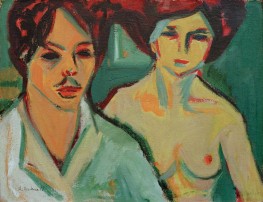
Giclée Canvas Print
$82.76
$82.76
SKU: 20984-KEL
Ernst Ludwig Kirchner
Original Size:60 x 70 cm
Private Collection
Ernst Ludwig Kirchner
Original Size:60 x 70 cm
Private Collection
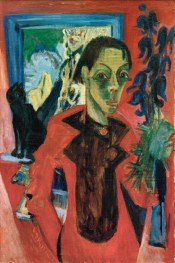
Giclée Canvas Print
$64.14
$64.14
SKU: 21077-KEL
Ernst Ludwig Kirchner
Original Size:120.6 x 80 cm
Public Collection
Ernst Ludwig Kirchner
Original Size:120.6 x 80 cm
Public Collection
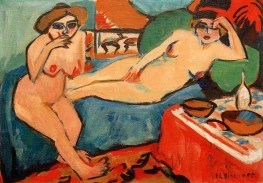
Giclée Canvas Print
$68.87
$68.87
SKU: 21226-KEL
Ernst Ludwig Kirchner
Original Size:50.2 x 70.5 cm
Private Collection
Ernst Ludwig Kirchner
Original Size:50.2 x 70.5 cm
Private Collection
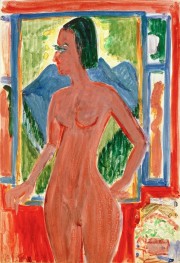
Giclée Paper Art Print
$60.38
$60.38
SKU: 21266-KEL
Ernst Ludwig Kirchner
Original Size:49.9 x 34.6 cm
Städel Museum, Frankfurt, Germany
Ernst Ludwig Kirchner
Original Size:49.9 x 34.6 cm
Städel Museum, Frankfurt, Germany
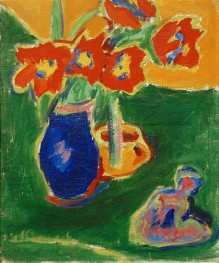
Giclée Canvas Print
$80.48
$80.48
SKU: 21175-KEL
Ernst Ludwig Kirchner
Original Size:66 x 55 cm
Private Collection
Ernst Ludwig Kirchner
Original Size:66 x 55 cm
Private Collection
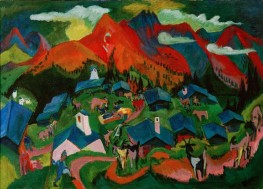
Giclée Canvas Print
$69.23
$69.23
SKU: 21090-KEL
Ernst Ludwig Kirchner
Original Size:120.5 x 168 cm
Public Collection
Ernst Ludwig Kirchner
Original Size:120.5 x 168 cm
Public Collection
Giclée Canvas Print
$73.09
$73.09
SKU: 20980-KEL
Ernst Ludwig Kirchner
Original Size:90.7 x 120 cm
Private Collection
Ernst Ludwig Kirchner
Original Size:90.7 x 120 cm
Private Collection
Giclée Canvas Print
$77.31
$77.31
SKU: 20985-KEL
Ernst Ludwig Kirchner
Original Size:75 x 60 cm
Public Collection
Ernst Ludwig Kirchner
Original Size:75 x 60 cm
Public Collection
Giclée Canvas Print
$63.77
$63.77
SKU: 21108-KEL
Ernst Ludwig Kirchner
Original Size:150 x 80 cm
Public Collection
Ernst Ludwig Kirchner
Original Size:150 x 80 cm
Public Collection
Giclée Canvas Print
$86.81
$86.81
SKU: 21230-KEL
Ernst Ludwig Kirchner
Original Size:89 x 80 cm
Public Collection
Ernst Ludwig Kirchner
Original Size:89 x 80 cm
Public Collection
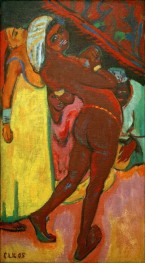
Giclée Canvas Print
$63.77
$63.77
SKU: 21236-KEL
Ernst Ludwig Kirchner
Original Size:170 x 94 cm
Private Collection
Ernst Ludwig Kirchner
Original Size:170 x 94 cm
Private Collection