
Fra Filippo Lippi Giclée Fine Art Prints
1406-1469
Italian Early Renaissance Painter
Fra Filippo Lippi canvas prints: 33 works in museum quality, each made to order in the size you choose, with optional framing.
A rope of knotted bedsheets, dangling from a window in Medici Florence. The tale may be half legend, but it has clung to Filippo Lippi for five and a half centuries, and it explains something about him. Born in Florence around 1406 and dead in Spoleto on 8 October 1469, this Italian painter and Carmelite friar belonged to the first great generation of the Quattrocento, and he gave the painting of the early Renaissance a human warmth it had not yet found.
His beginnings were bleak. The son of Tommaso, a butcher, he lost both parents at the age of two and passed into the care of an aunt, Mona Lapaccia, too poor to keep him. At eight he was placed in the neighbouring Carmelite convent, and there his schooling began. In 1420 he entered the novitiate at Santa Maria del Carmine, took his vows the following year at sixteen, and was ordained a priest around 1425. He remained in residence at the priory until 1432.
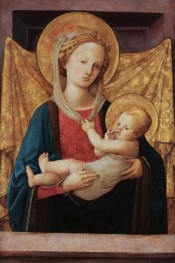
Painting reached him before doctrine did. Giorgio Vasari, writing a century later, reported that the young friar filled the margins of his grammar books with figures until the prior gave up and let him draw in earnest. Only steps from his cell lay the Brancacci Chapel, newly frescoed by Masaccio, and Lippi went back to it again and again. The lesson took. Masaccio's weighty modelling and steady architectural logic run visibly through the early panels - most of all the Tarquinia Madonna in the Palazzo Barberini in Rome, where the Child sprawls with the real, unlovely energy of an infant. Contemporaries said that Masaccio's spirit had entered into him.
In 1432 he left the monastery, though never his vows. A letter of 1439 has him calling himself the poorest friar in Florence, burdened with six nieces of marriageable age. Vasari sends him off to Ancona and Naples, seized by Barbary corsairs and held as a slave until a portrait drawn from life bought his freedom. Later scholars, among them Louis Gillet, dismissed the episode as pure romance. It is a reminder of how quickly this particular life turned into folklore.
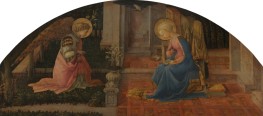
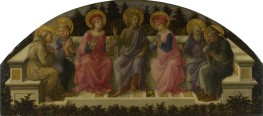
Back in Florence his reputation grew, and the Medici took him up. For them he produced the Annunciation and the Seven Saints. Cosimo de' Medici, exasperated by the painter's disappearances, is said to have locked him in to make him work - whereupon Lippi knotted his sheets and went out of the window. Lawsuits, debts, broken promises and at least one forgery trail behind him through the documents. Money slipped through his hands with remarkable consistency.
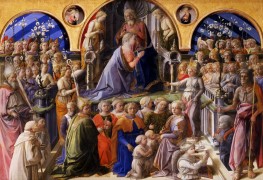
In 1441 he painted the Coronation of the Virgin for the nuns of Sant'Ambrogio, a crowded, gold-lit assembly of angels and saints. A half-length figure at the right, singled out by an angel's scroll bearing the words is perfecit opus, was long read as a self-portrait; opinion has since shifted towards the benefactor who paid for the panel. Robert Browning made painting and painter famous again in his dramatic monologue of 1855.
The chaplaincy to the nuns of Santa Maria Maddalena came in 1452. By June 1456 Lippi was recorded at Prato, at work on the choir frescoes of the cathedral, and in 1457 he was made commendatory rector of San Quirico in Legnaia, a benefice that occasionally brought in considerable sums. It was at Prato, painting for the convent chapel of Santa Margherita, that he met Lucrezia Buti, daughter of Francesco Buti and Caterina Ciacchi, a young boarder in the house. He asked that she be allowed to sit for the Madonna. She left with him and did not go back, despite the nuns' efforts to reclaim her. Their son Filippino was born in 1457, a daughter, Alessandra, in 1465.
The Prato frescoes remain his most monumental achievement. Facing walls carry the lives of Saint Stephen and Saint John the Baptist, the vault the four evangelists, the end wall Saint John Gualbert and Saint Alberto. In the Feast of Herod, Salome dances in a long transparent robe whose drapery runs ahead of her body in a line of pure calligraphy - Botticelli was watching, and later so was Filippino. The ceremonial mourning over Stephen's corpse is quieter and stranger, a row of grave Tuscan faces that includes, most agree, the painter himself, though nobody can say which. Lucrezia is generally taken to be the dancing Salome.
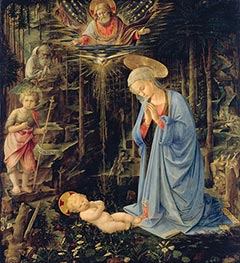
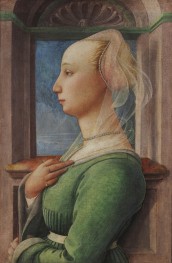
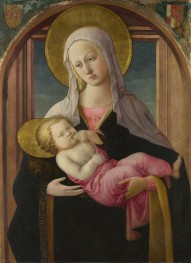
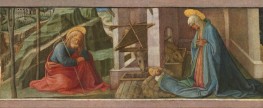
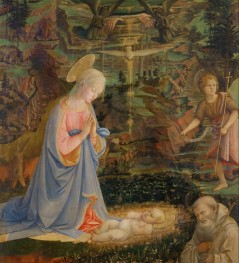
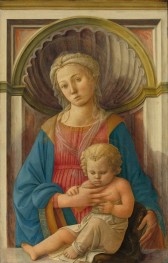
Elsewhere the range is wide. Germiniano Inghirami of Prato commissioned a Death of Saint Bernard; the refectory of San Domenico held a Nativity, the Christ Child on the bare ground between Saints George and Dominic, shepherds piping in a rocky landscape and six angels above. A Vision of Saint Bernard hangs in the National Gallery in London, an Adoration in the Forest of 1459 in the Gemäldegalerie in Berlin, a Madonna and Child of the early 1440s in the National Gallery of Art in Washington. Finest of all is the Uffizi Lippina, in which the Virgin - Lucrezia again - looks towards the Child held up by two grinning angels, the group set against a window of pale rock and water. Here the sacred subject becomes a domestic interior with a real woman inside it, and the panel has a fair claim to be the first Italian painting to treat feminine beauty as something observed rather than prescribed.
His last years were spent at Spoleto, frescoing scenes from the Life of the Virgin in the apse of the cathedral between 1467 and 1469. The Coronation of the Virgin fills the semidome among sibyls, prophets and angels; the Annunciation, the Adoration and the Funeral of the Virgin follow below. Among the mourners stand Lippi himself, his assistants Fra Diamante and Pier Matteo d'Amelia, and Filippino, by then a painter in his own right. He died in Spoleto on or about 8 October 1469, and the cause has never been settled - poisoning by Lucrezia's relatives is the version that survived, told and retold. Fra Diamante and the workshop completed the apse. Lorenzo de' Medici paid for the tomb in the right transept.
What lingers is not the scandal but the tenderness. Perhaps a man given away at eight understood better than most what it means for a mother to hold a child, and painted accordingly. Sandro Botticelli and Francesco di Pesello, called Pesellino, learned their trade in his workshop, and his son carried the manner into the next century; the line of descent runs from Masaccio through Filippo Lippi to the Primavera. Visitors to the Uffizi still stop longest in front of the Lippina. That is the measure of him - a friar who broke his vows, fled his patrons, and left behind the most humane Madonnas of his century.
His beginnings were bleak. The son of Tommaso, a butcher, he lost both parents at the age of two and passed into the care of an aunt, Mona Lapaccia, too poor to keep him. At eight he was placed in the neighbouring Carmelite convent, and there his schooling began. In 1420 he entered the novitiate at Santa Maria del Carmine, took his vows the following year at sixteen, and was ordained a priest around 1425. He remained in residence at the priory until 1432.
Painting reached him before doctrine did. Giorgio Vasari, writing a century later, reported that the young friar filled the margins of his grammar books with figures until the prior gave up and let him draw in earnest. Only steps from his cell lay the Brancacci Chapel, newly frescoed by Masaccio, and Lippi went back to it again and again. The lesson took. Masaccio's weighty modelling and steady architectural logic run visibly through the early panels - most of all the Tarquinia Madonna in the Palazzo Barberini in Rome, where the Child sprawls with the real, unlovely energy of an infant. Contemporaries said that Masaccio's spirit had entered into him.
In 1432 he left the monastery, though never his vows. A letter of 1439 has him calling himself the poorest friar in Florence, burdened with six nieces of marriageable age. Vasari sends him off to Ancona and Naples, seized by Barbary corsairs and held as a slave until a portrait drawn from life bought his freedom. Later scholars, among them Louis Gillet, dismissed the episode as pure romance. It is a reminder of how quickly this particular life turned into folklore.
Back in Florence his reputation grew, and the Medici took him up. For them he produced the Annunciation and the Seven Saints. Cosimo de' Medici, exasperated by the painter's disappearances, is said to have locked him in to make him work - whereupon Lippi knotted his sheets and went out of the window. Lawsuits, debts, broken promises and at least one forgery trail behind him through the documents. Money slipped through his hands with remarkable consistency.
In 1441 he painted the Coronation of the Virgin for the nuns of Sant'Ambrogio, a crowded, gold-lit assembly of angels and saints. A half-length figure at the right, singled out by an angel's scroll bearing the words is perfecit opus, was long read as a self-portrait; opinion has since shifted towards the benefactor who paid for the panel. Robert Browning made painting and painter famous again in his dramatic monologue of 1855.
The chaplaincy to the nuns of Santa Maria Maddalena came in 1452. By June 1456 Lippi was recorded at Prato, at work on the choir frescoes of the cathedral, and in 1457 he was made commendatory rector of San Quirico in Legnaia, a benefice that occasionally brought in considerable sums. It was at Prato, painting for the convent chapel of Santa Margherita, that he met Lucrezia Buti, daughter of Francesco Buti and Caterina Ciacchi, a young boarder in the house. He asked that she be allowed to sit for the Madonna. She left with him and did not go back, despite the nuns' efforts to reclaim her. Their son Filippino was born in 1457, a daughter, Alessandra, in 1465.
The Prato frescoes remain his most monumental achievement. Facing walls carry the lives of Saint Stephen and Saint John the Baptist, the vault the four evangelists, the end wall Saint John Gualbert and Saint Alberto. In the Feast of Herod, Salome dances in a long transparent robe whose drapery runs ahead of her body in a line of pure calligraphy - Botticelli was watching, and later so was Filippino. The ceremonial mourning over Stephen's corpse is quieter and stranger, a row of grave Tuscan faces that includes, most agree, the painter himself, though nobody can say which. Lucrezia is generally taken to be the dancing Salome.
Elsewhere the range is wide. Germiniano Inghirami of Prato commissioned a Death of Saint Bernard; the refectory of San Domenico held a Nativity, the Christ Child on the bare ground between Saints George and Dominic, shepherds piping in a rocky landscape and six angels above. A Vision of Saint Bernard hangs in the National Gallery in London, an Adoration in the Forest of 1459 in the Gemäldegalerie in Berlin, a Madonna and Child of the early 1440s in the National Gallery of Art in Washington. Finest of all is the Uffizi Lippina, in which the Virgin - Lucrezia again - looks towards the Child held up by two grinning angels, the group set against a window of pale rock and water. Here the sacred subject becomes a domestic interior with a real woman inside it, and the panel has a fair claim to be the first Italian painting to treat feminine beauty as something observed rather than prescribed.
His last years were spent at Spoleto, frescoing scenes from the Life of the Virgin in the apse of the cathedral between 1467 and 1469. The Coronation of the Virgin fills the semidome among sibyls, prophets and angels; the Annunciation, the Adoration and the Funeral of the Virgin follow below. Among the mourners stand Lippi himself, his assistants Fra Diamante and Pier Matteo d'Amelia, and Filippino, by then a painter in his own right. He died in Spoleto on or about 8 October 1469, and the cause has never been settled - poisoning by Lucrezia's relatives is the version that survived, told and retold. Fra Diamante and the workshop completed the apse. Lorenzo de' Medici paid for the tomb in the right transept.
What lingers is not the scandal but the tenderness. Perhaps a man given away at eight understood better than most what it means for a mother to hold a child, and painted accordingly. Sandro Botticelli and Francesco di Pesello, called Pesellino, learned their trade in his workshop, and his son carried the manner into the next century; the line of descent runs from Masaccio through Filippo Lippi to the Primavera. Visitors to the Uffizi still stop longest in front of the Lippina. That is the measure of him - a friar who broke his vows, fled his patrons, and left behind the most humane Madonnas of his century.
Page 1 of 2
Canvas Print
$84.20
$84.20
SKU: 17202-LFF
Fra Filippo Lippi
Original Size:129.4 x 118.6 cm
Old Masters Gallery, Berlin, Germany
Fra Filippo Lippi
Original Size:129.4 x 118.6 cm
Old Masters Gallery, Berlin, Germany
Canvas Print
$62.11
$62.11
SKU: 23178-LFF
Fra Filippo Lippi
Original Size:68.6 x 152.7 cm
National Gallery, London, UK
Fra Filippo Lippi
Original Size:68.6 x 152.7 cm
National Gallery, London, UK
Canvas Print
$62.11
$62.11
SKU: 23167-LFF
Fra Filippo Lippi
Original Size:49.5 x 32.9 cm
Old Masters Gallery, Berlin, Germany
Fra Filippo Lippi
Original Size:49.5 x 32.9 cm
Old Masters Gallery, Berlin, Germany
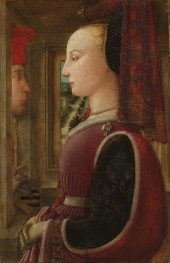
Canvas Print
$62.11
$62.11
SKU: 23173-LFF
Fra Filippo Lippi
Original Size:64 x 42 cm
Metropolitan Museum of Art, New York, USA
Fra Filippo Lippi
Original Size:64 x 42 cm
Metropolitan Museum of Art, New York, USA
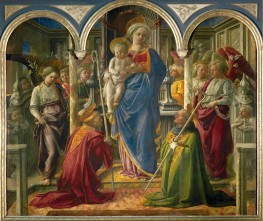
Canvas Print
$79.41
$79.41
SKU: 23172-LFF
Fra Filippo Lippi
Original Size:208 x 244 cm
Louvre Museum, Paris, France
Fra Filippo Lippi
Original Size:208 x 244 cm
Louvre Museum, Paris, France
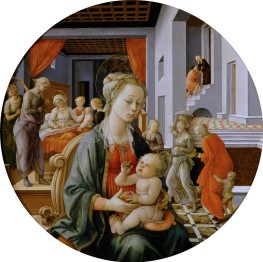
Canvas Print
$93.95
$93.95
SKU: 23223-LFF
Fra Filippo Lippi
Original Size:135 x 135 cm
Palazzo Pitti, Florence, Italy
Fra Filippo Lippi
Original Size:135 x 135 cm
Palazzo Pitti, Florence, Italy
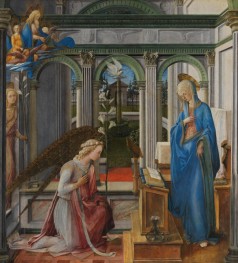
Canvas Print
$85.40
$85.40
SKU: 23170-LFF
Fra Filippo Lippi
Original Size:205.8 x 187.9 cm
Alte Pinakothek, Munich, Germany
Fra Filippo Lippi
Original Size:205.8 x 187.9 cm
Alte Pinakothek, Munich, Germany
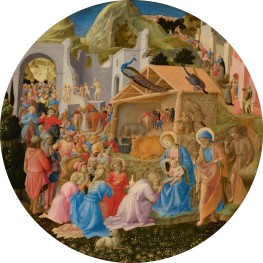
Canvas Print
$94.12
$94.12
SKU: 23185-LFF
Fra Filippo Lippi
Original Size:137.3 x 137.3 cm
National Gallery of Art, Washington, USA
Fra Filippo Lippi
Original Size:137.3 x 137.3 cm
National Gallery of Art, Washington, USA
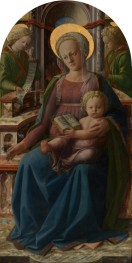
Canvas Print
$62.11
$62.11
SKU: 23176-LFF
Fra Filippo Lippi
Original Size:122.6 x 62.9 cm
Metropolitan Museum of Art, New York, USA
Fra Filippo Lippi
Original Size:122.6 x 62.9 cm
Metropolitan Museum of Art, New York, USA
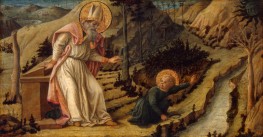
Canvas Print
$62.11
$62.11
SKU: 23171-LFF
Fra Filippo Lippi
Original Size:28 x 51.5 cm
State Hermitage Museum, St. Petersburg, Russia
Fra Filippo Lippi
Original Size:28 x 51.5 cm
State Hermitage Museum, St. Petersburg, Russia
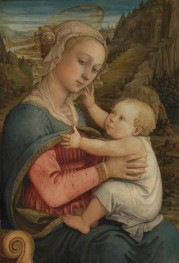
Canvas Print
$64.18
$64.18
SKU: 23169-LFF
Fra Filippo Lippi
Original Size:76.9 x 54.1 cm
Alte Pinakothek, Munich, Germany
Fra Filippo Lippi
Original Size:76.9 x 54.1 cm
Alte Pinakothek, Munich, Germany
Canvas Print
$62.11
$62.11
SKU: 23177-LFF
Fra Filippo Lippi
Original Size:68 x 152.8 cm
National Gallery, London, UK
Fra Filippo Lippi
Original Size:68 x 152.8 cm
National Gallery, London, UK
Canvas Print
$68.63
$68.63
SKU: 23182-LFF
Fra Filippo Lippi
Original Size:76.6 x 61 cm
National Gallery, London, UK
Fra Filippo Lippi
Original Size:76.6 x 61 cm
National Gallery, London, UK
Canvas Print
$62.11
$62.11
SKU: 23184-LFF
Fra Filippo Lippi
Original Size:23.2 x 55.3 cm
National Gallery of Art, Washington, USA
Fra Filippo Lippi
Original Size:23.2 x 55.3 cm
National Gallery of Art, Washington, USA
Canvas Print
$62.11
$62.11
SKU: 23168-LFF
Fra Filippo Lippi
Original Size:28.2 x 52.8 cm
Old Masters Gallery, Berlin, Germany
Fra Filippo Lippi
Original Size:28.2 x 52.8 cm
Old Masters Gallery, Berlin, Germany
Canvas Print
$64.69
$64.69
SKU: 23165-LFF
Fra Filippo Lippi
Original Size:200 x 287 cm
Galleria degli Uffizi, Florence, Italy
Fra Filippo Lippi
Original Size:200 x 287 cm
Galleria degli Uffizi, Florence, Italy
Canvas Print
$85.74
$85.74
SKU: 23192-LFF
Fra Filippo Lippi
Original Size:140 x 130 cm
Galleria degli Uffizi, Florence, Italy
Fra Filippo Lippi
Original Size:140 x 130 cm
Galleria degli Uffizi, Florence, Italy
Canvas Print
$92.58
$92.58
SKU: 23181-LFF
Fra Filippo Lippi
Original Size:unknown
National Gallery, London, UK
Fra Filippo Lippi
Original Size:unknown
National Gallery, London, UK
Canvas Print
$62.81
$62.81
SKU: 23166-LFF
Fra Filippo Lippi
Original Size:82 x 55 cm
Fondazione Magnani-Rocca, Parma, Italy
Fra Filippo Lippi
Original Size:82 x 55 cm
Fondazione Magnani-Rocca, Parma, Italy
Canvas Print
$62.11
$62.11
SKU: 23186-LFF
Fra Filippo Lippi
Original Size:79 x 51.1 cm
National Gallery of Art, Washington, USA
Fra Filippo Lippi
Original Size:79 x 51.1 cm
National Gallery of Art, Washington, USA
Canvas Print
$62.11
$62.11
SKU: 23190-LFF
Fra Filippo Lippi
Original Size:81.3 x 29.8 cm
Cleveland Museum of Art, Ohio, USA
Fra Filippo Lippi
Original Size:81.3 x 29.8 cm
Cleveland Museum of Art, Ohio, USA
Canvas Print
$62.11
$62.11
SKU: 23189-LFF
Fra Filippo Lippi
Original Size:81.3 x 29.8 cm
Cleveland Museum of Art, Ohio, USA
Fra Filippo Lippi
Original Size:81.3 x 29.8 cm
Cleveland Museum of Art, Ohio, USA
Canvas Print
$64.69
$64.69
SKU: 23174-LFF
Fra Filippo Lippi
Original Size:142.2 x 100.3 cm
Metropolitan Museum of Art, New York, USA
Fra Filippo Lippi
Original Size:142.2 x 100.3 cm
Metropolitan Museum of Art, New York, USA
Canvas Print
$71.71
$71.71
SKU: 23180-LFF
Fra Filippo Lippi
Original Size:45 x 61 cm
National Gallery, London, UK
Fra Filippo Lippi
Original Size:45 x 61 cm
National Gallery, London, UK