
Eustache Le Sueur Giclée Fine Art Prints
1617-1655
French Baroque Painter
Eustache Le Sueur canvas prints: 34 works in museum quality, each made to order in the size you choose, with optional framing.
Among the founders of French classical painting, only one earned the curious sobriquet of "the French Raphael" without ever having crossed the Alps. Eustache Le Sueur, born in Paris on 19 November 1616 and dead in the same city on 30 April 1655, lived a life of less than thirty-nine years yet shaped a sensibility that would help define the visual vocabulary of seventeenth-century France. His career, brief and almost entirely Parisian, produced an art of distilled gravity that still feels separate - quieter, more inward - than the louder rhetoric of his contemporaries.
The son of Cathelin Le Sueur, a woodturner of modest standing, the young Eustache entered the studio of Simon Vouet in 1632. Vouet was at that moment the most fashionable painter in Paris, premier peintre du Roi, presiding over a workshop that also trained Charles Le Brun and Pierre Mignard. For roughly a decade Le Sueur absorbed the trade of decoration and large-scale composition under Vouet's direction. He learned to draw at speed, to organise crowded biblical and mythological scenes, to handle drapery with confident lyricism.
What he did not learn was Italy. Where ambitious painters of his generation crossed the Alps to study Raphael, Titian and the Carracci at first hand, Le Sueur stayed in France. The reasons are unrecorded - perhaps financial, perhaps temperamental. He compensated through the royal palace at Fontainebleau, with its galleries imagined a century earlier by Italian masters, and through the rich private collections of Paris, then crowded with sixteenth-century Italian paintings. Perhaps solitude with these surrogates gave his brush its peculiar clarity. From engravings and copies he constructed his own version of the Italian inheritance, filtered through study rather than travel.
His earliest independent works followed designs by Vouet, but a personal idiom was already detectable: a leaning toward severity, toward fewer figures and quieter intervals. The cycle of paintings he made on the theme of the Dream of Poliphilus illustrates this evolution clearly. Five of these canvases survive in museums today, and the later compositions show a marked tightening - less ornament, better balance, a calmer rhythm between body and space. Even when he reused Vouet's celebrated Virgin and Child or Holy Family templates, he stripped them of decorative excess.
The turning point came in 1645. That year Le Sueur was awarded the commission for twenty-two paintings on the life of Saint Bruno, intended for the cloister of the Carthusian monastery in Paris. The cycle occupied him and a small group of assistants for three years. Acquired by Louis XVI in 1776, these works passed into the royal collection and now hang in the Louvre - a sober procession of monastic interiors, austere figures, and carefully ruled perspectives. Here the influence of Nicolas Poussin, who had worked briefly in Paris from 1640 to 1642 before returning to Rome, becomes unmistakable. Le Sueur lightens his palette, slows his gestures, and constructs space with the discipline of a draughtsman thinking architecturally.
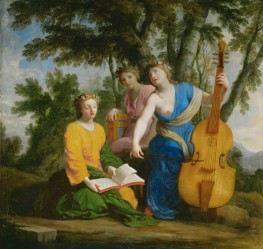
Through the late 1640s and early 1650s he emerged as a leading figure of what historians now call Parisian Atticism, a sober and equilibrated classicism filled with references to antiquity. In this period he became one of the founding members of the Académie royale de peinture et de sculpture, and among its first teachers. Private patronage flourished alongside public recognition. He decorated several Parisian hôtels particuliers, but the most celebrated of these commissions was the Hôtel Lambert on the Île Saint-Louis. There he painted five panels representing the nine Muses and a ceiling, Phaeton Asking Apollo to Drive His Chariot, for the Chamber of the Muses - works now preserved in the Louvre. His painted decoration of the Cabinet of Baths survived in situ for more than three centuries before being lost in the fire that swept through the hôtel on the night of 9 July 2013.
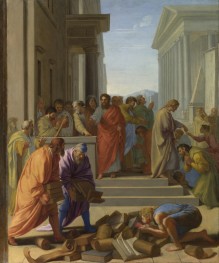
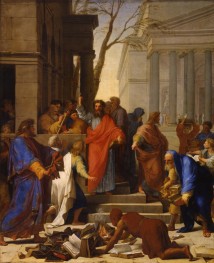
A late commission of particular note is The Preaching of Saint Paul at Ephesus, painted in 1649 and today held by the Louvre. In this work we see Le Sueur at his most assured: gestures are emphatic but measured, the architectural setting clear and rational, the eye guided through a hierarchy of postures and expressions. Following the end of the Fronde in 1653, royal commissions resumed, and Le Sueur took part in the renovation of the Louvre Palace, painting allegorical decorations for the bath apartment of Anne of Austria and for the chamber of the young Louis XIV. Most of these decorative ensembles are lost, surviving only in a handful of dispersed canvases and preparatory drawings. In 1654 he produced four paintings for the Benedictine abbey of Marmoutier-lès-Tours, now divided between the Musée des Beaux-Arts of Tours and the Louvre.
Death came suddenly in April 1655. He was thirty-eight. His art reflects a desire for austerity unusual in his moment, perhaps a deliberate distinction from the more academic and decorative idioms around him; contemporaries sometimes compared him to the Italian primitives. Today Eustache Le Sueur is recognised as one of the most personal voices of seventeenth-century painting, one of those who partly escaped the gravitational pull of Italian Baroque academicism. The composer Jean-François Le Sueur, who lived from 1760 to 1837, is believed to have been his grand-nephew, an unexpected musical postscript to a painter who himself worked in a register of restrained harmony. To stand before the Saint Bruno cycle today is to encounter a quiet voice still speaking - measured, lucid, and uncommonly grave.
The son of Cathelin Le Sueur, a woodturner of modest standing, the young Eustache entered the studio of Simon Vouet in 1632. Vouet was at that moment the most fashionable painter in Paris, premier peintre du Roi, presiding over a workshop that also trained Charles Le Brun and Pierre Mignard. For roughly a decade Le Sueur absorbed the trade of decoration and large-scale composition under Vouet's direction. He learned to draw at speed, to organise crowded biblical and mythological scenes, to handle drapery with confident lyricism.
What he did not learn was Italy. Where ambitious painters of his generation crossed the Alps to study Raphael, Titian and the Carracci at first hand, Le Sueur stayed in France. The reasons are unrecorded - perhaps financial, perhaps temperamental. He compensated through the royal palace at Fontainebleau, with its galleries imagined a century earlier by Italian masters, and through the rich private collections of Paris, then crowded with sixteenth-century Italian paintings. Perhaps solitude with these surrogates gave his brush its peculiar clarity. From engravings and copies he constructed his own version of the Italian inheritance, filtered through study rather than travel.
His earliest independent works followed designs by Vouet, but a personal idiom was already detectable: a leaning toward severity, toward fewer figures and quieter intervals. The cycle of paintings he made on the theme of the Dream of Poliphilus illustrates this evolution clearly. Five of these canvases survive in museums today, and the later compositions show a marked tightening - less ornament, better balance, a calmer rhythm between body and space. Even when he reused Vouet's celebrated Virgin and Child or Holy Family templates, he stripped them of decorative excess.
The turning point came in 1645. That year Le Sueur was awarded the commission for twenty-two paintings on the life of Saint Bruno, intended for the cloister of the Carthusian monastery in Paris. The cycle occupied him and a small group of assistants for three years. Acquired by Louis XVI in 1776, these works passed into the royal collection and now hang in the Louvre - a sober procession of monastic interiors, austere figures, and carefully ruled perspectives. Here the influence of Nicolas Poussin, who had worked briefly in Paris from 1640 to 1642 before returning to Rome, becomes unmistakable. Le Sueur lightens his palette, slows his gestures, and constructs space with the discipline of a draughtsman thinking architecturally.
Through the late 1640s and early 1650s he emerged as a leading figure of what historians now call Parisian Atticism, a sober and equilibrated classicism filled with references to antiquity. In this period he became one of the founding members of the Académie royale de peinture et de sculpture, and among its first teachers. Private patronage flourished alongside public recognition. He decorated several Parisian hôtels particuliers, but the most celebrated of these commissions was the Hôtel Lambert on the Île Saint-Louis. There he painted five panels representing the nine Muses and a ceiling, Phaeton Asking Apollo to Drive His Chariot, for the Chamber of the Muses - works now preserved in the Louvre. His painted decoration of the Cabinet of Baths survived in situ for more than three centuries before being lost in the fire that swept through the hôtel on the night of 9 July 2013.
A late commission of particular note is The Preaching of Saint Paul at Ephesus, painted in 1649 and today held by the Louvre. In this work we see Le Sueur at his most assured: gestures are emphatic but measured, the architectural setting clear and rational, the eye guided through a hierarchy of postures and expressions. Following the end of the Fronde in 1653, royal commissions resumed, and Le Sueur took part in the renovation of the Louvre Palace, painting allegorical decorations for the bath apartment of Anne of Austria and for the chamber of the young Louis XIV. Most of these decorative ensembles are lost, surviving only in a handful of dispersed canvases and preparatory drawings. In 1654 he produced four paintings for the Benedictine abbey of Marmoutier-lès-Tours, now divided between the Musée des Beaux-Arts of Tours and the Louvre.
Death came suddenly in April 1655. He was thirty-eight. His art reflects a desire for austerity unusual in his moment, perhaps a deliberate distinction from the more academic and decorative idioms around him; contemporaries sometimes compared him to the Italian primitives. Today Eustache Le Sueur is recognised as one of the most personal voices of seventeenth-century painting, one of those who partly escaped the gravitational pull of Italian Baroque academicism. The composer Jean-François Le Sueur, who lived from 1760 to 1837, is believed to have been his grand-nephew, an unexpected musical postscript to a painter who himself worked in a register of restrained harmony. To stand before the Saint Bruno cycle today is to encounter a quiet voice still speaking - measured, lucid, and uncommonly grave.
Page 1 of 2
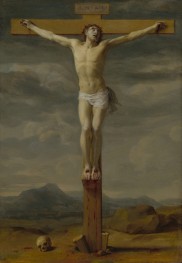
Canvas Print
$61.89
$61.89
SKU: 22648-LSE
Eustache Le Sueur
Original Size:47.5 x 34 cm
J. Paul Getty Museum, Los Angeles, USA
Eustache Le Sueur
Original Size:47.5 x 34 cm
J. Paul Getty Museum, Los Angeles, USA
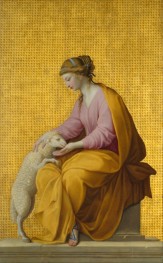
Canvas Print
$61.89
$61.89
SKU: 22652-LSE
Eustache Le Sueur
Original Size:100.7 x 67 cm
Art Institute of Chicago, Illinois, USA
Eustache Le Sueur
Original Size:100.7 x 67 cm
Art Institute of Chicago, Illinois, USA
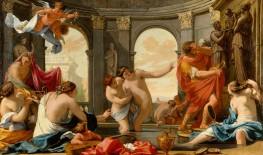
Canvas Print
$61.89
$61.89
SKU: 22658-LSE
Eustache Le Sueur
Original Size:94 x 156 cm
Musee des Beaux-Arts, Dijon, France
Eustache Le Sueur
Original Size:94 x 156 cm
Musee des Beaux-Arts, Dijon, France
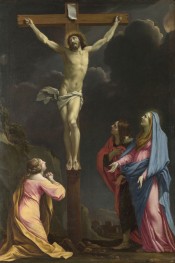
Canvas Print
$62.59
$62.59
SKU: 22646-LSE
Eustache Le Sueur
Original Size:109 x 73.1 cm
National Gallery, London, UK
Eustache Le Sueur
Original Size:109 x 73.1 cm
National Gallery, London, UK
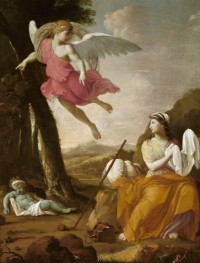
Canvas Print
$71.63
$71.63
SKU: 22656-LSE
Eustache Le Sueur
Original Size:159 x 114 cm
Musee des Beaux Arts, Rennes, France
Eustache Le Sueur
Original Size:159 x 114 cm
Musee des Beaux Arts, Rennes, France
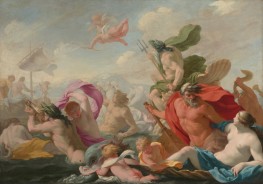
Canvas Print
$65.83
$65.83
SKU: 22649-LSE
Eustache Le Sueur
Original Size:96.2 x 136.2 cm
J. Paul Getty Museum, Los Angeles, USA
Eustache Le Sueur
Original Size:96.2 x 136.2 cm
J. Paul Getty Museum, Los Angeles, USA
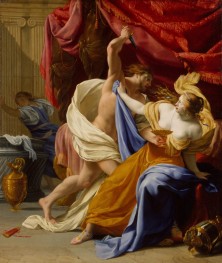
Canvas Print
$79.47
$79.47
SKU: 22653-LSE
Eustache Le Sueur
Original Size:189.2 x 161.3 cm
Metropolitan Museum of Art, New York, USA
Eustache Le Sueur
Original Size:189.2 x 161.3 cm
Metropolitan Museum of Art, New York, USA
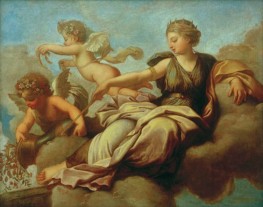
Canvas Print
$74.02
$74.02
SKU: 22654-LSE
Eustache Le Sueur
Original Size:90 x 110 cm
Public Collection
Eustache Le Sueur
Original Size:90 x 110 cm
Public Collection
Canvas Print
$78.28
$78.28
SKU: 22647-LSE
Eustache Le Sueur
Original Size:100.8 x 84.8 cm
National Gallery, London, UK
Eustache Le Sueur
Original Size:100.8 x 84.8 cm
National Gallery, London, UK
Canvas Print
$76.57
$76.57
SKU: 22667-LSE
Eustache Le Sueur
Original Size:394 x 328 cm
Louvre Museum, Paris, France
Eustache Le Sueur
Original Size:394 x 328 cm
Louvre Museum, Paris, France
Canvas Print
$93.29
$93.29
SKU: 22645-LSE
Eustache Le Sueur
Original Size:96 x 96 cm
National Gallery, London, UK
Eustache Le Sueur
Original Size:96 x 96 cm
National Gallery, London, UK
Canvas Print
$61.89
$61.89
SKU: 22655-LSE
Eustache Le Sueur
Original Size:71 x 47 cm
Public Collection
Eustache Le Sueur
Original Size:71 x 47 cm
Public Collection
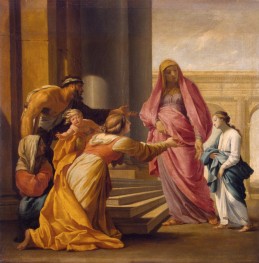
Canvas Print
$92.77
$92.77
SKU: 22660-LSE
Eustache Le Sueur
Original Size:102.6 x 101.2 cm
State Hermitage Museum, St. Petersburg, Russia
Eustache Le Sueur
Original Size:102.6 x 101.2 cm
State Hermitage Museum, St. Petersburg, Russia
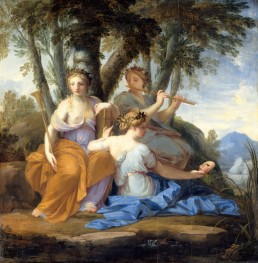
Canvas Print
$92.26
$92.26
SKU: 22663-LSE
Eustache Le Sueur
Original Size:130 x 130 cm
Louvre Museum, Paris, France
Eustache Le Sueur
Original Size:130 x 130 cm
Louvre Museum, Paris, France
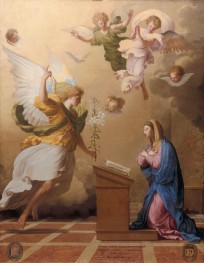
Canvas Print
$72.99
$72.99
SKU: 22661-LSE
Eustache Le Sueur
Original Size:297 x 227 cm
Louvre Museum, Paris, France
Eustache Le Sueur
Original Size:297 x 227 cm
Louvre Museum, Paris, France
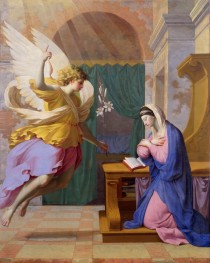
Canvas Print
$75.21
$75.21
SKU: 22651-LSE
Eustache Le Sueur
Original Size:156.2 x 125.7 cm
Toledo Museum of Art, Ohio, USA
Eustache Le Sueur
Original Size:156.2 x 125.7 cm
Toledo Museum of Art, Ohio, USA
Canvas Print
$89.02
$89.02
SKU: 22657-LSE
Eustache Le Sueur
Original Size:130 x 138 cm
Louvre Museum, Paris, France
Eustache Le Sueur
Original Size:130 x 138 cm
Louvre Museum, Paris, France
Canvas Print
$77.94
$77.94
SKU: 22673-LSE
Eustache Le Sueur
Original Size:89 x 73 cm
Public Collection
Eustache Le Sueur
Original Size:89 x 73 cm
Public Collection
Canvas Print
$61.89
$61.89
SKU: 22676-LSE
Eustache Le Sueur
Original Size:210 x 135 cm
Musee des Beaux Arts, Grenoble, France
Eustache Le Sueur
Original Size:210 x 135 cm
Musee des Beaux Arts, Grenoble, France
Canvas Print
$71.80
$71.80
SKU: 22665-LSE
Eustache Le Sueur
Original Size:278 x 360 cm
Louvre Museum, Paris, France
Eustache Le Sueur
Original Size:278 x 360 cm
Louvre Museum, Paris, France
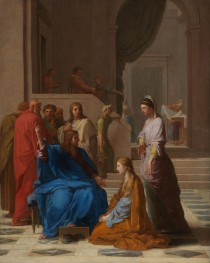
Canvas Print
$75.21
$75.21
SKU: 22659-LSE
Eustache Le Sueur
Original Size:162.5 x 129.8 cm
Alte Pinakothek, Munich, Germany
Eustache Le Sueur
Original Size:162.5 x 129.8 cm
Alte Pinakothek, Munich, Germany
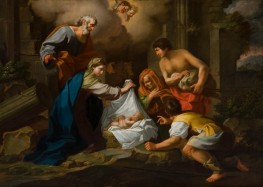
Canvas Print
$66.85
$66.85
SKU: 22677-LSE
Eustache Le Sueur
Original Size:97.8 x 135.3 cm
Public Collection
Eustache Le Sueur
Original Size:97.8 x 135.3 cm
Public Collection
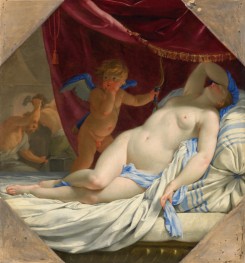
Canvas Print
$87.66
$87.66
SKU: 22650-LSE
Eustache Le Sueur
Original Size:128.3 x 119.4 cm
Fine Arts Museums of San Francisco, California, USA
Eustache Le Sueur
Original Size:128.3 x 119.4 cm
Fine Arts Museums of San Francisco, California, USA
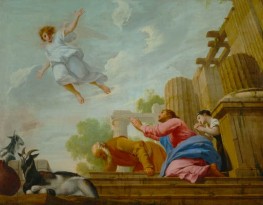
Canvas Print
$73.50
$73.50
SKU: 22674-LSE
Eustache Le Sueur
Original Size:137 x 215 cm
Louvre Museum, Paris, France
Eustache Le Sueur
Original Size:137 x 215 cm
Louvre Museum, Paris, France