
Wivenhoe Park, Essex, 1816 by John Constable
Canvas Print - 15461-COJ
Location: National Gallery of Art, Washington, USAOriginal Size: 56 × 101.2 cm
Wivenhoe Park, Essex by Constable (1816) is reproduced as a museum-quality giclée canvas print. Printed with archival inks on 400 g/m² canvas and hand-varnished for UV protection, it can be made in any size up to 22.3 × 41.3 in, scaled proportionally, with optional framing. Free worldwide shipping available; unframed prints ship in 2 workdays, framed in 7 to 8. Guaranteed 100-year color durability.

Giclée Canvas Print | $61.85 USD
Your Selection

Customize Your Print
Sizes scale proportionally to the original. Dimensions shown are for the printed area - we always add 1.2 in of blank canvas on every side for stretching.
Questions about this Print
About the Painting
2 Reviews
5.00 Overall rating

 Verified Buyer
Thank you for your review, Brian! We're glad the print exceeded your expectations and that you're happy with the result. Just a quick note - the free standard shipping option does take a bit longer compared to our express delivery, but we appreciate your patience.
Verified BuyerMore Fine Art Prints by Constable

John Constable
Original Size:32.4 × 51 cm
The Clark Art Institute, Williamstown, USA

John Constable
Original Size:77 × 65 cm
The Clark Art Institute, Williamstown, USA
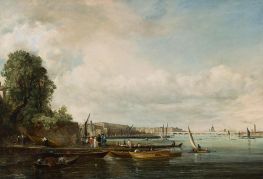
John Constable
Original Size:55 × 78 cm
Cincinnati Art Museum, USA
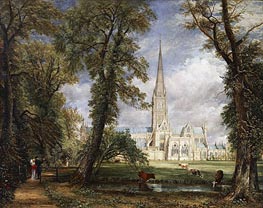
John Constable
Original Size:88.9 × 112.4 cm
Frick Collection, New York, USA
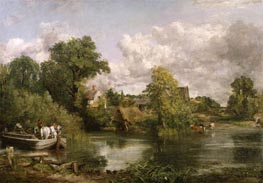
John Constable
Original Size:131.4 × 188.3 cm
Frick Collection, New York, USA

John Constable
Original Size:143 × 122 cm
National Gallery, London, UK

John Constable
Original Size:45.7 × 55.3 cm
Victoria and Albert Museum, London, UK

John Constable
Original Size:34.3 × 43.2 cm
Victoria and Albert Museum, London, UK