
Why We Don't Offer Gallery Wrap - And Why That's a Good Thing
 TopArtPrint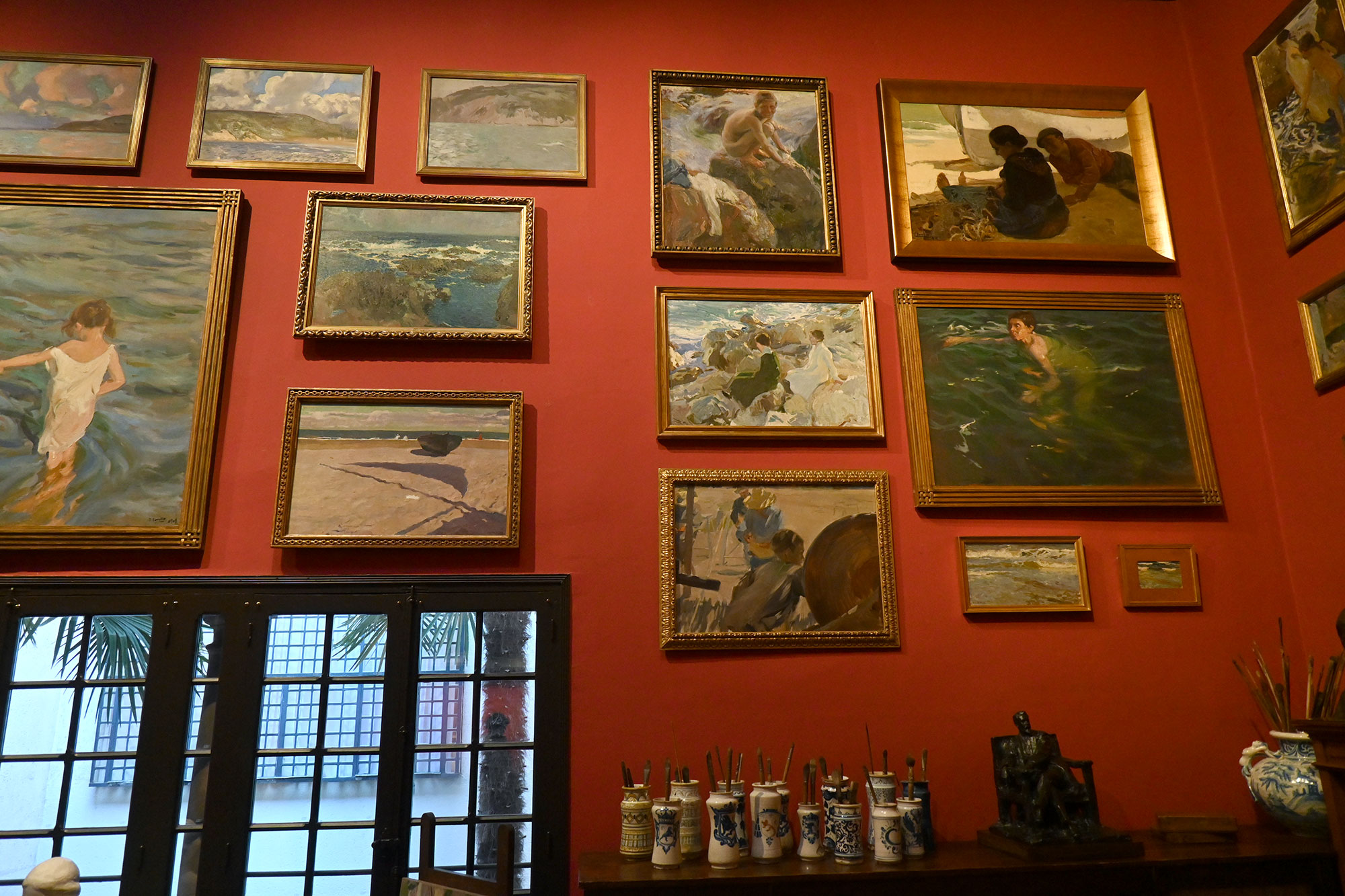
Customers often ask us about gallery wrap - politely, sometimes insistently - wanting to know why we don't offer the option to wrap the printed image around the sides of the stretcher bars. It's a fair question. Gallery wrap is everywhere. It's the default at most canvas printing services. It sounds sophisticated - the word "gallery" is right there in the name.
And yet, we don't offer it. Not because we can't. Because we shouldn't.
This isn't a marketing position or a cost-saving measure. It comes from three decades of working with fine art reproductions and a conviction that the artwork itself deserves better.
What Gallery Wrap Actually Is
Before going further, it's worth being precise about what gallery wrap means in practice. The print providers who offer it don't crop the image to cover the sides. They use one of two common tricks: they either mirror the outermost pixels of the image and print that mirrored band on the stretcher edge, or they fill the sides with a solid color sampled from the painting - a black, a cream, a muted tone borrowed from somewhere inside the composition.
On the surface this looks like a neat solution. The image on the front stays intact. The sides are covered. The whole thing arrives ready to hang, no frame required.
That, in a sentence, is the real purpose of gallery wrap. It is a shortcut to a finished product. It removes the need to buy an outer frame, removes the need for any framing decisions at all, and allows the canvas to be shipped and sold as a single, self-contained object. It exists because it is cheap to produce and convenient to package. And that convenience is exactly where the problem begins.
The Mirrored Edge Problem
A mirrored edge is a digital fabrication. It did not exist when the painting was created. Stand at an angle to a mirrored-edge reproduction of Botticelli's "Birth of Venus" and you will see a strange, symmetrical distortion running along the sides - shapes and colors inverted into a pattern that has nothing to do with Botticelli and everything to do with a software plugin.
A solid-color edge is a different kind of invention. The algorithm picks a tone from inside the image and paints the sides with it. Sometimes the result is tolerable. Sometimes it is jarring - a band of dark brown wrapping a luminous sky by J. M. W. Turner. Either way, it is a choice made by a machine about what to add to a painting where nothing needs to be added.
The viewer may barely notice these details. That doesn't make them any less of an intrusion on an artwork that was finished centuries ago and never asked for a trim.
The Museum Test
Here is a simple thought experiment. Walk through the Louvre, the Uffizi, the National Gallery in London, the Metropolitan Museum in New York, the Prado in Madrid. Look at every old master painting on every wall. You will not find a single gallery-wrapped canvas among them. Not one.
It's worth being clear about how these paintings came to be framed. Museums, for the most part, did not frame these works. The paintings arrived at the museum long after they had already lived through several generations of frames - commissioned by patrons, replaced by collectors, adjusted to the taste of successive owners. A frame was part of how a painting entered the world. It hung in private houses, palaces, and chapels for decades or centuries before a curator ever saw it. When museums receive works whose original frames have been lost, conservators and framers research the appropriate period and commission something as close to the historically correct presentation as possible. Museums write openly about this practice - the careful study of what frame a painting would have been born into, the reconstruction of a context as faithful as the painting itself.
The point is that framing is not something imposed on paintings by institutions. It is how paintings have been shown, from the moment they left the studio, for as long as Western easel painting has existed.
The irony of the term "gallery wrap" is hard to miss. It suggests gallery-level presentation. In practice, no serious gallery or museum presenting historical masterworks would display them this way.
The Finished Form of a Painting
This brings us to a point that underlies everything else we believe about reproductions. A painting, in its finished and complete form, is stretched on a stretcher, framed with an outer frame, and hung on a wall. That is the state in which the work exists fully. Every other presentation - rolled in a tube, stretched without a frame, taped to a studio wall during production - is a stage along the way, a waiting period before the painting reaches its proper form.
A good frame is not decoration added to a painting. It is a large part of the visual impression the painting makes on the viewer. It directs the eye, establishes the scale, tells the viewer where the image ends and the room begins, and gives the work the weight and presence it was always meant to have. Remove the frame and a great painting still shows its quality, but quietly, at a reduced volume. Put it in the right frame and the whole thing comes alive.
This is why we think of gallery wrap as a detour rather than a destination. The image is printed, the canvas is stretched, and then - instead of moving the work forward toward its proper finished state - the process stops and declares itself complete. The frame, which would have given the work its full visual impact, is skipped entirely. What's left is a half-finished object presented as a whole one.
A Budget Substitute for Framing
This is where the real objection lies. Gallery wrap is not offered because it honors the artwork. It is offered because it eliminates the cost of a frame.
A proper reproduction of a great painting deserves a proper context. A frame does several things at once: it provides a visual boundary between the image and the wall, it protects the edges of the canvas, it gives the eye somewhere to rest as it moves from the room into the painting, and - in the case of period-appropriate framing - it recreates the kind of presentation the work was intended for. Gallery wrap does none of this. It replaces a considered frame with a wrapped strip of canvas, and it does so for one reason: it is cheaper.
When a canvas print costs twenty euros and hangs above a university dorm bed, that compromise may be perfectly reasonable. Convenience wins, and there is no pretense of anything more. When someone invests in a quality giclée reproduction of a painting they admire - printed with archival pigment inks on artist-grade canvas - the same compromise feels less innocent. The print exists precisely because the buyer values the work. To then strip away the very convention of presentation that has accompanied the original throughout its life is, quietly, a devaluation of the whole project.
That is what we mean when we say gallery wrap disrespects the artwork. Not that it mutilates the image - it doesn't. But it reduces a Rembrandt or a Klimt to the presentation standards of an office poster, and it does so for reasons of economy rather than aesthetics.
How We Sell Our Prints
Our approach follows directly from what we've just described. Every giclée print we produce is offered, by default, as a rolled print in a tube. A generous white margin is left around the image on all sides, allowing for stretching at a later stage. This is the most flexible and most economical option, and it leaves all subsequent decisions in the customer's hands.
On every canvas print, you can also choose stretching - the canvas mounted on solid pine stretcher bars, with a clean neutral border on the sides - or stretching with framing, where the stretched canvas is fitted into an outer frame chosen to complement the work. Each of these represents a step closer to the painting's finished form.
What we don't offer is the shortcut. We don't print a mirrored or solid-color band on the stretcher edge and present the result as ready-to-hang. If a customer wants the canvas stretched, they'll receive it with clean sides that are ready for a frame. If they want it framed, we'll frame it properly. If they want it rolled, they'll receive it with margins that leave every option open for whenever they choose to finish the work.
Respecting the Artwork
This may sound like a small thing. It isn't.
A reproduction exists to bring a great painting into someone's daily life - to let them live with Monet's light or Caravaggio's shadow in a way that a museum visit, however wonderful, cannot provide. That purpose is undermined when the reproduction treats the presentation of the work as an afterthought to be solved with a software trick.
We believe a giclée print of "Girl with a Pearl Earring" should show the same image that Vermeer painted, in the same proportions, with nothing added to its edges. The frame is a separate decision - and a worthwhile one - but the print itself should be faithful, and the presentation should be equal to the work.
That's why we don't offer gallery wrap. And that's why we're not planning to.